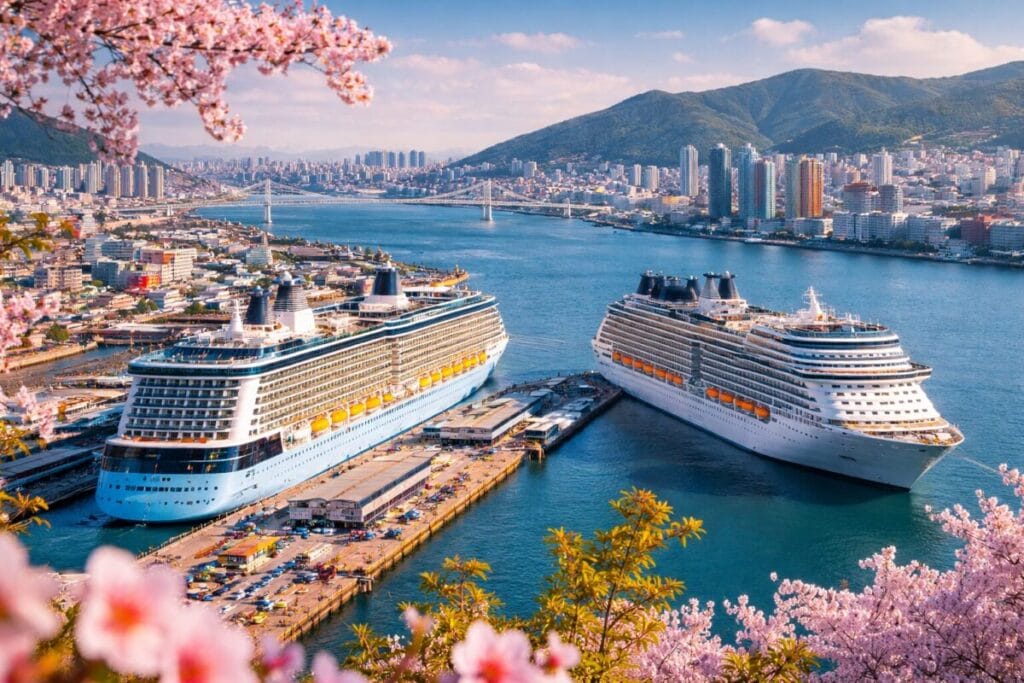
China and South Korea have emerged as the central pillars of Northeast Asia’s cruise industry in 2026, as evolving deployment strategies reshape regional travel patterns and redefine how cruise lines operate within the region. A noticeable shift toward South Korean ports has created a concentrated travel model widely referred to as the “Korea Season,” reflecting the growing alignment between Chinese homeports and Korean destinations.
This development highlights broader changes across the maritime tourism sector, where geopolitical factors, operational considerations, and shifting consumer preferences are driving new approaches to cruise planning. Instead of multi-country itineraries spanning several nations, cruise operators have increasingly streamlined routes into short-duration voyages linking major cities in China with key destinations in South Korea.
South Korea Emerges as the Core Destination
Throughout 2026, cruise deployment has shown a clear focus on South Korean ports such as Busan, Jeju Island, and Incheon. These cities have experienced a significant increase in ship calls as cruise companies adjusted their regional strategies.
The shift comes partly from ongoing recalibration of itineraries involving Japan, encouraging operators to prioritize destinations offering greater operational certainty and strong passenger demand. South Korea’s well-developed cruise infrastructure, efficient port facilities, and diverse tourism offerings have made it a natural choice for redeployment.
As a result, cruise schedules have become highly synchronized, with many lines offering similar four- to six-night sailings designed to maximize convenience and appeal to short-holiday travelers.
Rise of Short-Duration Cruises
One of the defining trends of the 2026 season has been the popularity of shorter voyages. These itineraries typically depart from major Chinese homeports and focus on one or two South Korean stops, allowing passengers to enjoy international travel without committing to extended journeys.
Short cruises have proven especially attractive to families, first-time cruisers, and younger travelers seeking accessible and affordable vacations. The convenience of relatively brief travel times and straightforward entry requirements has also contributed to strong demand, particularly during peak travel periods.
The streamlined structure of these itineraries reflects a broader industry trend toward flexible travel products that align with modern lifestyles, where travelers prefer shorter breaks throughout the year rather than one long holiday.
Chinese New Year Drives Booking Momentum
During the Chinese New Year holiday period, Korea-focused sailings experienced robust demand. Family travelers formed a significant portion of passengers, with multi-generational groups choosing cruises as a stress-free way to celebrate the festive season.
South Korea’s reputation for shopping, culinary experiences, and pop culture attractions enhanced its appeal, helping cruise lines achieve high occupancy rates and strong pricing performance during this peak travel window. Cabins sold quickly, and premium categories were particularly popular among holiday travelers seeking upgraded experiences.
However, as the holiday period concluded, the market began to transition into a more competitive phase, revealing challenges associated with high deployment concentration.
Pricing Pressures and Competitive Dynamics
The clustering of numerous ships along similar routes created a saturated marketplace in early spring. With many brands offering comparable itineraries, price competition intensified, leading to fare adjustments across several sailings.
Operators responded by introducing promotional campaigns and bundled packages designed to maintain value perception while attracting new customers. Flash sales, family discounts, and onboard credit incentives became common marketing tools as cruise lines worked to sustain demand in a crowded market.
The pricing adjustments also highlighted the risks of limited itinerary diversity. Without significant variation in destinations, operators were forced to differentiate their products through other aspects of the cruise experience.
Onboard Experiences Take Center Stage
As itinerary homogeneity increased, cruise lines shifted focus toward onboard innovation to stand out from competitors. Entertainment programming, culinary experiences, and family-friendly activities became key differentiators in marketing campaigns.
Ships sailing in Northeast Asia introduced immersive shows, technology-driven attractions, and expanded dining concepts aimed at elevating the overall guest experience. Cruise companies emphasized unique onboard features to position their ships as destinations in their own right, rather than relying solely on port calls to attract travelers.
This strategy reflects a broader shift across the global cruise industry, where experiential offerings are becoming essential for maintaining brand identity and customer loyalty.
Regional Operators Experiment with New Approaches
While major international brands maintained core Korea-focused itineraries, regional operators explored alternative ways to diversify their offerings. Some introduced overnight stays in Busan, allowing passengers more time to explore local culture, nightlife, and culinary scenes.
Other lines experimented with visits to lesser-known ports in South Korea, aiming to reduce congestion and offer unique experiences beyond the standard cruise circuit. These adjustments demonstrate how smaller operators are attempting to maintain competitiveness by creating niche itineraries within an otherwise concentrated deployment model.
Japan’s Role and Future Regional Balance
Although South Korea currently dominates Northeast Asia cruise itineraries, Japan continues to play an important role in shaping the regional landscape. Changes in Japan-bound sailings have significantly influenced deployment decisions, and many industry observers expect a gradual rebalancing in future seasons.
Historically, itineraries combining China, South Korea, and Japan provided strong consumer appeal by offering diverse cultural experiences within a single voyage. A return to this multi-destination model could help stabilize pricing and broaden traveler interest once market conditions allow.
Calls for Regulatory Innovation
Industry stakeholders are also exploring new operational models to reduce dependence on international port access. Proposals such as cruises featuring only sea days or expanded domestic Chinese itineraries have gained attention as potential ways to diversify offerings.
Such innovations could provide greater flexibility during periods of geopolitical uncertainty while supporting long-term sustainability in the region’s cruise sector.
Outlook for the 2026 Cruise Season
The emergence of the Korea Season represents a defining moment for Northeast Asia’s cruise industry. By concentrating deployment on South Korean destinations, operators have created a dynamic but highly competitive environment that reflects both opportunity and challenge.
The future trajectory of the market will likely depend on balancing operational efficiency with creative itinerary design and onboard innovation. As cruise lines continue to adapt, the evolving relationship between China and South Korea will remain a key driver shaping travel trends across Northeast Asia.
For travelers, the result is an expanding array of short, accessible cruise options that combine cultural exploration with modern onboard experiences, marking a new chapter in regional maritime tourism.
For more travel news like this, keep reading Global Travel Wire