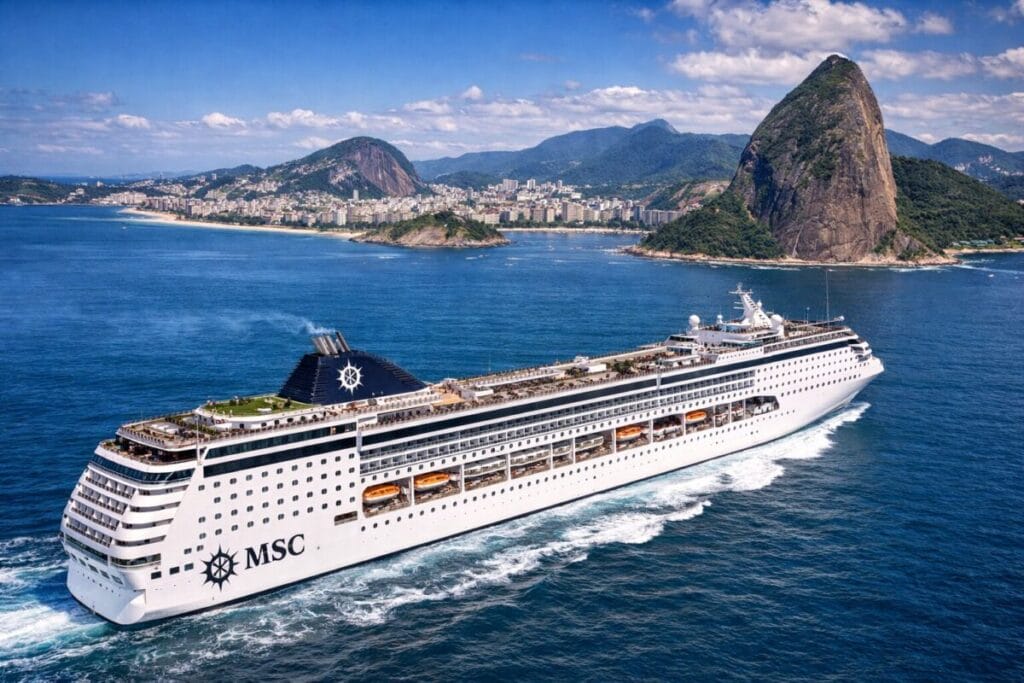
MSC Cruises has announced a significant change to its upcoming South America deployment, confirming that MSC Lirica will no longer operate in the region during the 2026–27 cruise season. The decision has led to the cancellation of multiple sailings originally planned from Brazilian ports, affecting passengers who had scheduled winter cruises across South America.
The adjustment reflects the dynamic nature of cruise operations, where deployment strategies may evolve based on operational priorities, fleet planning, or market considerations. While the cruise line continues to maintain a presence in South America through several other ships, the removal of MSC Lirica represents a notable shift in previously announced plans for the region.
Impact on Brazil-Based Itineraries and Passenger Plans
MSC Lirica had been scheduled to operate a series of voyages departing from key Brazilian homeports, including Rio de Janeiro, Santos, Itajaí, and Paranaguá. These itineraries were designed to cater to both local travellers and international guests seeking warm-weather cruises during the Northern Hemisphere winter months.
Following the announcement, all related sailings were removed from booking systems, including a transatlantic repositioning voyage that was meant to transfer the ship from Europe to South America. Guests who had confirmed reservations were notified directly of the cancellations, with the cruise line offering several alternatives to minimize disruption.
For travellers, the change has introduced uncertainty, particularly for those who had arranged flights or extended travel around their cruise dates. However, the availability of rebooking and refund options aims to provide flexibility while maintaining customer confidence.
Operational Reasons Behind the Deployment Change
MSC Cruises cited operational factors as the reason behind MSC Lirica’s withdrawal from the South American market, although detailed explanations have not been publicly disclosed. The absence of additional information regarding the vessel’s future schedule has prompted industry speculation about potential redeployment to other regions or operational adjustments within the fleet.
The ship is currently expected to conclude its scheduled voyages in Europe toward the end of 2026, with its activities beyond that point yet to be clarified. Such adjustments are not uncommon within the cruise industry, where fleet optimization plays a crucial role in aligning ships with market demand and strategic priorities.
Revised South America Lineup Maintains Regional Presence
Despite the removal of MSC Lirica, MSC Cruises has reaffirmed its commitment to South America by maintaining a strong regional lineup for the 2026–27 season. Remaining ships scheduled to operate in the region include MSC Musica, MSC Virtuosa, MSC Divina, and MSC Splendida.
These vessels will continue offering a variety of itineraries, ranging from short coastal cruises to extended voyages exploring multiple South American destinations. Brazilian ports remain central to the deployment strategy, reflecting the country’s importance as a key market for cruise tourism.
MSC Musica, in particular, is expected to feature upgrades including the addition of premium onboard experiences designed to enhance guest satisfaction. Such enhancements demonstrate ongoing investment in the region even as individual deployment plans evolve.
Passenger Options: Rebooking, Transfers, and Refunds
To address the cancellations, MSC Cruises has outlined several pathways for affected passengers. One option allows guests to transfer their bookings to alternative South America cruises of similar duration, provided that comparable cabin categories are available. This solution enables travellers to continue exploring the region without significant changes to their overall plans.
Another alternative offers broader flexibility, allowing guests to switch to any available sailing within MSC Cruises’ global network without change fees. Pricing adjustments are applied depending on the cost difference between the original and new itineraries.
Passengers who prefer not to rebook can choose to cancel entirely and receive a full refund. While this option offers a straightforward resolution, travellers may need to consider additional arrangements such as flights or accommodations that were independently booked.
Industry Trends Highlight Operational Flexibility
Changes like the MSC Lirica withdrawal highlight the evolving nature of cruise industry planning. Deployment strategies often shift due to factors such as ship maintenance schedules, regional demand fluctuations, or broader market dynamics. Cruise lines must continually balance operational efficiency with guest expectations, particularly when planning itineraries years in advance.
South America has become an increasingly competitive cruise market, attracting both international visitors and domestic travellers seeking accessible vacation options. Seasonal deployment decisions play a crucial role in determining how cruise lines allocate their fleets to maximize occupancy and revenue while responding to changing travel trends.
Brazil’s Role in the Global Cruise Landscape
Brazil continues to serve as a vital hub for cruise tourism in South America, offering diverse itineraries that combine vibrant cities, scenic coastlines, and cultural experiences. Ports such as Rio de Janeiro and Santos attract significant passenger volumes each year, contributing to local tourism economies and supporting regional travel infrastructure.
Even with MSC Lirica’s removal, the presence of multiple vessels ensures that travellers will still have access to a range of cruise options across the region. The revised lineup underscores the cruise line’s ongoing commitment to maintaining operations in Brazil despite adjustments to individual ships.
Looking Ahead: What the Change Means for Travellers
For passengers and travel advisors, the announcement serves as a reminder that cruise itineraries can change even after initial schedules are released. Flexibility remains an important consideration when booking long-term travel plans, particularly in an industry that must adapt to shifting operational realities.
While the absence of MSC Lirica will reshape the 2026–27 South America cruise season, MSC Cruises’ broader fleet deployment continues to support the region’s tourism growth. As new details emerge regarding the ship’s future role and potential redeployment, travellers and industry observers alike will be watching closely to see how the cruise line’s strategy evolves in response to changing global travel trends.
For more travel news like this, keep reading Global Travel Wire