China is reshaping its tourism landscape by transforming large-scale infrastructure projects into immersive travel experiences. From record-breaking bridges and high-speed rail networks to innovative luxury resorts and industrial attractions, the country is redefining how engineering achievements can double as tourism destinations. These developments are not only improving accessibility to remote provinces but also creating new opportunities for travelers seeking adventure, cultural discovery, and architectural marvels.
Industry observers describe this shift as part of a broader “tourism-plus” model, where infrastructure is designed with tourism in mind from the beginning. Instead of functioning solely as transportation systems or industrial facilities, these projects now serve as attractions that combine sightseeing, education, and experiential travel.
Guizhou Emerges as a Center for Vertical Tourism
Guizhou Province, located in southwest China, has become a prime example of how infrastructure can drive tourism growth. Historically considered difficult to access due to mountainous terrain, the region is now gaining international attention thanks to a series of dramatic bridges and engineering projects.
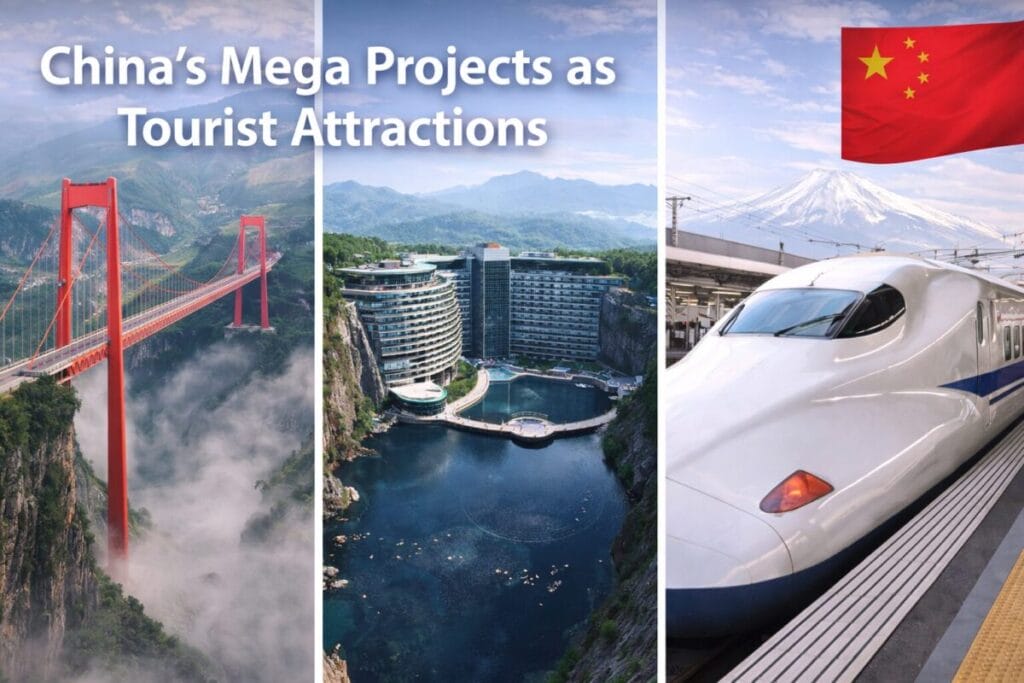
One standout attraction is the Huajiang Grand Canyon Bridge, recognized as one of the tallest bridges in the world. Beyond its role in reducing travel time across rugged landscapes, the bridge incorporates viewing platforms and visitor experiences that allow travelers to appreciate both the natural scenery and the engineering achievement. Adventure tourism operators are increasingly promoting activities such as panoramic sightseeing, photography tours, and high-altitude experiences.
Another significant draw is the FAST radio telescope, one of the largest single-dish radio telescopes globally. While initially established as a scientific research facility, the surrounding area has evolved into an educational tourism destination. Visitors can learn about astronomy and space exploration while enjoying the peaceful environment of the remote countryside. The combination of science and nature appeals to travelers seeking meaningful and intellectually engaging experiences.
High-Speed Rail Revolutionizes Accessibility
A key factor enabling the growth of infrastructure-based tourism is China’s extensive high-speed rail network. With tens of thousands of kilometers of track connecting cities and remote regions, travelers can now reach destinations that were once considered inaccessible.
Projects such as the Shenzhen-Zhongshan connection demonstrate how integrated transport systems can reshape travel patterns. By combining bridges, tunnels, and artificial islands, the route significantly reduces travel time between major urban centers, making day trips and multi-city itineraries more practical.
Similarly, the Sichuan-Tibet railway represents a major advancement in connecting high-altitude destinations. Regions that previously required lengthy road journeys can now be accessed more safely and efficiently, opening up opportunities for tourism in culturally rich and scenic areas of western China. Improved accessibility also supports local economies by encouraging visitor spending in smaller communities.
Innovative Architecture and Resort Experiences
China’s approach to infrastructure tourism extends beyond transport systems to include architectural landmarks and luxury hospitality projects. Developers are increasingly designing hotels and urban complexes that serve as attractions in their own right.
One example is the Shimao Wonderland Intercontinental in Shanghai, built within a former quarry. The property transforms an industrial landscape into a luxury retreat, offering guests a unique stay experience surrounded by dramatic cliffs and water features. Such projects demonstrate how adaptive reuse of industrial sites can create new tourism icons.
Another notable development is Raffles City in Chongqing, featuring a massive skybridge suspended high above the city. The structure offers sweeping views of the surrounding rivers and skyline, attracting visitors interested in architecture, urban design, and experiential spaces. These destinations are increasingly used for conferences, corporate events, and incentive travel programs, blending tourism with business travel.
Seasonal Attractions and Industrial Tourism
China is also expanding tourism by leveraging seasonal events and industrial facilities as visitor attractions. Harbin Ice-Snow World, for example, has grown into one of the largest winter-themed attractions globally. Elaborate ice sculptures, illuminated installations, and large-scale winter activities draw millions of visitors during peak season, demonstrating the potential of seasonal tourism to boost regional economies.
Industrial tourism is another emerging trend. Facilities such as large hydropower stations are opening designated visitor zones that showcase engineering processes and sustainable energy production. Travelers interested in technology and innovation can explore these sites through guided tours that highlight environmental considerations and technological achievements.
Opportunities for the Travel Industry
The rise of infrastructure tourism presents significant opportunities for travel professionals. Tour operators are developing specialized itineraries focused on engineering marvels, architecture, and innovation, appealing to niche audiences interested in science and design.
High-speed rail connectivity allows planners to create seamless multi-destination journeys that combine major cities with remote regions. For example, travelers can explore modern urban centers before heading to mountainous provinces or cultural heritage sites connected by efficient transport networks.
Corporate travel and meetings, incentives, conferences, and exhibitions (MICE) tourism also benefit from these developments. Iconic structures such as skybridges and unique hotels provide distinctive venues that enhance event experiences.
Sustainable Development and Regional Growth
Authorities emphasize that infrastructure-led tourism must balance economic growth with environmental protection. Many projects include sustainability initiatives such as eco-friendly design, controlled visitor access, and conservation programs aimed at preserving local ecosystems.
Improved transportation not only attracts tourists but also enhances living standards for residents by improving access to healthcare, education, and economic opportunities. As tourism spreads to previously overlooked areas, regional development becomes more balanced, reducing pressure on overcrowded destinations.
A New Era of Travel Experiences
China’s integration of tourism into large-scale infrastructure projects reflects a broader evolution in global travel trends. Travelers are increasingly drawn to experiences that combine education, adventure, and luxury, and engineering landmarks offer a unique way to meet these expectations.
By turning bridges, railways, industrial facilities, and architectural innovations into attractions, China is positioning itself as a leader in experiential tourism. The approach transforms journeys into immersive experiences where the route itself becomes as compelling as the destination.
As these mega projects continue to expand, remote regions are becoming more accessible to global travelers, creating fresh opportunities for exploration and redefining how infrastructure can shape the future of tourism.
For more travel news like this, keep reading Global Travel Wire