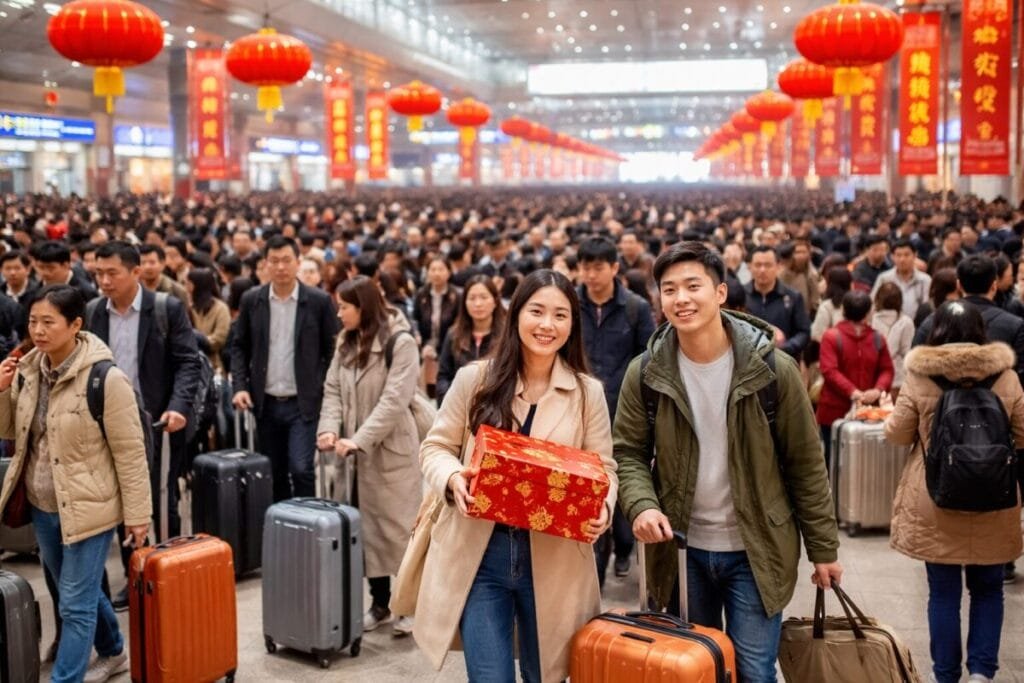
Every year, an extraordinary spectacle unfolds across China — a travel phenomenon so vast it eclipses any other seasonal movement of people on Earth. Known as Chunyun, the Lunar New Year travel rush is more than a logistical challenge; it is a powerful cultural ritual, an economic barometer, and an awe-inspiring human story. In 2026, this massive migration once again reshapes cities, railways, and travel trends across Asia and beyond, offering fascinating insight into modern mobility and tradition.
What Is Chunyun? The Cultural Heartbeat Behind a Mega Migration
Chunyun is the annual 40-day travel period surrounding Chinese New Year, during which hundreds of millions journey home for reunion dinners, celebrations, and holidays. Rooted in centuries-old traditions of family gathering, the event symbolises unity and renewal — but its modern scale reflects China’s rapid urbanisation and economic transformation.
Many migrant workers and students travel from bustling cities back to rural hometowns, turning transport hubs into vibrant gateways of emotional homecomings. The phenomenon is often described as the largest annual human migration on the planet, surpassing any religious pilgrimage or international holiday movement in sheer numbers.
Record-Breaking Numbers: Why 2026 Is a Historic Year
This year’s Lunar New Year travel rush began on 2 February and is expected to generate an astonishing 9.5 billion domestic passenger trips, a record figure that highlights both population mobility and growing travel demand.
Key statistics shaping the 2026 travel surge include:
- The 40-day migration period running through mid-March.
- Official public holidays from 15 to 23 February, encouraging extended journeys.
- More than 1.01 billion railway passengers recorded by early February alone.
- Up to 95 million flights projected during the season.
These figures are staggering even by China’s standards. The migration not only demonstrates the country’s massive internal travel market but also highlights the growing role of mobility in shaping economic activity.
Engineering the Impossible: How China Moves Millions Daily
Managing such enormous travel flows requires world-leading infrastructure. China’s high-speed rail network — now stretching roughly 50,000 kilometres — plays a crucial role, connecting nearly all major cities and enabling journeys that once took a full day to be completed in hours.
During peak travel days:
- Millions board trains daily, turning railway stations into choreographed hubs of movement.
- Airlines add capacity and flexible schedules to handle surging demand.
- Highways become lifelines for self-drive journeys, now included in official passenger tallies.
Behind the scenes, advanced booking apps, AI scheduling, and digital ticketing systems help maintain efficiency — a testament to how technology shapes modern travel experiences.
More Than Travel: A Powerful Economic Indicator
Chunyun is often viewed as a snapshot of China’s economic health. Increased mobility reflects consumer confidence, domestic tourism growth, and retail spending linked to holiday traditions.
Authorities hope the extended holiday will stimulate consumption in sectors such as entertainment, tourism, and dining, boosting an economy seeking stronger domestic demand.
Popular destinations during the 2026 season include tropical Hainan Island, scenic mountain resorts like Changbai Mountain, and international escapes such as Thailand, Australia, and visa-friendly destinations newly opened to Chinese travellers.
The Emotional Side of Travel: Why People Still Brave the Crowds
Beyond statistics lies a deeply human story. For many travellers, Chunyun is the only time of year they return home, transforming long queues and crowded carriages into shared experiences filled with anticipation.
Reunion dinners, gift exchanges, and cultural rituals like lion dances anchor the journey with meaning. The act of travelling itself becomes part of the celebration — a collective ritual reinforcing cultural identity.
Changing Travel Trends: Politics, Tourism and New Preferences
The 2026 travel rush also reflects shifting global tourism dynamics. Political tensions and safety concerns are influencing travel decisions, leading to declining popularity of certain destinations while Southeast Asian countries benefit from redirected flows.
Meanwhile, relaxed visa policies and longer holiday periods are encouraging more outbound travel, signalling China’s growing influence on international tourism markets.
Lessons for Global Travel: What Chunyun Reveals About the Future
From a travel industry perspective, Chunyun offers powerful insights:
- Infrastructure matters — massive investment enables seamless mass mobility.
- Technology drives efficiency — digital tools are essential for managing peak demand.
- Cultural travel remains dominant — family-centred journeys shape travel patterns more than leisure alone.
As urbanisation continues worldwide, similar mega-movements may emerge in other regions, though few will match China’s scale.
A Journey Unlike Any Other
Ultimately, China’s Lunar New Year travel rush is far more than a logistical feat; it is a living symbol of connection, resilience, and cultural continuity. As billions of journeys unfold across railways, skies, and highways, Chunyun reminds the world that travel is not merely about destinations — it is about belonging.
For travellers and observers alike, this annual migration stands as one of humanity’s most extraordinary shared experiences, redefining what mass movement looks like in the modern era.