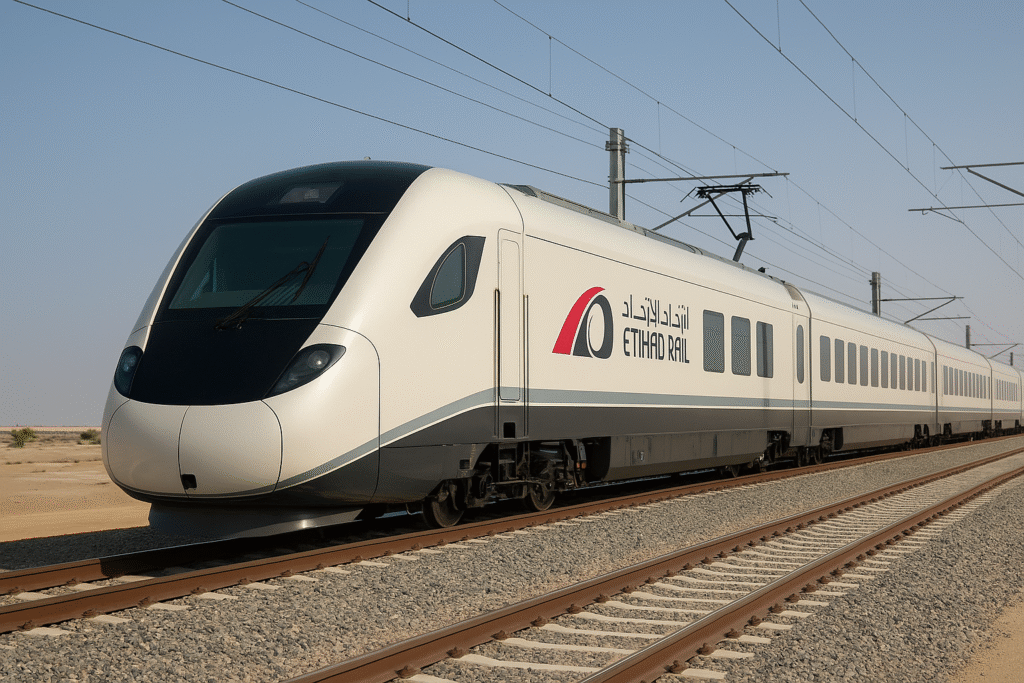
By 2026, the UAE will enter a new age of transportation with the launch of Etihad Rail, the country’s first national passenger railway system. Connecting all seven emirates, Etihad Rail is designed to transform how residents and visitors travel across the nation. With high-speed trains, modern amenities, and a strong commitment to sustainability, the project aims to reduce travel times, cut carbon emissions, and contribute to the UAE’s broader vision of innovation and environmental responsibility.
The project not only provides a fast and safe alternative to road and air travel but also plays a vital role in strengthening tourism and business connectivity. Once completed, it will set a new benchmark for transportation infrastructure in the region.
Connectivity Across the Emirates
The Etihad Rail passenger service will link major urban centers and cultural hubs, from Al Sila on the western border to Fujairah on the eastern coast. The first phase will include prominent stations in Abu Dhabi, Dubai, Sharjah, and Fujairah, with later expansions to cover 11 cities and regions, including Al Mirfa, Ruwais, and Al Dhaid.
Travel times will be dramatically reduced, making commuting and leisure travel far more convenient. A trip between Abu Dhabi and Dubai will take just 57 minutes, while the journey to Fujairah will be completed in 1 hour 45 minutes. In addition, a dedicated high-speed line between Abu Dhabi and Dubai—reaching speeds of 350 km/h—will slash the journey to just 30 minutes.
Passenger Experience: Comfort and Innovation
Etihad Rail is placing passenger comfort at the heart of its design. Each train will accommodate up to 400 passengers and feature three service classes: First, Business, and Economy. Travelers will enjoy modern conveniences such as Wi-Fi, charging stations, comfortable seating, and quiet zones for work or relaxation.
For a premium experience, Etihad Rail is introducing a luxury rail cruise service, designed in partnership with Italian hospitality specialists. This unique offering will include 15 opulent carriages inspired by Emirati heritage, providing a travel experience comparable to the iconic Orient Express.
Digital technology will further streamline travel. A “digital tickets first” policy will allow passengers to plan, purchase, and board using integrated smart systems. Ticketing is expected to align with existing UAE payment networks, including Nol cards, ensuring seamless connectivity with local transportation.
Scenic Routes and Infrastructure
The railway is designed not only for efficiency but also for passenger enjoyment. Stretching across desert landscapes, coastal plains, and mountain ranges, the route promises stunning views of the UAE’s natural and urban landmarks. Travelers will see iconic skylines, sweeping dunes, and natural wonders such as Jebel Hafeet.
The network includes 593 bridges and 9 tunnels, including a 6.5 km stretch through mountainous terrain, showcasing the engineering scale of the project.
Economic Impact and Growth
Etihad Rail is expected to bring substantial economic benefits to the UAE. The passenger and freight network combined could add up to $39 billion (Dh145 billion) to the national GDP over the next five decades. The railway will support the tourism industry by making it easier for visitors to explore the country’s diverse attractions, from cultural heritage in Sharjah to beach resorts in Fujairah.
In addition, by integrating with ports, free zones, and airports, the railway enhances logistics and trade, further positioning the UAE as a global hub for commerce and tourism.
Commitment to Sustainability
One of Etihad Rail’s most significant contributions will be its environmental impact. Trains will operate on electrification-ready tracks, capable of reducing CO2 emissions by 8.2 million tonnes annually. This is equivalent to removing 300 heavy trucks from UAE roads per train journey.
By offering an eco-friendly alternative to cars and planes, the railway directly supports the UAE’s pledge to achieve net-zero carbon emissions by 2050. With its integration of energy-efficient systems and sustainable practices, Etihad Rail reflects the country’s balance of modern progress and environmental stewardship.
Freight Services Already in Operation
Although passenger services are yet to begin, Etihad Rail’s freight operations have been running since 2023. Covering a vast network, the freight line currently transports up to 60 million tonnes of goods annually, with 38 locomotives and over 1,000 wagons in service. The freight system connects industrial hubs, ports, and logistics centers, playing a critical role in diversifying the UAE economy beyond oil.
Regional Expansion: Linking the Gulf
Etihad Rail’s ambitions extend beyond the UAE. The network will eventually form part of the Gulf Cooperation Council (GCC) rail project, a $100 billion initiative designed to link member states with high-speed trains. Construction has already begun on a route from Abu Dhabi to Sohar Port in Oman, which will reduce travel time to just 1 hour 40 minutes. Future plans also include links to Saudi Arabia through the Ghuwaifat border crossing.
This regional integration will allow seamless movement of people and goods across the Arabian Peninsula, strengthening both tourism and trade while deepening cooperation among Gulf nations.
Etihad Rail: A Symbol of the Future
With its blend of speed, safety, comfort, and sustainability, Etihad Rail is set to revolutionize travel within the UAE and beyond. The railway will connect people, stimulate economic growth, reduce environmental impact, and enhance the nation’s tourism landscape.
By 2026, travelers in the UAE will have the choice of a modern, efficient railway that reflects the country’s forward-thinking vision. Whether commuting between cities, exploring cultural attractions, or traveling for business, Etihad Rail promises a faster, greener, and more enjoyable journey for all.
For more travel news like this, keep reading Global Travel Wire