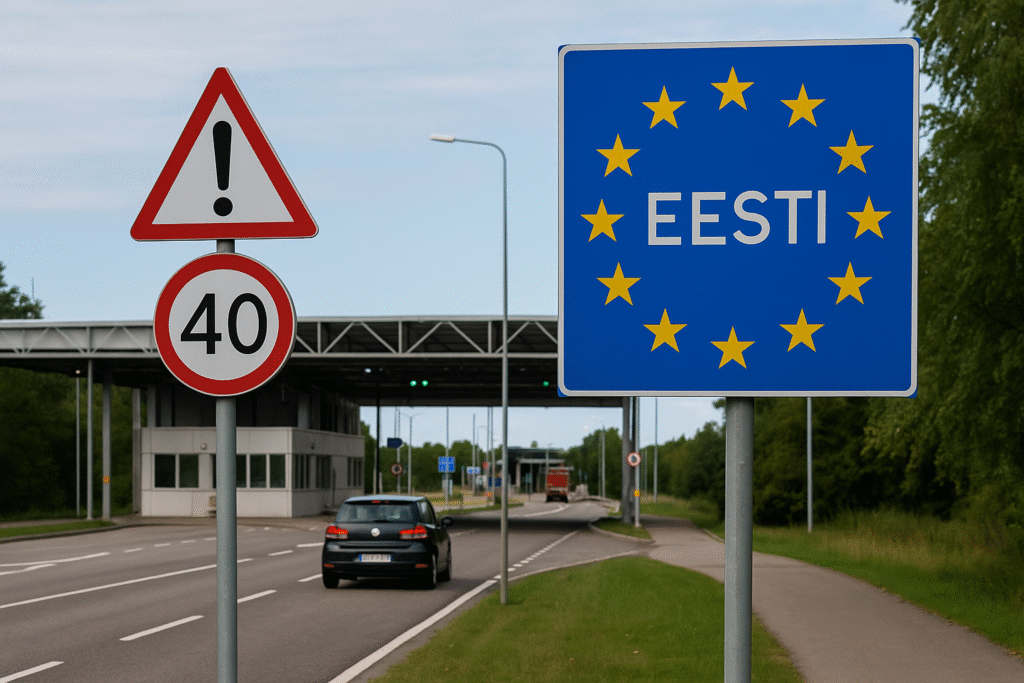
Several major countries have issued travel advisories for Estonia as the Baltic state begins grappling with both a new continental border-control regime and increased tensions at its frontier with Russia.
Germany, the United Kingdom, Italy and Australia are among those cautioning their citizens about possible disruptions at Estonia’s crossings, especially near the Russian border.
What’s driving the concern?
One root cause is the recent rollout of the Entry/Exit System (EES) across the Schengen Area. Introduced 12 October 2025, the EES demands biometric data — including fingerprints and facial images — from non-EU nationals the first time they cross an external Schengen border. The system will fully operate by April 2026. At land crossings in countries such as Estonia, this means border processing may be slower than before.
At the same time, Estonia’s eastern border with Russia remains volatile. The possibility of sudden closures or added checks has raised concerns, particularly around crossings such as Narva and Koidula.
Germany’s Advisory for Estonia
The German Foreign Office has alerted travellers to expect delays at Estonia’s border points due to the EES. It also warns that political or security tensions near the Russian frontier may lead to traffic snarls or unexpected entry pressures. Areas like Narva and Koidula are highlighted as especially susceptible to queue build-ups or abrupt restrictions. Visitors are urged to carry correct travel documents and remain flexible with plans.
UK’s Advisory: Monitoring Wider Risk
The UK’s foreign travel unit echoes Germany’s concerns and adds that the wider geopolitical climate in Eastern Europe may elevate security risks. While Estonia has not had recent terror incidents, the UK government points to its proximity to conflict zones and advises British travellers to stay alert. Those heading to border areas should follow local authority guidance and monitor developments closely.
Italy’s Approach: Non-Essential Travel Warning
Italy has taken a more cautious stance, advising its citizens to reconsider non-essential travel to regions near the Russian border. In its guidance, Italy flags the biometric delays introduced by EES, potential border closures (especially at Narva), and the risk of falling foul of EU sanctions on Russia if travelling via Estonia into Russia. Travellers are warned that cash or goods export violations might carry heavy penalties.
Australia’s Advisory: Biometric Changes + Tourist Safety
Australia’s government reminds its citizens that the EES applies to them as non-EU nationals entering Estonia via the Schengen zone. Extra time for border checks, long queues and unfamiliar procedures are specifically flagged. Tourism-related risks such as pick-pocketing, drink-spiking and credit-card fraud in busy areas (including Estonia’s capital, Tallinn) also feature in the advisory. Unofficial taxis are singled out as risky and travellers are urged to use licensed services only.
What Travellers to Estonia Should Know
- Allow extra time at borders. Biometric registration under EES may lengthen processing times significantly.
- Border crossings near Russia may be unpredictable. Some crossings operate only on foot, vehicles may be diverted or halted at short notice.
- Sanction rules are strict. Travelling through Estonia to Russia or moving cash/goods may trigger enforcement under EU sanctions.
- Basic travel readiness is vital. Ensure your passport is valid, you have proof of onward travel if asked, and you carry sufficient funds.
- Stay updated before departure. Check for any last-minute changes to border status, especially if your itinerary includes the Russian border.
Why This Matters for Tourism
Estonia remains an appealing destination — it offers a charming old town in Tallinn, serene countryside and rich cultural heritage. However, the introduction of rigourous border checks and the instability of a neighbouring region mean that what was once a straightforward journey may now require greater planning and flexibility. Tourists may need to budget extra time for entry, and border-region visits may carry additional risks or uncertainties.
Final Thoughts
While Estonia is not off-limits, the recent series of advisories from Germany, the UK, Italy and Australia make it clear that travellers need to be cautious. Being alert to new border rules under the EES, understanding the implications of the Russia–Estonia border situation, and ensuring all travel documentation is in order will help minimise disruption. For a smoother visit, keep to well-known tourist routes, avoid the immediate border region unless necessary and build in buffer time for arrival and departure.
For more travel news like this, keep reading Global Travel Wire