Germany has taken another decisive step toward the future of rail transport as new digital technology allows commuter trains in Munich to be remotely operated within depot environments. The breakthrough marks an important milestone not only for railway operations but also for sustainable urban mobility and tourism connectivity across Bavaria and beyond.
The successful demonstration of remote-controlled shunting operations for Munich’s S-Bahn commuter network shows how digitalisation can modernise railway logistics while maintaining safe and efficient services for millions of passengers, including domestic and international travelers using Germany’s extensive rail system.
Digital Innovation Supporting Urban Mobility
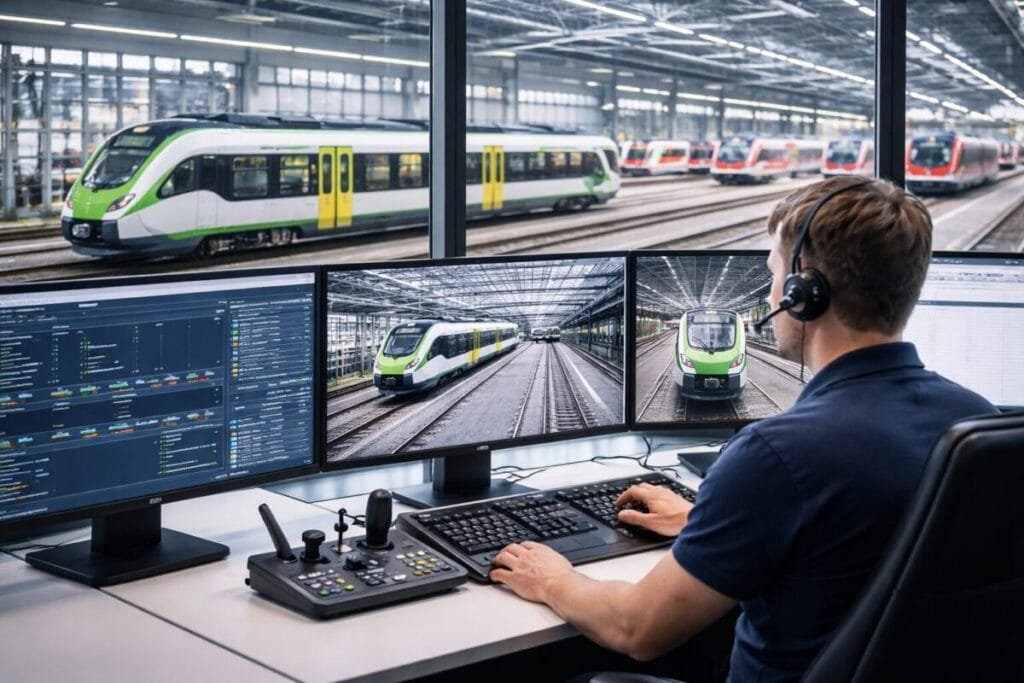
The new system enables trains to be moved within depots without requiring a driver to remain physically inside the train cabin. Instead, operators manage movements from a centralized Remote Operation Centre, controlling trains through advanced digital interfaces.
This development streamlines the preparation of trains before they enter service, allowing quicker turnaround times and improved availability during peak commuter hours. For visitors traveling through Munich — one of Europe’s busiest tourist gateways — improved operational efficiency ultimately means fewer service disruptions and smoother travel experiences.
Efficient rail networks are increasingly important as travelers rely more heavily on public transportation to explore cities and surrounding regions sustainably.
5G Technology Drives Real-Time Operations
A crucial component behind the success of the Munich trial is the deployment of a dedicated high-speed 5G network within the depot. This secure communication system allows real-time transmission of commands and operational data between the control centre and the train.
Modern digital architecture connects existing train control systems with newly developed remote operation interfaces, enabling older trains to operate using cutting-edge technology without costly fleet replacements. This approach supports sustainability goals by extending the life of current rolling stock while upgrading performance.
The use of fast and reliable data communication ensures that operators maintain precise control over movements, making remote handling safe and practical even in complex depot environments.
Enhanced Safety Through Advanced Monitoring
To support remote operations, trains involved in the demonstration were equipped with additional cameras and sensor systems. These tools provide operators with a comprehensive view of surroundings, allowing accurate maneuvering of trains within maintenance and parking zones.
Digital situational awareness improves safety by reducing risks associated with limited visibility or human error during traditional shunting processes. The technology can be integrated into several existing commuter train fleets operating across Germany, making nationwide adoption possible in the future.
This development also improves working conditions for railway staff by reducing the need for long walks through active depot zones, helping to create safer and more productive working environments.
Benefits Extend Beyond Rail Operations
Although the innovation focuses on operational efficiency, its broader impact extends to tourism and urban mobility. Munich’s S-Bahn network plays a vital role in connecting visitors to city attractions, convention centers, and major transport hubs, including Munich Airport.
Improved train preparation processes help ensure punctuality, reliability, and service frequency — all key factors influencing tourist satisfaction and business travel efficiency. As Europe continues promoting environmentally friendly transport solutions, reliable rail systems remain central to sustainable tourism strategies.
The adoption of remote operations also prepares rail networks for increased passenger volumes expected as tourism rebounds and urban populations grow.
Industrial Compatibility and Fleet Flexibility
One of the strongest advantages of the new technology lies in its compatibility with existing train fleets. Instead of requiring entirely new vehicles, the system can be applied to current commuter trains already serving metropolitan regions.
This flexibility makes digital transformation financially viable for operators while preserving investments in existing infrastructure. Future trains can also be built with remote-operation capabilities from the outset, ensuring long-term modernization across rail networks.
The scalable nature of the system allows expansion beyond Munich, potentially benefiting other German cities and European rail operators seeking to modernize depot operations.
Toward Fully Digital Rail Infrastructure
Industry experts see remote-controlled operations as part of a broader transformation toward intelligent railway infrastructure. As automation, digital monitoring, and predictive maintenance systems evolve, railway depots are expected to become increasingly efficient and interconnected.
These innovations support Europe’s environmental objectives by improving train availability and reducing reliance on road-based transport, ultimately lowering carbon emissions across urban travel networks.
Munich’s successful demonstration serves as a proof of concept showing that complex digital solutions can be integrated into existing railway ecosystems without disrupting passenger services.
Future Potential Across Europe
With digital rail initiatives accelerating across Europe, similar remote-operation systems could soon appear in other commuter networks, enabling faster, safer, and more cost-effective train handling.
As cities invest in smart mobility solutions, railways remain a cornerstone of sustainable urban transport. Enhanced operational efficiency not only benefits commuters but also supports tourism growth by ensuring dependable and environmentally friendly travel options.
A Milestone for Smart Rail Travel
The introduction of remote-controlled S-Bahn operations in Munich signals a new chapter in European rail innovation. By combining modern communication networks, adaptable digital architecture, and practical operational solutions, Germany continues to lead efforts to modernize railway systems.
For travelers exploring Munich and beyond, these behind-the-scenes innovations translate into smoother, more reliable journeys, reinforcing rail travel’s role as a sustainable and efficient way to experience Europe.
As digital railway technology evolves, remote-controlled operations are likely to become a standard feature in modern depot management, setting the stage for a smarter and greener future for rail transport worldwide.
For more travel news like this, keep reading Global Travel Wire