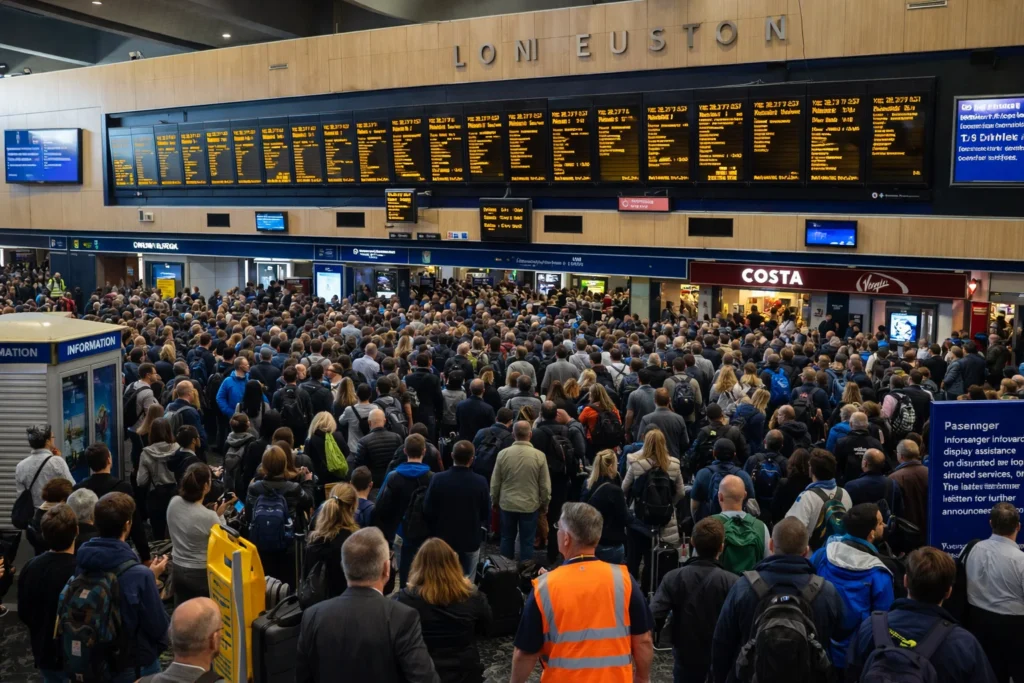
Thousands of passengers faced severe disruption after a major power failure affected parts of London’s rail network during one of the busiest holiday travel periods of the year. Services to and from major stations were delayed, cancelled, or significantly reduced, creating widespread travel difficulties for domestic passengers, international visitors, and commuters across the United Kingdom.
The disruption impacted key transport gateways including London Euston, King’s Cross, and St Pancras International, causing knock-on delays across long-distance and regional routes. For tourists heading to coastal breaks, city escapes, Scotland, or Europe, the incident created sudden changes to carefully planned journeys.
With rail travel playing a central role in UK tourism, the power failure has highlighted the importance of network resilience during peak seasonal demand.
Major London Stations Hit by Power Failure
Several of London’s busiest stations were affected when electrical systems linked to train operations and signalling experienced disruption. These stations are among the most important gateways for holidaymakers and business travellers moving between the capital and destinations across Britain and Europe.
London Euston is a key departure point for services to Birmingham, Manchester, Liverpool, and Glasgow. King’s Cross connects travellers to Yorkshire, Newcastle, and Edinburgh. St Pancras International handles domestic high-speed services and international rail travel to continental Europe.
When services at these hubs are interrupted, the impact spreads rapidly across the wider network because many routes depend on trains, crews, and rolling stock moving in sequence throughout the day.
Holiday Travel Plans Affected Across the UK
The timing of the disruption has made the situation especially challenging. April is a popular period for school breaks, spring holidays, weekend escapes, and inbound tourism. With demand already high, reduced capacity quickly led to overcrowded stations and longer waiting times.
Travellers heading to popular destinations reported missed connections and altered plans. Routes to seaside towns, countryside retreats, cultural cities, and family holiday destinations all felt the effect of reduced train services.
The disruption also affected visitors arriving in London who planned onward rail journeys. Many international tourists rely on London’s rail hubs for travel beyond the capital, making the power failure a wider tourism issue rather than only a commuter problem.
International Routes Through St Pancras Impacted
St Pancras International is one of Europe’s most important rail terminals, linking London with major cities such as Paris, Brussels, and Amsterdam. Reduced operations at the station created delays for passengers travelling between the UK and mainland Europe.
For overseas visitors, rail remains a popular alternative to short-haul flights because of city-centre convenience, luggage flexibility, and lower transfer times. Any disruption at St Pancras therefore affects both outbound UK tourism and inbound European travel.
Passengers travelling internationally were advised to allow additional time, check departure status regularly, and follow updated station guidance as services adjusted throughout the day.
Emergency Timetables Introduced
Rail operators introduced temporary timetables while engineers worked to restore power and stabilise infrastructure. Emergency schedules typically involve fewer trains operating at lower frequencies, helping networks restart safely while limiting congestion on affected lines.
Although this allows some movement to continue, it can also lead to:
- Longer queues at stations
- Reduced seat availability
- Delayed departures
- Missed onward connections
- Last-minute platform changes
- Crowding on available services
For tourists carrying luggage or travelling with families, these changes can be particularly stressful during peak holiday periods.
Why Rail Matters for UK Tourism
Rail is one of the most important transport systems supporting tourism across Britain. Millions of visitors use trains every year to reach historic cities, national parks, beach resorts, festivals, and major events.
Popular tourism journeys include:
- London to Edinburgh for culture and heritage travel
- London to Bath and Bristol for short breaks
- London to Cornwall for seaside holidays
- London to York for history tourism
- London to Manchester and Liverpool for city travel
- London to Paris or Brussels for multi-country trips
When rail networks experience disruption, the effects can spread quickly across hotels, attractions, local transport, and travel spending.
Advice for Travellers During Disruption
Passengers travelling during periods of rail disruption should remain flexible and monitor updates before leaving for the station. Even after power is restored, normal service can take time to return because trains and crews need repositioning.
Useful tips for travellers include:
- Check live departure boards before travel
- Allow extra time for station entry and boarding
- Keep digital tickets accessible
- Consider off-peak alternatives where possible
- Review refund or rebooking policies
- Carry phone chargers, snacks, and water for delays
- Stay updated through official operator announcements
Visitors with flights, cruises, or timed event tickets should also consider extra buffer time when travelling from London stations.
Recovery Expected in Phases
Transport authorities and rail operators are working to restore full service as quickly as possible. However, complex rail systems often recover in stages rather than instantly. Even after power returns, delays may continue while equipment is checked and timetables are reset.
Passengers should expect gradual improvement rather than an immediate return to normal operations. The busiest long-distance routes are often prioritised first, followed by wider regional services.
Positive Long-Term Outlook for UK Travel
While the London rail chaos caused major short-term inconvenience, the UK remains one of Europe’s strongest tourism markets with extensive rail links, world-famous destinations, and strong domestic travel demand.
Temporary disruption can be frustrating, but the broader travel outlook remains positive as operators continue investing in infrastructure, customer service, and smarter network management. For tourists planning future UK holidays, rail travel remains one of the best ways to explore the country’s cities, coastlines, and countryside.
As services recover, passengers are expected to return quickly to the convenience and connectivity that Britain’s rail system provides.
For more travel news like this, keep reading Global Travel Wire