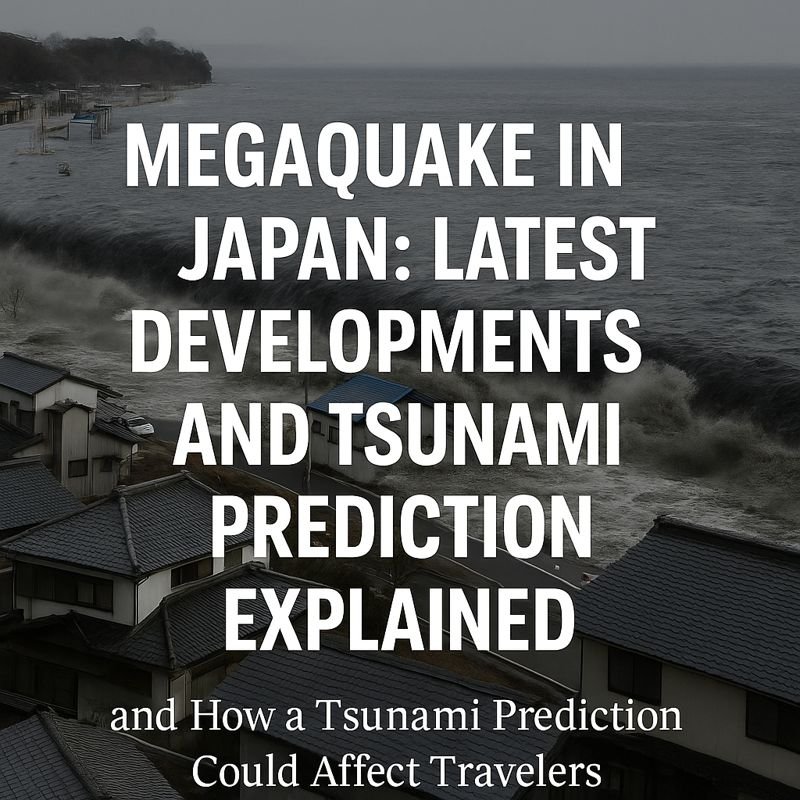
Japan is once again under the global spotlight after a series of strong offshore earthquakes triggered a rare “megaquake advisory” and short-term tsunami alerts across northern coastal regions. For travelers, the news has raised urgent questions: What exactly is happening? How serious is the risk? And is it still safe to visit Japan right now?
Here’s a clear, travel-focused breakdown of everything we know so far.
A Surge in Seismic Activity
Over recent days, northern Japan has experienced several significant earthquakes originating off the Pacific coastline. The strongest struck with enough force to shake major cities, disrupt transport briefly, and prompt emergency authorities to issue swift tsunami warnings for vulnerable coastal areas.
While tsunami waves remained relatively modest—well below the destructive levels seen in past disasters—the alerts were a reminder of how quickly conditions can shift along Japan’s tectonic fault zones. Another sizeable quake followed days later, reinforcing concerns that the region is experiencing an active seismic phase.
What a “Megaquake Advisory” Actually Means
One term catching headlines worldwide is “megaquake prediction,” leading to understandable confusion. Japan’s meteorological agency does not claim it can predict an exact time or place for future earthquakes. Instead, after certain major seismic events, authorities may issue a special advisory indicating that the statistical likelihood of a larger quake temporarily increases.
This advisory is not a guarantee that a catastrophic event will happen—it’s a precautionary measure designed to heighten preparedness. For a country situated on the Pacific Ring of Fire, readiness is a routine part of life, and public safety systems are among the most advanced anywhere in the world.
Tsunami Alerts: Short-Term but Important
Following the initial earthquakes, Japan briefly issued tsunami warnings and advisories along portions of the northern Pacific coastline. These alerts were lifted once ocean readings showed that wave heights remained moderate and posed no widespread threat.
However, the process demonstrated Japan’s exceptional early-warning capabilities: within minutes, coastal communities received sirens, phone alerts, and evacuation guidance. Travelers unfamiliar with tsunami zones may find these warnings unnerving, but they are part of a highly efficient safety network that prioritizes fast communication and clear evacuation procedures.
Current Travel Impact
Despite the dramatic headlines, Japan has not closed airports, halted rail lines, or imposed travel restrictions. Transportation services resumed quickly after inspections, and hotels and tourism operators in affected regions have continued welcoming guests.
Travelers heading to areas such as Hokkaido, Aomori, or the scenic Sanriku coastline should remain attentive to official updates but can expect day-to-day life to feel largely normal. Japan’s tourism infrastructure is built with resilience in mind, from quake-resistant buildings to robust contingency planning.
What Travelers Should Do Now
For visitors currently in Japan—or planning to arrive soon—simple preparedness is key:
- Enable emergency alerts on your mobile device. Japan’s system delivers real-time earthquake and tsunami notifications.
- Review evacuation routes posted in hotels, train stations, and coastal areas.
- Follow local instructions immediately if an alert sounds.
- Stay informed by checking updates from national weather and disaster agencies.
- Pack essentials such as a portable charger, bottled water, and a small flashlight when exploring remote or coastal regions.
Taking these precautions doesn’t mean your trip will be disrupted—it simply ensures you’re ready should conditions shift.
Perspective for Travelers
Although the phrase “megaquake” can sound alarming, the current advisory reflects a temporary statistical elevation in seismic risk—not a definitive forecast. Japan experiences earthquakes regularly, and its infrastructure, alert systems, and public training make it one of the safest countries to experience such events.
For most travelers, the biggest impact will be staying attentive to alerts and following routine safety steps. Japan remains open, welcoming, and well-prepared—even during heightened seismic activity.