



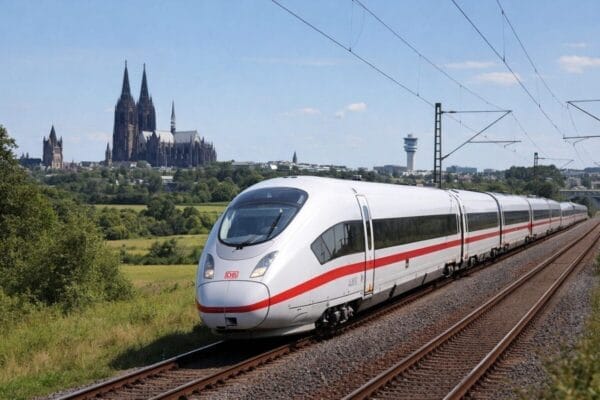
European travel is set to become faster and more sustainable with the launch of a new high-speed rail connection between Cologne in Germany and Brussels Airport in Belgium. Scheduled to begin operations in September 2026, the service will significantly reduce travel time between the two major transport hubs while offering passengers a more convenient cross-border travel option.
The train service will be operated by Deutsche Bahn and is designed to strengthen connectivity between Germany and Belgium while supporting Europe’s broader efforts to promote rail travel as a sustainable alternative to short-haul flights. Once operational, the route will allow passengers to travel between Cologne and Brussels Airport in approximately two hours.
The introduction of this rail link is expected to benefit both business and leisure travelers, providing a fast, comfortable, and environmentally friendly way to reach one of Europe’s busiest international airports.
Faster Cross-Border Travel Across Key European Cities
The new high-speed service will connect Cologne with Brussels Airport through several important cities along the route. Stops will include Aachen in Germany and Liège, Leuven, and Antwerp in Belgium, creating improved access for passengers traveling within the region.
By linking these cities directly to a major international airport, the train route will help simplify travel planning and reduce reliance on domestic flights. For many passengers, the rail service will offer a quicker and less stressful alternative to flying short distances.
Rail travel often eliminates the need for long airport security lines and early arrival times required for flights. Passengers can board trains more quickly and travel directly to city centers or airport terminals, saving valuable time during their journeys.
For commuters, tourists, and business travelers alike, the new connection is expected to make cross-border travel across Western Europe more efficient.
Integrated Travel with Rail and Air Connections
One of the most innovative aspects of the project is the integration between rail and air travel. The new train service will be linked with airline ticketing systems, allowing passengers to book a combined train and flight journey on a single reservation.
This concept, known as intermodal travel, is gaining popularity across Europe as transportation providers seek to offer seamless travel experiences that combine different modes of transport.
Passengers departing from Cologne will be able to travel by train directly to Brussels Airport and connect to long-haul international flights without needing separate bookings. The integrated ticketing system also offers protection for connecting journeys, ensuring that passengers are supported if delays occur.
Frequent travelers will also benefit from loyalty rewards programs connected to airline partners, allowing them to earn points when using both the train and flight services.
By simplifying transfers between rail and air networks, the new route aims to create a smoother and more efficient travel experience.
Strengthening Brussels Airport as an International Gateway
Brussels Airport serves as a major aviation hub in Europe, connecting passengers to more than 180 international destinations across multiple continents. The new high-speed rail link will strengthen the airport’s accessibility for travelers living in western Germany.
Passengers from Cologne and surrounding areas will gain direct access to Brussels Airport’s global flight network without needing to rely on connecting flights or long car journeys.
For international travelers, the improved rail connection will also make it easier to explore destinations across Belgium and Germany. Visitors arriving at Brussels Airport will be able to travel quickly to cities like Cologne or Aachen using the same rail corridor.
This expanded accessibility is expected to support tourism and economic cooperation between the two neighboring countries.
A Sustainable Alternative to Short-Haul Flights
Environmental sustainability is one of the key motivations behind the development of the Cologne–Brussels high-speed rail service. Rail travel produces significantly fewer carbon emissions compared with air travel, especially on short-distance routes.
European governments and transportation authorities have been encouraging travelers to choose trains over short flights whenever possible. High-speed rail networks are seen as an effective way to reduce congestion in airports and lower greenhouse gas emissions.
By offering a fast and reliable rail option between Cologne and Brussels Airport, the new service supports the European Union’s broader climate goals aimed at reducing transportation-related emissions.
The shift toward rail also helps reduce air traffic congestion and noise pollution, contributing to more sustainable urban environments.
Supporting Europe’s Growing Intermodal Transport Network
The Cologne–Brussels Airport rail link represents part of a larger transformation taking place across Europe’s transportation sector. Intermodal travel systems that combine trains, flights, and other transport services are becoming increasingly common.
These integrated networks allow passengers to move more easily across borders while reducing the need for multiple tickets or complicated transfers.
Rail operators, airlines, and airport authorities are increasingly collaborating to create seamless travel experiences that connect major transport hubs efficiently.
In the coming years, more cities across Europe are expected to adopt similar models, linking airports with high-speed rail networks that extend across multiple countries.
Such developments are seen as essential for supporting tourism growth, improving regional mobility, and creating a more sustainable transportation system.
Economic and Tourism Benefits for the Region
The new rail connection is expected to bring economic benefits to cities along the route by improving access for tourists and business travelers. Faster travel between Cologne and Brussels can encourage greater cultural exchange and commercial activity between Germany and Belgium.
Tourists visiting Brussels will find it easier to explore nearby German destinations, while travelers visiting Cologne will gain quick access to Belgium’s capital and its international airport.
Cities such as Aachen, Liège, Leuven, and Antwerp may also benefit from increased visitor numbers as the rail service improves accessibility throughout the corridor.
For the tourism industry, improved transportation infrastructure plays a vital role in attracting visitors and supporting regional development.
A New Era of European Rail Travel
The launch of the high-speed train between Cologne and Brussels Airport marks an important milestone in Europe’s evolving transportation landscape. By combining speed, sustainability, and seamless connections with international flights, the new service reflects the future direction of European travel.
Passengers will benefit from faster journeys, improved convenience, and environmentally friendly transport options.
As the project moves closer to its 2026 launch date, it represents a promising example of how rail and air travel can work together to create smarter and more efficient mobility across Europe.
For more travel news like this, keep reading Global Travel Wire