Cebu City is moving rapidly to elevate religious tourism as a central pillar of its long-term visitor strategy, transforming its centuries-old Christian landmarks into structured pilgrimage routes, cultural circuits and year-round heritage attractions. As the cradle of Christianity in Asia, the city is using its historical and spiritual legacy to strengthen its global tourism profile, deepen cultural engagement and diversify its visitor economy beyond coastal and leisure markets.
The initiative comes at a strategic time, as Cebu prepares to host a major regional tourism gathering under the ASEAN framework in January 2026. The event has accelerated logistical planning and boosted regional attention, but local officials emphasize that the religious tourism initiative extends beyond the summit. The goal is to convert faith-based travel into a sustainable segment that attracts visitors throughout the year and complements Cebu’s well-established beach resorts, diving destinations and festival culture.
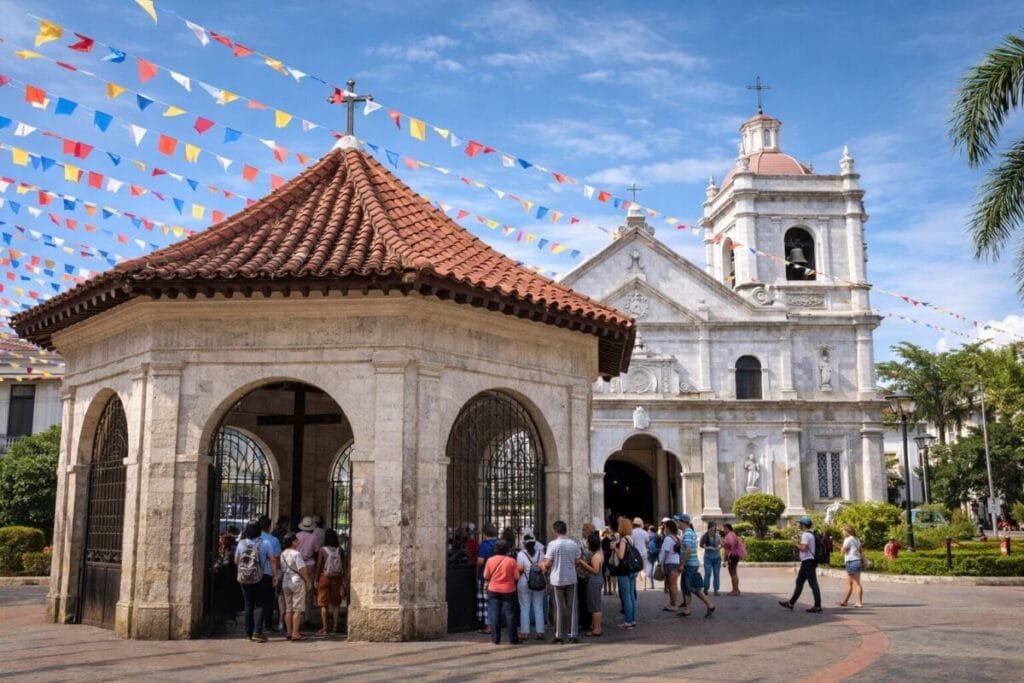
Cebu’s religious heritage holds deep significance not only for the Philippines but for the broader region. The arrival of Christianity in 1521, marked by the planting of Magellan’s Cross and the introduction of the Santo Niño image, set the city on a path that shaped centuries of religious and cultural development. Today, the Basilica Minore del Santo Niño remains a major pilgrimage site, drawing devotees from across the country and overseas, especially during the annual Sinulog festival. These landmark sites serve as natural anchors for a more expansive and curated tourism experience.
As part of the ASEAN tourism summit from January 28 to 30, 2026, delegates will be guided through a heritage-focused itinerary designed to showcase Cebu’s religious and historical landscape. These curated tours are expected to highlight how cultural preservation, tourism planning and community involvement can converge to create meaningful travel experiences. Unlike standard conference tours, the program places heritage interpretation at the forefront, encouraging deeper reflection on Cebu’s role in regional history.
The tour network extends beyond Cebu City, incorporating Lapu-Lapu and Mandaue as linked heritage nodes. This interconnected approach positions the metro area as a cohesive tourism corridor rather than a collection of isolated attractions. By broadening the geographic footprint, planners hope to encourage longer visitor stays, wider spending distribution and greater participation from local communities. For regional tourism officials, this model aligns with broader efforts to highlight cultural landscapes rather than singular attractions.
Delegates will visit an array of sites representing different eras of Cebu’s evolution, including Magellan’s Cross, the Basilica Minore del Santo Niño, the Cebu Metropolitan Cathedral, Fort San Pedro, Casa Gorordo, Patria de Cebu, the National Museum of the Philippines in Cebu and the Heritage of Cebu Monument in the Parian district. Each site contributes a chapter to Cebu’s narrative—from early Christianization and Spanish colonial fortification to civic development, artistic expression and modern heritage preservation.
The inclusion of museums and heritage houses alongside churches demonstrates a deliberate shift toward integrated cultural tourism. Rather than presenting religious monuments in isolation, Cebu is weaving faith into a broader story that examines how religion shaped society, architecture, urban life and identity. This approach allows the city to appeal to multiple traveler segments including pilgrims, cultural tourists, academics, history enthusiasts and educational groups.
Beyond the high-profile summit, Cebu tourism planners envision faith-based travel as a structurally resilient part of the visitor economy. Religious travelers tend to stay longer, return repeatedly and travel during non-peak seasons—characteristics that support more balanced tourism flows and reduce dependence on holiday surges. The sector also supports local livelihoods, generating jobs for guides, heritage interpreters, museum staff, small retailers and transportation services.
Infrastructure improvements are also underway. Signage upgrades, visitor information centers, improved pedestrian pathways and accessibility enhancements are being introduced near key historic sites. Authorities are coordinating closely with church institutions and heritage caretakers to ensure that increased visibility does not compromise cultural authenticity or religious reverence. The ASEAN-linked tours are expected to serve as a pilot for future programming, offering a template for scalable faith-based tourism.
A smaller familiarization tour on January 27 will precede the main summit. Temporary traffic adjustments and selective road closures have been announced to ensure smooth movement for international guests. Officials have stressed that disruptions will be minimal and are part of broader efforts to position Cebu as a globally competitive host city for cultural and event-driven tourism.
Cebu’s shift aligns with a broader global trend in which travelers are seeking experiences rooted in meaning, authenticity and personal connection. Faith-based tourism is one of the world’s fastest-growing niche travel segments, supported by rising demand for pilgrimage routes, heritage trails and spiritual retreats. Cebu’s blend of historic Christian landmarks, local devotion, preserved architecture and cultural storytelling gives it strong competitive advantages within this market.
While religious tourism is gaining prominence, it is not intended to replace Cebu’s established tourism pillars. Instead, it adds depth and diversity, complementing marine tourism, culinary travel, events, shopping and festivals. This multidimensional strategy also supports the Philippines’ national tourism efforts to promote culture and heritage as major travel motivators alongside sun-and-beach offerings.
As Cebu City prepares to welcome regional tourism leaders, the spotlight on its religious heritage signals both ambition and strategic foresight. By embracing its identity as the birthplace of Christianity in Asia and presenting that story with sensitivity and clarity, Cebu is positioning itself as a destination where faith, history and modern tourism planning move forward together—promising a richer, more resilient tourism future for the region.
For more travel news like this, keep reading Global Travel Wire