









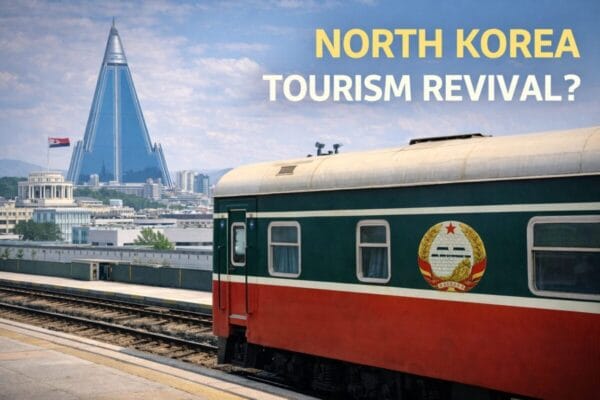
Passenger rail connections linking North Korea with China and Russia are gradually returning after years of suspension, raising expectations that tourism and cross-border travel in the region could soon see a revival. The reopening of key railway services represents one of the most significant transportation developments for North Korea since the country largely closed its borders during the global pandemic.
Rail services between Beijing and Pyongyang have resumed after more than six years of inactivity. The return of these trains marks a symbolic moment in regional travel, signaling a shift toward renewed connectivity between North Korea and some of its closest neighboring countries.
For decades, rail routes connecting North Korea with China and Russia have served as important travel corridors for diplomats, business travelers, and organized tourist groups. Their revival is widely viewed as a step toward rebuilding travel exchanges that had been halted for several years.
A Historic Railway Corridor Reopens
The railway connecting Beijing and Pyongyang has historically been one of the most important international transport routes for North Korea. This train route provides a direct link between the Chinese capital and the North Korean capital, passing through northeastern China before crossing the border.
Before its suspension in early 2020, the railway line was frequently used by tourists, business travelers, and officials traveling between the two countries. The pandemic forced the closure of many cross-border transport links, leaving North Korea with very limited international travel options.
With the trains now running again, the return of the Beijing–Pyongyang route represents an early sign that regional travel may gradually recover.
Rail travel remains particularly important for North Korea because it provides a controlled and structured way to manage international visitors. Trains allow authorities to monitor entry points more closely than other forms of travel, making them a preferred option for regulated tourism.
Passenger Travel Still Limited During Early Phase
Although passenger trains have returned to the tracks, access remains restricted during the initial reopening phase. Travelers currently allowed to use the service are mainly individuals involved in official business or those who have received formal invitations from North Korean institutions.
This controlled approach reflects the government’s cautious strategy toward reopening international travel. Authorities appear to be gradually restoring connections while maintaining strict oversight over who is permitted to enter the country.
Travel experts believe that broader tourism access could eventually follow if the early stages of the reopening proceed smoothly.
Observers are particularly watching major national celebrations that could potentially coincide with expanded travel opportunities. Historically, certain national events have been accompanied by increased tourism activity in North Korea.
Russia–North Korea Rail Tourism Plans Emerge
In addition to the Chinese route, new rail travel initiatives involving Russia are also drawing attention. A travel program based in Russia’s Far East region has introduced plans for a long-distance train journey connecting Moscow with Pyongyang.
The proposed journey would span thousands of kilometers across Eurasia and is expected to take around eight days to complete. The route would begin in Moscow and travel along major railway corridors before reaching North Korea.
For rail enthusiasts and adventure travelers, such a journey offers a rare opportunity to experience one of the world’s longest cross-continental rail trips.
However, participation in the initial tours is currently limited to Russian citizens. Travel organizers have restricted access to ensure that the program operates within existing diplomatic and travel frameworks.
This cautious rollout suggests that North Korea is prioritizing visitors from long-standing partner countries as it gradually reopens travel routes.
Tourism Potential and Cultural Curiosity
North Korea has long been viewed as one of the world’s most unusual travel destinations. Visitors who are able to enter the country typically participate in organized tours that include guided visits to major landmarks and cultural sites.
Popular attractions often include monumental architecture in Pyongyang, historical museums, large public squares, and scenic landscapes such as mountains and coastal areas.
Tourism in North Korea has traditionally been carefully structured, with visitors following organized itineraries supervised by local guides. Despite these restrictions, interest in visiting the country remains strong among travelers seeking rare cultural experiences.
The return of passenger rail connections could make travel logistics easier for tour companies organizing trips from neighboring countries.
Challenges in Reopening Tourism
While the reopening of railway routes represents progress, tourism in North Korea remains subject to strict controls and evolving regulations. Authorities are known to maintain tight oversight of visitor activities, including travel routes and photography.
Government officials are particularly sensitive about how foreign visitors share their travel experiences online. The widespread use of social media and digital platforms has raised concerns about uncontrolled images or videos being circulated internationally.
As a result, any future expansion of tourism is likely to include detailed guidelines regarding visitor conduct and digital documentation.
Tourism Development Projects Continue
Despite cautious border policies, North Korea has continued to invest in tourism infrastructure. One of the most ambitious projects is the development of the Wonsan–Kalma coastal tourism zone, a large resort area designed to attract international visitors.
The project includes hotels, beaches, entertainment facilities, and infrastructure aimed at creating a modern seaside tourism destination. Authorities have described the resort as a centerpiece of future tourism development.
If international travel gradually resumes, destinations like Wonsan could play a central role in North Korea’s strategy to attract foreign visitors and generate tourism revenue.
Regional Travel Outlook
The reopening of railway services from China and Russia represents an important step toward rebuilding cross-border travel networks in Northeast Asia. Rail transport has historically played a key role in connecting cities across the region, offering an alternative to air travel.
For now, passenger trains between neighboring countries and North Korea remain limited in scope. However, tourism analysts believe that these early steps could eventually lead to broader travel opportunities if conditions continue to improve.
Rail diplomacy between North Korea, China, and Russia demonstrates how transportation infrastructure can support diplomatic relations and cultural exchange.
As rail routes gradually return and tourism policies evolve, the region may witness a slow but steady revival of travel connections that had remained dormant for several years.
For more travel news like this, keep reading Global Travel Wire