
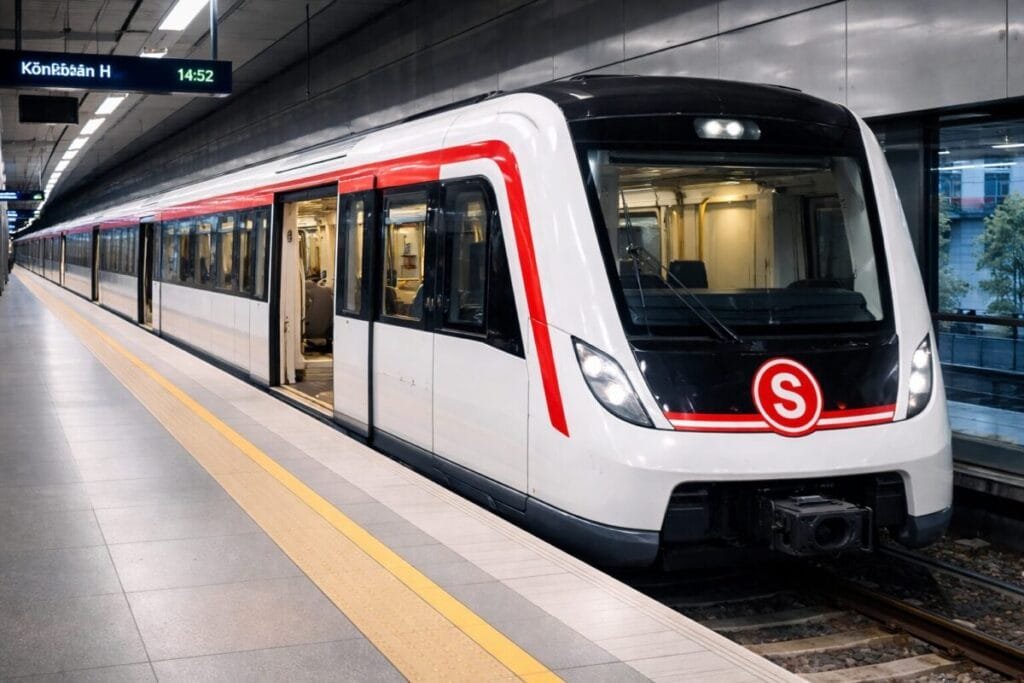
Copenhagen is preparing for a major transformation in urban transportation as new fully automated trains are set to reshape the city’s suburban rail network. A landmark collaboration between Danish State Railways and leading rail technology companies aims to introduce driverless train operations on the S-Bane system, marking a significant step forward in modern public transport innovation.
The ambitious project will deliver hundreds of new trainsets designed for unattended operation, representing one of Europe’s most advanced automated rail initiatives. With passenger services expected to begin in the early 2030s, the system promises to improve reliability, sustainability, and connectivity for both daily commuters and international visitors exploring Denmark’s capital.
A New Era of Fully Automated Rail Travel
The introduction of Grade of Automation 4 (GoA4) technology means the new trains will operate without onboard drivers, relying instead on sophisticated digital systems to manage navigation, speed control, and safety monitoring. Automation will allow trains to run more frequently and maintain precise schedules, reducing waiting times and enhancing overall passenger experience.
Advanced sensors, real-time monitoring tools, and centralized control systems will oversee operations, ensuring safety remains a top priority. These technologies are designed to detect obstacles, adjust performance automatically, and respond quickly to operational challenges, creating a smoother and more dependable travel environment.
For passengers, the shift toward automation will translate into more consistent service, improved punctuality, and a seamless commuting experience across the city’s extensive suburban rail network.
Transforming Mobility for Residents and Tourists
Copenhagen’s S-Bane network connects the city center with surrounding neighborhoods and regional destinations, making it a vital component of urban mobility. The introduction of automated trains is expected to increase capacity significantly, allowing more passengers to travel efficiently during peak hours while improving accessibility across the metropolitan area.
Tourists visiting Copenhagen will benefit from easier navigation and faster connections between key attractions. Efficient suburban rail links provide convenient access to iconic landmarks, waterfront districts, cultural sites, and nearby coastal areas. By simplifying transportation logistics, automated trains will enable visitors to explore beyond the historic center with greater confidence.
As travel demand continues to grow, the upgraded system will help accommodate rising passenger numbers while maintaining high service standards.
Sustainability at the Core of Innovation
Copenhagen has long been recognized as a leader in sustainable urban development, and the transition to automated trains aligns closely with the city’s environmental goals. Automated systems are designed to optimize energy consumption through efficient acceleration, braking, and scheduling, reducing overall carbon emissions compared to traditional rail operations.
By encouraging more travelers to choose public transport over private vehicles, the new system is expected to contribute to lower traffic congestion and improved air quality. Sustainable mobility remains a central focus for Copenhagen’s transportation strategy, reinforcing the city’s reputation as a pioneer in eco-friendly infrastructure.
Additionally, modern train designs prioritize lightweight materials and energy-efficient technologies, supporting long-term sustainability targets while delivering high performance.
Enhancing Reliability Through Digital Innovation
Automation introduces a new level of operational precision that traditional rail systems often struggle to achieve. Real-time data analysis allows the system to anticipate potential disruptions, optimize train spacing, and maintain consistent service intervals.
Centralized digital platforms will monitor train performance continuously, enabling faster response times and reducing downtime. These innovations help ensure a more reliable passenger experience, which is particularly important in busy urban networks where delays can quickly affect large numbers of travelers.
Improved reliability not only benefits commuters but also strengthens the overall attractiveness of rail travel as a preferred mode of transportation for visitors.
Boosting Tourism Through Improved Connectivity
Enhanced connectivity is expected to play a significant role in supporting Copenhagen’s tourism industry. With faster and more frequent services, visitors will have easier access to suburban destinations, coastal landscapes, and neighboring regions.
The improved network may encourage tourists to explore beyond traditional city-center attractions, spreading visitor activity more evenly and supporting local economies in surrounding areas. Seamless transport options also make it easier for travelers arriving by air or cruise to navigate the region efficiently.
By combining advanced technology with user-friendly design, Copenhagen aims to create a transportation system that reflects the expectations of modern travelers seeking convenience and sustainability.
Setting a Global Example for Smart Cities
Copenhagen’s automated train initiative highlights the growing role of smart technology in shaping future urban mobility. Cities around the world are exploring automation as a solution to increasing population density, environmental challenges, and rising transportation demand.
The S-Bane modernization project demonstrates how driverless technology can be integrated into existing infrastructure while maintaining high safety standards. As automation becomes more widespread, Copenhagen’s approach may serve as a model for other cities aiming to modernize their public transport systems.
Looking Ahead to the Future of Urban Mobility
The rollout of driverless trains represents more than just a technological upgrade; it signals a broader transformation in how cities approach transportation planning. By prioritizing efficiency, sustainability, and passenger comfort, Copenhagen is positioning itself at the forefront of next-generation mobility solutions.
Future developments may include deeper integration with other forms of public transport, such as buses, cycling infrastructure, and regional rail networks, creating a seamless multimodal system that supports both residents and visitors.
A New Chapter for Travel in Copenhagen
As automated trains prepare to enter service in the coming years, Copenhagen is poised to redefine the urban travel experience. Faster journeys, reduced environmental impact, and improved accessibility will shape how people move around the city, enhancing its appeal as both a modern metropolis and a leading sustainable tourism destination.
For travelers seeking innovation and convenience, the evolution of the S-Bane network promises to deliver a glimpse into the future of transportation—one where technology and sustainability work together to create smarter, more enjoyable journeys.
For more travel news like this, keep reading Global Travel Wire