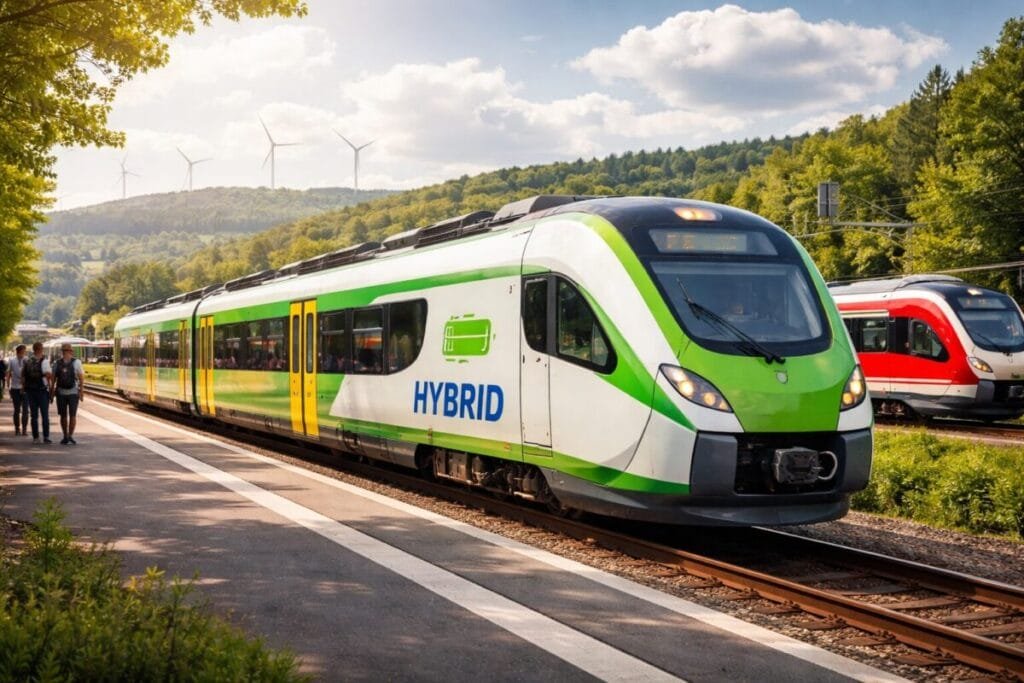
A major transformation is unfolding across Europe’s railways as the United Kingdom joins Denmark, Germany, France, Croatia, Italy, and Latvia in deploying battery and hybrid trains to phase out diesel-powered regional services. This transition is not only reshaping rail transport but also strengthening sustainable tourism and regional mobility across the continent.
For decades, diesel trains dominated routes where electrification was expensive or technically challenging. Now, advances in battery technology and hybrid propulsion systems are allowing rail operators to maintain services while drastically reducing emissions, fuel consumption, and noise levels. The result is a quieter, greener, and more comfortable journey for both residents and visitors exploring Europe by rail.
United Kingdom Leads with Rapid-Charging Innovation
The UK has taken a notable step forward with the introduction of a rapid-charging battery-powered train serving a short non-electrified line in west London. Designed to eliminate diesel operations on branch routes, the new system allows trains to recharge in only a few minutes at terminal stations, ensuring regular service without installing overhead wires along the entire route.
The trains, converted from older rolling stock, demonstrate how existing vehicles can be modernized rather than replaced, reducing costs and environmental impact. With capacity suitable for commuter demand and a smoother, quieter ride, passengers now experience emission-free travel while operational data gathered from the project may guide future deployment on similar lines nationwide.
Denmark Expands Battery Rail for Regional Connectivity
Denmark has also embraced battery-electric trains on regional routes connecting smaller towns and coastal communities. These trains operate on mixed networks where parts of the route are electrified while others are not, allowing seamless travel without diesel engines.
Passengers benefit from modern amenities such as Wi-Fi, digital information systems, and barrier-free boarding, making travel easier for families, tourists, and passengers with reduced mobility. The introduction of battery trains has also reduced noise levels in rural communities, enhancing the travel experience while supporting Denmark’s climate commitments.
Germany Emerges as Europe’s Battery Train Leader
Germany has become one of Europe’s largest adopters of battery-powered trains, deploying them across several federal states. These trains operate efficiently across partially electrified lines, eliminating diesel usage on long regional routes.
German battery trains offer passenger-friendly features including USB charging points, bicycle storage, accessible toilets, and low-floor entry. Their extended battery range allows them to travel significant distances without needing constant recharging, making them ideal for connecting scenic countryside destinations popular with domestic and international tourists.
The country has also invested in modular train designs that allow operators to adjust carriage numbers based on passenger demand, improving flexibility and efficiency.
France Converts Existing Trains for Cleaner Travel
France has chosen a slightly different approach by upgrading existing regional train fleets with battery systems instead of purchasing entirely new trains. This strategy enables dual-mode trains to run on electric lines where available and switch to battery power on non-electrified sections.
The approach significantly reduces carbon emissions while preserving passenger comfort. Travelers continue to enjoy familiar regional services but now benefit from quieter journeys and improved environmental performance. The project also demonstrates how infrastructure upgrades can be achieved without extensive fleet replacement.
Croatia Advances Domestic Green Rail Manufacturing
Croatia has entered the sustainable rail movement by introducing battery-powered trains built domestically. These trains serve regional lines connecting inland towns and coastal areas, improving transport while promoting local manufacturing expertise.
Modern interiors, accessible boarding, onboard connectivity, and fast-charging systems allow efficient operations without schedule disruptions. For tourists exploring Croatia beyond major cities, these trains offer a cleaner and more comfortable way to reach lesser-known destinations.
Italy Adopts Hybrid Transition Technology
Italy is deploying hybrid trains capable of running on electric, battery, and diesel power, serving as a transitional solution while full electrification or battery deployment expands. Battery support allows trains to reduce emissions in urban zones and operate more quietly in populated areas.
Passengers enjoy improved interiors, digital passenger information, and accessible boarding, supporting Italy’s tourism networks that link major cities with scenic rural regions and coastal communities.
Latvia and Future European Deployments
Looking ahead, Latvia has announced plans to introduce battery-electric trains on regional services, expanding sustainable rail coverage across the Baltic region. Additional networks in Italy are also preparing to deploy battery-powered trains on narrower regional lines.
These upcoming investments indicate that battery rail technology is becoming a long-term strategy rather than an experimental phase.
Benefits for Travelers and Tourism
For tourists and commuters alike, battery and hybrid trains deliver noticeable advantages. Reduced vibration and engine noise improve comfort, while modern onboard facilities enhance convenience for longer regional journeys. Stations and communities also benefit from lower pollution and quieter operations.
From a tourism perspective, sustainable rail travel aligns with growing demand for environmentally responsible transport options. Many travelers now prefer low-emission journeys, particularly when exploring natural landscapes and heritage destinations.
A New Era for European Rail Travel
Europe’s shift from diesel to battery and hybrid rail marks a significant milestone in sustainable transport. The combined efforts of the UK, Denmark, Germany, France, Croatia, Italy, and Latvia demonstrate how innovation and cooperation can modernize rail travel without sacrificing connectivity.
As more routes adopt cleaner technologies, travelers can expect greener journeys across Europe’s regional rail networks, reinforcing the continent’s position as a leader in sustainable tourism and transportation for years to come.
For more travel news like this, keep reading Global Travel Wire