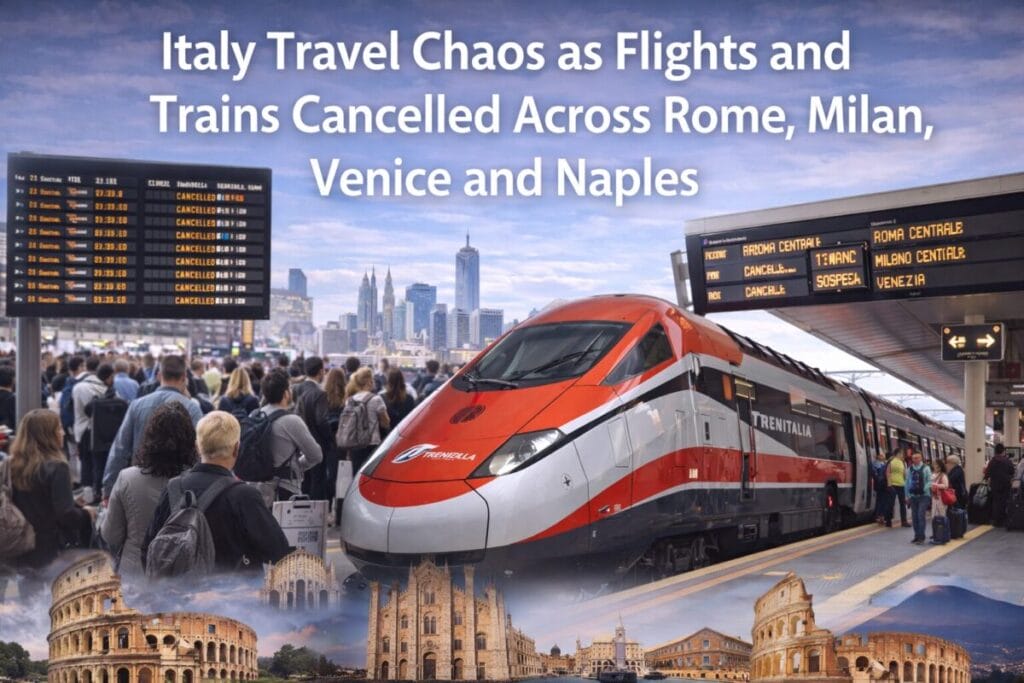
Italy’s tourism network is facing significant disruption as thousands of passengers are stranded across major cities including Rome, Milan, Venice, Bologna, and Naples. Widespread flight cancellations combined with interruptions to key rail services have created a ripple effect across the country’s busiest travel corridors, affecting both international visitors and domestic travelers during a crucial tourism period.
Major airports such as Rome Fiumicino, Milan Malpensa, Milan Linate, Venice Marco Polo, and Naples International have reported extensive cancellations and delays. The scale of the disruption has impacted tens of thousands of passengers, many of whom were traveling for holidays, business commitments, or connecting flights to other European destinations.
Heavy Impact on Air Travel
Italy’s national airline operations have been significantly affected, with a large percentage of scheduled flights cancelled. As a result, popular routes linking Italy to key European capitals and long-haul destinations have experienced abrupt changes. Travelers arriving from North America, Asia, and the Middle East have faced unexpected delays, while domestic passengers attempting to move between Italian cities have also been caught in the disruption.
Rome Fiumicino, the country’s primary international gateway, has experienced substantial operational pressure. The airport serves as a central hub for visitors heading to historic landmarks such as the Colosseum, Vatican City, and the Roman Forum. Delays here have had cascading consequences for travelers with tight itineraries.
In northern Italy, Milan Malpensa and Milan Linate have also been heavily affected. Milan’s status as a global fashion and business capital means consistent passenger flow year-round. Disruptions here impact not only leisure travelers but also corporate visitors and international event attendees.
Venice Marco Polo Airport, the entry point to the city’s canals and historic architecture, has seen cancellations affecting both short-haul European travelers and long-haul arrivals. Naples International Airport, serving southern Italy and acting as the gateway to the Amalfi Coast and Pompeii, has also reported significant schedule changes.
Rail Network Compounds the Challenge
Complicating the situation further, rail services between major cities such as Rome, Milan, Florence, and Venice have faced temporary suspensions. Italy’s high-speed rail system is a critical component of its tourism infrastructure, allowing visitors to move efficiently between cultural hubs.
With rail routes disrupted, travelers who planned to rely on trains as an alternative to flights have found themselves scrambling for replacement transport. The suspension of services along high-traffic corridors has placed additional pressure on road travel and private transportation options.
Italy’s rail network is widely regarded as one of Europe’s most efficient, linking major destinations within hours. When this system experiences interruptions, the consequences are felt immediately across the tourism ecosystem, from hotel bookings to guided tours.
Tourism Industry Faces Setback
The disruption comes at a sensitive time for Italy’s tourism sector. The country continues to experience strong visitor demand due to its cultural heritage, culinary appeal, and iconic destinations. Cities like Rome, Florence, Milan, Venice, and Naples consistently rank among Europe’s most visited locations.
Travel interruptions risk shortening visitor stays, forcing itinerary changes, and in some cases leading to missed reservations at museums, tours, and events. Attractions such as the Duomo in Milan, St. Mark’s Square in Venice, and archaeological sites near Naples rely heavily on steady tourist flows.
Local businesses, including hotels, restaurants, tour operators, and transport providers, may also feel the financial effects of sudden cancellations and no-shows. For regions dependent on seasonal tourism, even brief disruptions can influence overall performance.
Passenger Guidance and Recovery Efforts
Airlines and rail operators are working to accommodate affected travelers, offering rebooking options, refunds, or alternative routes where possible. However, the volume of impacted passengers has made immediate solutions challenging.
Travelers are advised to verify the status of their flights and train services before departing for airports or stations. Monitoring updates and maintaining flexibility in travel plans is essential during periods of operational instability.
Tourism authorities emphasize that such disruptions, while significant, are temporary. Italy’s transport infrastructure has historically demonstrated resilience and capacity to restore services quickly once underlying issues are resolved.
Broader Implications for European Travel
Italy serves as a key transit point within Europe, meaning that disruptions can extend beyond national borders. Travelers connecting through Rome or Milan to other European cities may face missed onward flights, affecting broader travel plans across the continent.
The situation highlights the importance of diversified transport options and contingency planning within modern tourism systems. As travel demand grows globally, maintaining reliable infrastructure becomes increasingly critical for sustaining visitor confidence.
Looking Ahead
While the current disruption presents immediate challenges, Italy’s long-term tourism outlook remains strong. The country’s global appeal, extensive infrastructure network, and commitment to service recovery suggest that normal operations will resume in due course.
Once flights and rail services are fully restored, pent-up demand may lead to a swift rebound in travel activity. Tourists remain eager to explore Italy’s historic sites, coastal landscapes, and vibrant cities.
For now, travelers are encouraged to remain informed, flexible, and proactive in managing their journeys. Despite the temporary chaos, Italy’s enduring charm and world-class attractions continue to make it one of the most sought-after destinations worldwide.
As services stabilize, the travel industry will likely focus on strengthening communication, improving contingency planning, and ensuring smoother coordination between air and rail networks to prevent similar disruptions in the future.
For more travel news like this, keep reading Global Travel Wire