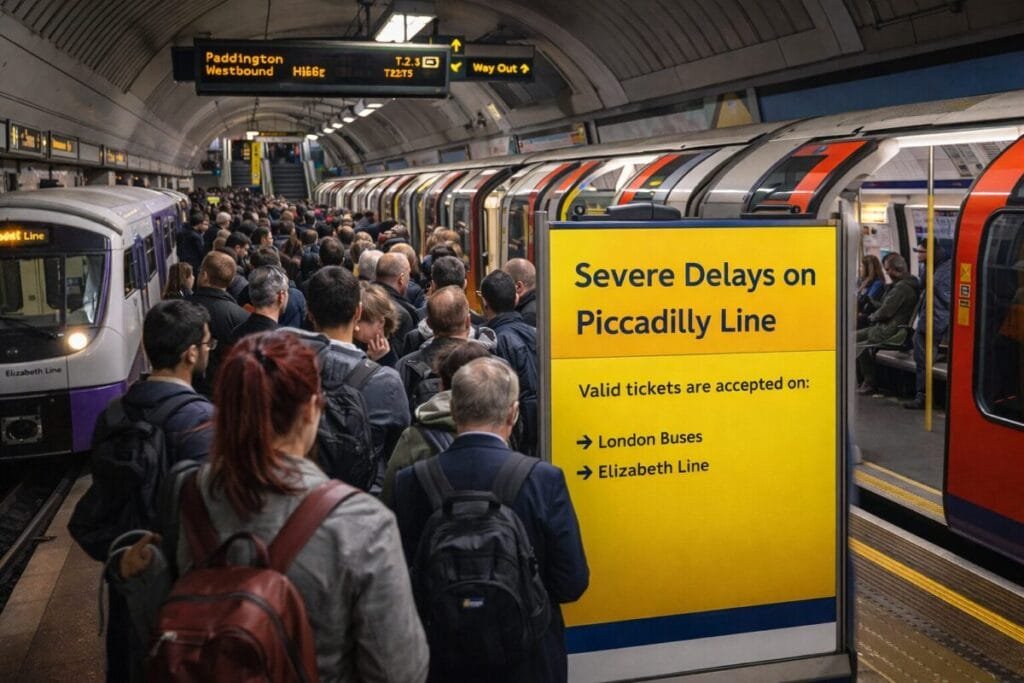
London experienced widespread travel disruption during rush hour as multiple incidents affected underground lines, rail services, road traffic, and river crossings across the city. Severe delays on the Piccadilly Line, one of the most important routes connecting central London with Heathrow Airport, created significant challenges for commuters, tourists, and business travelers attempting to reach key destinations.
The disruption unfolded during peak travel hours, leading to overcrowding at stations and forcing many passengers to quickly seek alternative routes. Travelers heading to Heathrow Airport were particularly impacted, with delays raising concerns about missed flights and disrupted travel itineraries.
Piccadilly Line Issues Create Airport Access Challenges
The Piccadilly Line plays a crucial role in connecting central London neighborhoods with Heathrow Airport terminals. Technical issues resulted in reduced service levels, causing major delays between Acton Town and Heathrow-bound routes. With trains running irregularly, passengers experienced extended waiting times and overcrowded platforms.
For international travelers and tourists, the Piccadilly Line is often the preferred transport option due to its direct access to airport terminals. The disruption forced many passengers to switch to alternative modes of transportation such as buses or the Elizabeth Line, which temporarily accepted valid tickets to help manage the situation.
Despite these measures, heavy passenger volumes led to congestion at alternative stations and transport hubs. Travel experts noted that even short-term disruptions on airport lines can have widespread ripple effects, particularly in a global city where millions rely on public transport daily.
Wider Rail Delays Add to Commuter Frustration
The transport problems were not limited to the Underground network. Rail services from London Waterloo toward destinations including Windsor, Weybridge, Farnham, and Reading also experienced delays. Reports indicated that operational issues and staffing complications contributed to service interruptions, resulting in delays of up to half an hour.
These delays affected both commuters and leisure travelers exploring destinations outside central London. Rail services are essential for connecting suburban areas and tourist attractions beyond the capital, and any disruption can quickly cascade across the wider network.
Passengers reported confusion regarding revised schedules and platform changes, highlighting the importance of real-time communication during periods of transport instability.
Road Traffic and Ferry Disruptions Intensify Travel Challenges
In addition to rail and underground issues, road traffic problems added further complications for travelers navigating the city. Congestion at Putney Bridge created long queues due to ongoing utility works, temporary traffic signals, and restricted lanes. Motorists faced extended delays, particularly during peak commuting hours.
Meanwhile, the Woolwich Ferry operated with reduced capacity after technical problems affected one of its vessels. The ferry serves as an important river crossing for both vehicles and pedestrians traveling across the Thames, and reduced operations resulted in longer waiting times at terminals.
The combination of underground disruptions, rail delays, road congestion, and ferry issues created a complex travel environment where alternative routes quickly became overcrowded.
Impact on Tourism and Business Travel
London’s transport network is a lifeline for both residents and visitors, and disruptions can significantly affect tourism experiences. Visitors arriving in or departing from Heathrow Airport rely heavily on efficient connections to reach hotels, attractions, and conference venues. Delays on the Piccadilly Line created uncertainty for many travelers with tightly scheduled plans.
Business travelers were also affected, with delayed journeys potentially impacting meetings, conferences, and corporate travel schedules. London’s reputation as a global business hub depends on reliable transport infrastructure, making smooth operations critical to maintaining traveler confidence.
Tourism professionals emphasize that transport reliability is one of the key factors shaping visitor satisfaction. Unexpected disruptions can influence perceptions of a destination, especially for first-time visitors unfamiliar with alternative routes.
Authorities Encourage Alternative Travel Options
Transport operators encouraged passengers to consider alternative routes during the disruption. The Elizabeth Line emerged as a major alternative for airport-bound travelers, offering faster connections between central London and Heathrow. Additional bus services were deployed to alleviate congestion, though capacity challenges remained during peak hours.
Travel experts advise passengers to allow extra time when navigating major cities, particularly during busy seasons or periods of infrastructure maintenance. Checking live updates, considering multiple transport options, and planning flexible itineraries can help reduce stress when unexpected delays occur.
Lessons for Urban Travel Resilience
The widespread disruption underscores the challenges faced by major urban transport systems. London’s extensive network serves millions of passengers daily, making even minor technical issues capable of triggering citywide impacts. Maintaining infrastructure, ensuring staffing reliability, and improving communication systems remain key priorities for transport authorities.
As cities continue to grow and tourism numbers increase, building resilience into transport networks is becoming increasingly important. Innovations such as digital passenger information systems, predictive maintenance technologies, and integrated travel planning platforms may help reduce future disruptions.
Travelers Urged to Stay Prepared
While disruptions are an inevitable part of operating large-scale transport systems, preparation can help travelers navigate unexpected challenges more effectively. Monitoring real-time travel updates, allowing extra journey time, and being open to alternative routes remain essential strategies.
Despite the day’s challenges, London’s transport network continues to offer multiple options for navigating the city, enabling travelers to reach their destinations even during periods of disruption. For tourists and commuters alike, staying informed and flexible remains the key to managing travel in one of the world’s busiest urban environments.
For more travel news like this, keep reading Global Travel Wire