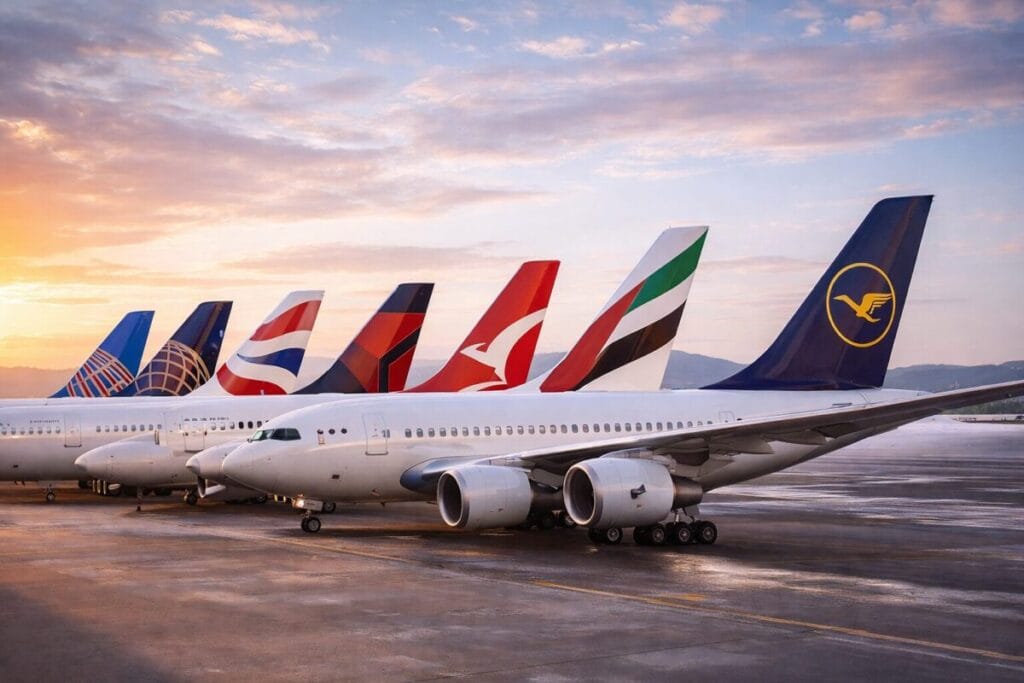
The world’s aviation and tourism industries are entering a new era as major global airlines expand their routes to France and Spain, two of Europe’s most visited destinations. United Airlines, British Airways, Air France, Delta Air Lines, Emirates, Qatar Airways, and Lufthansa are among the carriers increasing flights and capacity, responding to rapid growth in international travel demand. The result is a boost not only for the airlines themselves, but also for tourism economies, the hospitality sector, and wider business travel markets across Europe.
This strategic expansion reflects a broader shift in global travel behavior. With international tourism on a strong upward trajectory after years of uneven recovery, airlines are reshaping their networks to capture demand from leisure travelers, corporate groups, and long-haul tourists. France and Spain—already among the world’s top destinations—stand at the forefront of this transformation. Their cultural capitals, coastlines, gastronomy, and business hubs continue to attract millions, making them ideal targets for expanded air connectivity from North America, the Middle East, and Asia.
Airlines Respond to Travel Demand With New Connectivity
The surge in route expansion marks one of the most active periods of aviation development in recent years. Carriers are adding frequencies to major hubs such as Paris, Madrid, Barcelona, Marseille, and Seville, while increasing long-haul service between Europe and international gateways. Airlines like Delta Air Lines and United Airlines are boosting transatlantic routes, capitalizing on strong U.S. outbound demand for cultural tourism and Mediterranean holidays. Meanwhile, Gulf carriers including Emirates and Qatar Airways are offering additional services from Dubai and Doha, connecting Asia and the Middle East with Europe through premium aviation hubs.
This increase in route availability aligns with global trends showing that travelers are prioritizing international destinations with strong cultural value and high accessibility. For many passengers, seamless point-to-point service has become an expectation rather than a luxury, and airlines are stepping up to meet it. More direct flights reduce layovers, shorten journey times, and make weekend trips and short-haul vacations more practical than ever.
Aviation Growth Powers Tourism and Hospitality Sectors
The ripple effects of expanded airline connectivity extend far beyond the airport. Tourism authorities in Europe have long recognized that air access is a primary driver of visitor volume, and newly added flights can significantly influence seasonal travel patterns. France and Spain already rank among the most visited countries in the world, and the increased inbound traffic is set to stimulate local economies, cultural attractions, transportation services, and hospitality businesses.
Hotels across Paris, Barcelona, Madrid, and coastal resort regions are reporting higher bookings and longer stays as travelers combine cultural sightseeing with culinary tourism, events, beach holidays, or sporting activities. The hospitality sector is responding by enhancing guest experiences, expanding luxury offerings, modernizing mid-scale hotels, and increasing the availability of alternative lodging options that appeal to younger travelers and digital nomads.
Restaurants, museums, festivals, and entertainment venues are also benefiting from growing visitor numbers. Tourism boards in both countries have forecast continued upward growth throughout 2026, supported not only by aviation expansion but also by renewed interest in European cultural tourism, heritage travel, and gastronomic exploration.
Business Travel and Meetings Segment Rebounds
While leisure tourism drives much of the current momentum, business and corporate travel are also experiencing renewed demand. Airlines have reported increased bookings for premium cabins and flexible fares, indicating that corporate travelers are returning to international mobility for meetings, conferences, and industry events. Paris and Barcelona in particular remain strong convention markets, while Madrid continues to attract financial and diplomatic delegations from across Europe and beyond.
The meetings, incentives, conferences, and exhibitions (MICE) sector, which suffered significant disruption in earlier years, is now rebuilding its global calendar. Expanded flight options make it easier for international delegates to attend events, strengthening the competitive edge of European host cities.
Competitive Advantages and Industry Strategy
For the airlines, expanding European networks serves multiple strategic purposes: capturing leisure demand, strengthening alliances, and diversifying route portfolios. Carriers are no longer limiting their growth to major capitals; secondary cities are gaining prominence as travel tastes evolve. Tourism to historic regions, wine-producing areas, and coastal towns is increasing, and airlines are responding with new seasonal and year-round services.
Competition also enhances pricing, offering travelers more choices across cabin classes and fare types. Airlines are pairing expanded routes with investments in onboard services, loyalty programs, and passenger experience enhancements. The shift toward fuel-efficient aircraft, such as next-generation wide-bodies and long-range narrow-bodies, enables airlines to operate transatlantic and intercontinental flights more sustainably and profitably.
The Bigger Picture: A New Chapter for Global Tourism
The convergence of aviation growth and tourism momentum signals a new chapter for international travel. The increased connectivity to France and Spain demonstrates how airlines and destinations can mutually benefit when strategic expansion meets visitor demand. For travelers, the result is a more accessible, seamless, and enjoyable journey. For airlines, it means capturing new revenue streams in a competitive global landscape. And for tourism economies, it marks the beginning of a promising cycle of revitalization and economic uplift.
As 2026 unfolds, airlines and hospitality operators anticipate continued growth, fuelled by a traveler base eager to explore the world again—this time with more choices and better connectivity than ever before.
For more travel news like this, keep reading Global Travel Wire