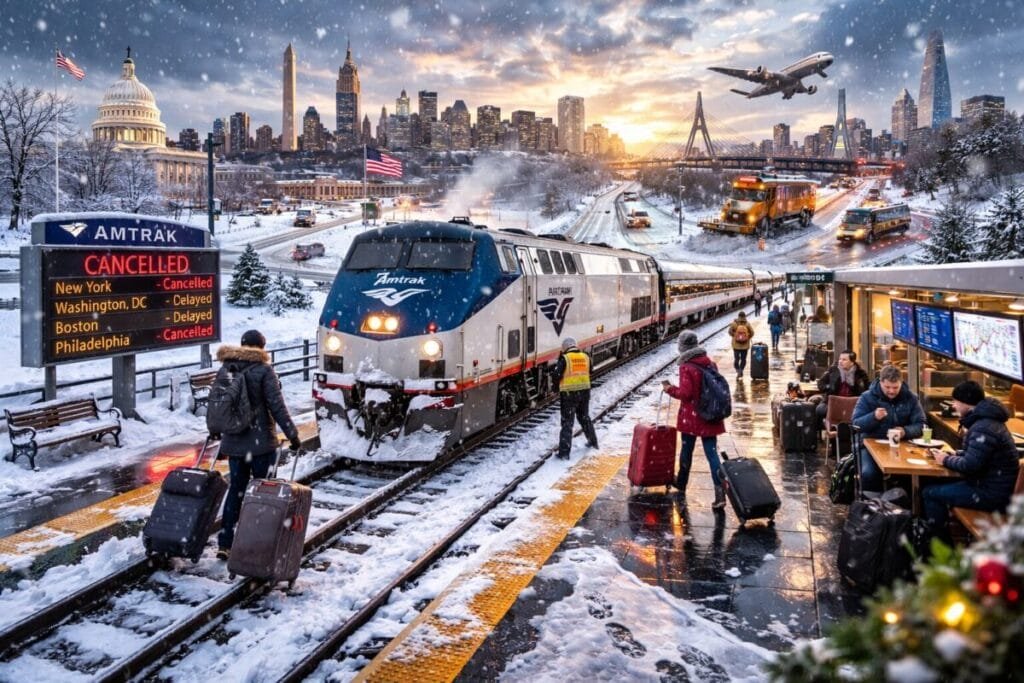
A powerful winter storm sweeping across the northeastern United States has forced widespread cancellations across the Amtrak rail network, affecting major travel hubs including New York City, Washington DC, Boston, Philadelphia, Chicago, Pittsburgh, and Cleveland. The disruptions come during one of the busiest travel periods of the season, impacting thousands of passengers and reshaping travel plans across the country.
Meteorologists have described the system as one of the most intense winter storms to affect the region in several years, bringing heavy snowfall, strong winds, and dangerous travel conditions. In response, rail operators implemented safety measures that included suspending multiple services and reducing schedules on heavily traveled routes.
The cancellations highlight the vulnerability of transportation networks during extreme weather events and underscore the importance of flexible travel planning for both domestic and international visitors.
Key Rail Routes Facing Major Cancellations
Among the hardest-hit services is the Northeast Regional line, one of Amtrak’s busiest routes connecting major cities along the East Coast. This corridor serves millions of passengers annually, linking Washington DC, Philadelphia, New York, and Boston through frequent daily departures.
Multiple Northeast Regional trains were canceled as conditions worsened, disrupting both commuter traffic and leisure travel. The route’s importance for business travelers and tourists means that even limited service interruptions can create ripple effects throughout the regional transportation system.
The high-speed Acela service, known for providing rapid connections between Washington DC and Boston, also faced significant cancellations. Because this service is widely used by travelers seeking fast city-to-city connections, its disruption affected time-sensitive trips, meetings, and vacation plans.
Additionally, Keystone Service trains connecting Harrisburg, Philadelphia, and New York were suspended during the storm’s peak, further limiting options for travelers moving within the Northeast corridor.
Impact on Tourism Across Major US Cities
The cancellations have had immediate consequences for tourism across several major destinations. New York City, Washington DC, and Boston typically rely heavily on rail travel as a convenient entry point for visitors arriving from nearby regions.
Travelers planning visits to popular attractions such as museums, historic sites, theaters, and cultural districts have been forced to adjust itineraries. Some passengers arriving from international flights also experienced challenges reaching their final destinations due to disrupted rail connections.
Hotels in key cities reported an increase in last-minute bookings as stranded travelers sought accommodation while waiting for services to resume. Restaurants, entertainment venues, and local tour operators have also experienced fluctuating visitor patterns as travel schedules shifted.
While severe weather events often lead to short-term disruptions, tourism officials note that cities in the Northeast remain resilient, with businesses quickly adapting to unexpected changes in visitor flows.
Passenger Options and Travel Flexibility
Rail operators have encouraged affected passengers to monitor updates through official channels and to explore flexible options such as rebooking or refunds. Many travelers are choosing to adjust travel dates rather than cancel trips altogether, reflecting ongoing demand for both leisure and business travel.
For those needing to continue their journeys during the storm, alternative transportation options such as intercity buses and flights have seen increased demand. However, weather conditions have also affected road and air travel, creating challenges across multiple modes of transportation.
Experts recommend that travelers monitor weather forecasts closely during winter months, especially in regions prone to heavy snowfall. Building extra time into travel plans and purchasing flexible tickets can help minimize stress during unpredictable conditions.
Wider Effects on Regional and Long-Distance Travel
While the storm’s primary impact has been felt in the Northeast, disruptions have extended to long-distance routes connecting the region with other parts of the United States. Passengers traveling between the Midwest and East Coast experienced delays as incoming trains arrived late or were rerouted.
Travelers connecting to flights from major hubs like New York or Washington DC also faced complications, highlighting the interconnected nature of transportation networks. When rail services slow down or stop entirely, delays often cascade across other systems, including airlines and local transit.
The situation illustrates how extreme weather events can create a chain reaction across national infrastructure, affecting not only commuters but also international tourists navigating multi-leg journeys.
Winter Weather Challenges and Infrastructure Preparedness
Severe winter weather is not uncommon in the Northeast, but the scale of this storm has renewed conversations about infrastructure resilience and contingency planning. Rail operators continue to invest in equipment upgrades, improved scheduling strategies, and advanced monitoring systems to reduce disruptions during extreme conditions.
Despite technological improvements, safety remains the primary priority, leading to proactive service reductions when conditions become hazardous. While cancellations are inconvenient, they are often necessary to protect passengers and staff.
Transportation planners emphasize the importance of collaboration between rail services, local governments, and weather agencies to ensure accurate communication and efficient response strategies during severe storms.
Outlook for Travelers in the Coming Days
As crews work to clear tracks and restore normal operations, gradual service recovery is expected. However, travelers are advised to remain flexible and prepared for ongoing adjustments as weather conditions evolve.
Tourism experts believe that while short-term disruptions may affect travel plans, long-term demand for rail travel in the Northeast remains strong. The region’s dense network of cities and cultural attractions continues to make train travel a popular and convenient option for visitors.
Navigating Winter Travel in the United States
The recent storm serves as a reminder that winter travel requires preparation and adaptability. For tourists planning trips to cities like New York, Boston, or Washington DC during colder months, monitoring transportation updates and maintaining flexible schedules can make a significant difference.
Despite the temporary challenges, the Northeast’s tourism industry is expected to rebound quickly once services resume. Travelers eager to explore the region’s historic landmarks, cultural experiences, and seasonal attractions are likely to return as normal operations are restored.
With infrastructure improvements ongoing and increased emphasis on traveler communication, rail operators aim to minimize future disruptions while ensuring safe and reliable journeys for passengers across the United States.
For more travel news like this, keep reading Global Travel Wire