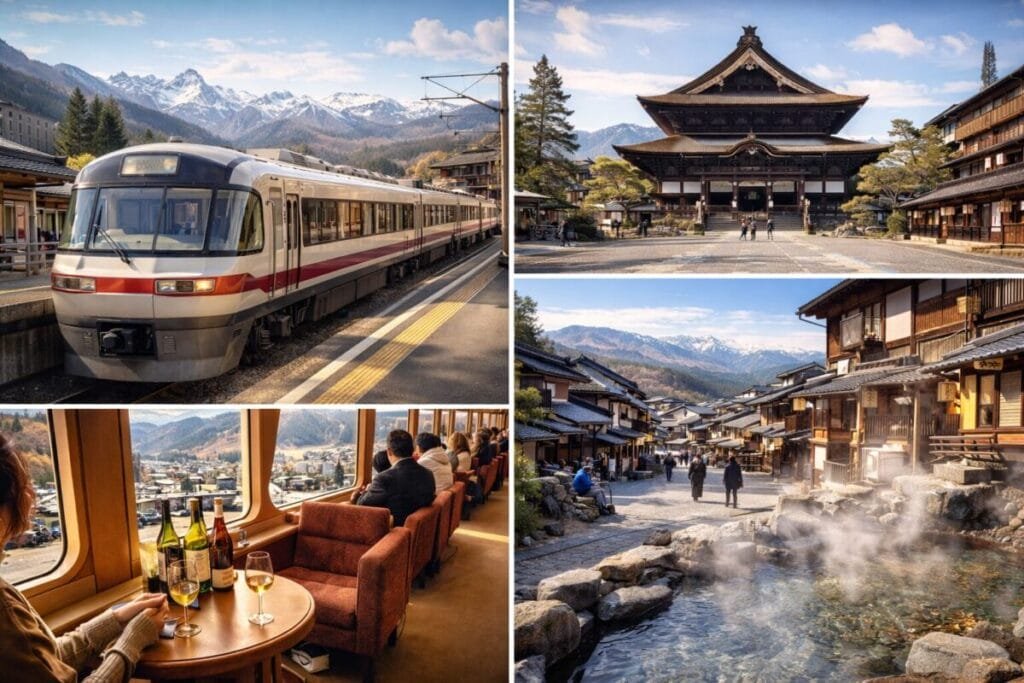
A growing number of travelers are rediscovering Japan through slow travel experiences that emphasize culture, wellness, and scenic exploration rather than fast-paced sightseeing. Nagano Prefecture, located in the heart of the Japanese Alps, has emerged as a standout destination for this trend, offering a unique journey that combines spiritual heritage, regional wine culture, and traditional hot spring towns.
Just a short high-speed rail journey from Tokyo, Nagano provides visitors with an immersive experience centered around the Shinshu region’s landscapes and traditions. The highlight of this route is a nostalgic sightseeing train connecting Nagano Station with Yudanaka Onsen, creating an unhurried travel experience designed to showcase local flavors and mountain scenery.
A Spiritual Starting Point at Zenkoji Temple
Many visitors begin their Nagano journey at Zenkoji Temple, one of Japan’s most revered Buddhist landmarks. With a history spanning more than a millennium, the temple attracts both religious pilgrims and cultural tourists seeking insight into Japan’s spiritual traditions.
The temple complex features impressive wooden architecture and historic gates that reflect centuries of craftsmanship. The lively approach to the temple, lined with traditional shops and local eateries, allows travelers to experience the atmosphere of an ancient pilgrimage route. Seasonal variations add to its appeal, as winter snow and early spring air create a calm, reflective environment that contrasts sharply with the energy of Tokyo.
Tourism experts note that combining spiritual sites with modern travel experiences has become increasingly popular, particularly among visitors seeking meaningful cultural immersion rather than purely urban attractions.
Scenic Wine Train Highlights Regional Culture
After exploring Nagano’s cultural landmarks, travelers can continue their journey aboard a retro-style sightseeing train designed to celebrate the region’s winemaking heritage. The route between Nagano and Yudanaka passes through orchards, rural villages, and mountainous terrain, offering panoramic views that encourage passengers to slow down and enjoy the journey.
The train features large windows and comfortable seating arrangements, allowing visitors to relax while sampling wines produced in northern Shinshu. The experience reflects a broader trend toward combining transportation with gastronomy, turning travel itself into a curated cultural event.
Japan’s regional wine industry has grown steadily in recent years, with Nagano gaining recognition for its cool-climate varieties. By integrating local wines into the rail experience, tourism operators aim to support regional producers while enhancing the visitor experience.
Landscapes That Encourage Mindful Exploration
Unlike high-speed rail journeys that prioritize efficiency, this sightseeing train embraces a slower rhythm. Passengers are encouraged to appreciate the natural surroundings, from alpine peaks and river valleys to farmland shaped by generations of local cultivation.
Travel analysts highlight that slow travel has gained momentum globally as visitors seek more authentic and environmentally conscious ways to explore destinations. Scenic rail journeys provide an ideal format for this approach, offering low-impact transportation while showcasing regional identity.
The Shinshu landscape, known for its seasonal beauty, delivers a constantly changing backdrop. Snow-covered mountains in winter transition to lush greenery in spring and vibrant foliage in autumn, ensuring that the journey remains appealing throughout the year.
Wellness and Relaxation at Yudanaka Onsen
The train journey concludes at Yudanaka, a historic hot spring area long associated with relaxation and rejuvenation. Onsen culture is deeply rooted in Japanese tradition, and the mineral-rich waters of the region are believed to offer therapeutic benefits such as muscle relaxation and stress relief.
Visitors can choose between day-use bath facilities or traditional ryokan accommodations, where overnight stays often include seasonal meals prepared with local ingredients. Experiencing an onsen is considered an essential part of Japanese travel, providing a moment of calm and connection with nature.
Travelers unfamiliar with onsen customs are encouraged to learn basic etiquette beforehand, including bathing practices and communal rules, to ensure a respectful and enjoyable experience.
Historic Onsen Towns Offer Timeless Atmosphere
Beyond Yudanaka, nearby hot spring towns such as Shibu Onsen and Kakuma Onsen present a glimpse into Japan’s past. Narrow streets, wooden inns, and lantern-lit pathways create a nostalgic ambiance that appeals to visitors seeking authenticity.
Shibu Onsen is particularly known for its traditional bathhouses, where guests staying at local inns can enjoy multiple public baths as part of their stay. Kakuma Onsen provides a quieter alternative, offering peaceful surroundings ideal for travelers looking to escape crowded tourist hubs.
These destinations highlight the enduring appeal of small-scale, heritage-focused tourism experiences that emphasize relaxation over rapid sightseeing.
Easy Access Enhances Tourism Appeal
One of Nagano’s strongest advantages is its accessibility. The high-speed rail network connects Tokyo to Nagano in roughly ninety minutes, making it possible for visitors to enjoy an alpine escape without extensive travel time.
Tourism planners see this convenience as a key factor driving interest in the region. As Japan promotes regional tourism to reduce overcrowding in major cities, destinations like Nagano are benefiting from increased attention.
A New Vision for Japan Travel
Nagano’s combination of spiritual heritage, scenic rail journeys, and wellness-focused experiences represents a broader shift in Japan’s tourism landscape. Rather than focusing solely on famous metropolitan attractions, travelers are increasingly exploring regional destinations that offer authenticity and tranquility.
By blending cultural discovery with slow travel principles, the Shinshu rail and onsen route demonstrates how transportation can become part of the destination itself. For travelers seeking a balanced journey that combines relaxation, gastronomy, and cultural depth, Nagano’s alpine experience offers a compelling alternative to traditional travel itineraries.
For more travel news like this, keep reading Global Travel Wire