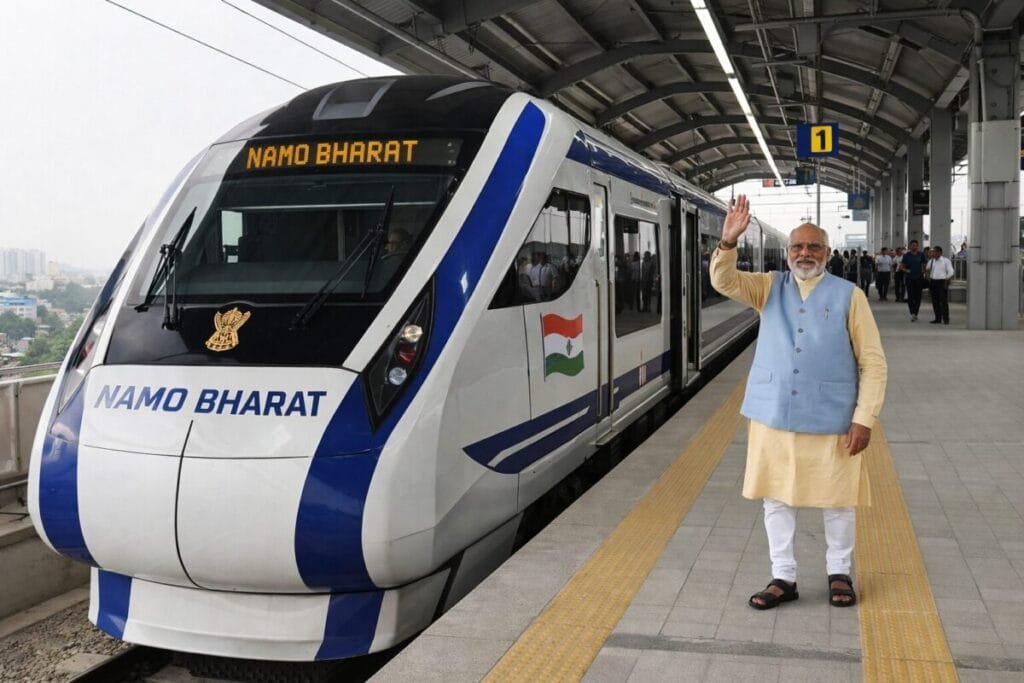
India has entered a new era of regional transportation with the launch of the Namo Bharat train, a high-speed regional rapid transit system designed to enhance connectivity between Delhi and Meerut. The project represents one of the most ambitious rail infrastructure developments in the country, aimed at reshaping daily commuting patterns, supporting sustainable mobility, and improving economic integration across the National Capital Region.
Developed as part of the Regional Rapid Transit System (RRTS), the Delhi-Meerut corridor is envisioned as a modern transport solution that bridges the gap between metro rail services and long-distance intercity trains. By delivering fast, reliable, and comfortable travel between major urban centers and satellite towns, the system is expected to transform how millions of people move across the region.
High-Speed Engineering and Advanced Infrastructure
The Namo Bharat train stands out for its impressive speed capabilities, designed to reach top speeds of up to 180 kilometers per hour while maintaining high operational speeds for daily service. This allows passengers to significantly reduce travel time compared to traditional rail or road options.
The corridor’s infrastructure incorporates advanced engineering solutions tailored for high-speed operation. Ballastless tracks provide stability and durability, reducing maintenance needs while ensuring smooth rides. Elevated sections, underground tunnels, and modern stations have been integrated into the design to accommodate the diverse landscape between Delhi and Meerut.
A key aspect of the project is its focus on domestic manufacturing and technological self-reliance. Many components of the train and supporting infrastructure were produced within India, contributing to the country’s broader goal of strengthening local manufacturing capabilities and reducing dependence on imports.
Passenger Comfort Designed for Modern Travel
Passenger experience has been a central priority in the development of the Namo Bharat system. The trains feature climate-controlled interiors designed to handle North India’s extreme seasonal temperatures. Ergonomic seating arrangements provide enhanced comfort for commuters traveling longer distances, while spacious interiors create a more relaxed travel environment.
Large panoramic windows allow passengers to enjoy views of the surrounding landscape, transforming daily commutes into a more pleasant experience. Modern amenities such as onboard Wi-Fi connectivity, mobile charging points, and dedicated luggage spaces reflect the expectations of contemporary travelers who rely heavily on digital connectivity.
The inclusion of both standard and premium seating options ensures that the service caters to a wide range of passengers, from regular commuters to business travelers seeking additional comfort.
Advanced Safety Systems and Smart Technology
Safety remains a cornerstone of the RRTS design. The system uses cutting-edge signaling technology, including automated train control systems that enhance operational accuracy and reduce the risk of human error. Real-time monitoring from centralized control centers ensures that any operational issues can be addressed quickly.
Stations are equipped with platform screen doors, which improve safety by preventing accidental access to tracks while maintaining efficient boarding processes. Additional safety features include automated braking systems, surveillance infrastructure, and modern communication networks that keep passengers informed throughout their journey.
Digital ticketing options further streamline the travel experience, allowing passengers to use QR codes or mobility cards for seamless entry and exit. These systems help reduce waiting times and improve overall efficiency during peak hours.
Inclusive and Accessible Public Transport
Inclusivity has been a key focus in the design of the Namo Bharat train and its stations. Dedicated areas for wheelchair users, tactile pathways for visually impaired passengers, and clear signage contribute to a more accessible travel environment.
High-capacity lifts and escalators enable smooth movement through stations, particularly during busy commuting periods. The system’s integration with existing metro lines, buses, and other transport modes creates a cohesive mobility network that simplifies transfers and encourages public transport usage.
Additionally, specific coaches have been designated to support safe travel for women, reflecting broader efforts to create gender-inclusive transport infrastructure. Premium coaches offer upgraded amenities such as wider seats and enhanced onboard services, providing flexible travel options for different passenger needs.
Economic Growth and Environmental Benefits
The Delhi-Meerut RRTS corridor is expected to deliver significant economic advantages by improving accessibility to smaller cities and emerging business hubs. Enhanced connectivity can attract investment, boost real estate development, and create new employment opportunities along the route.
From an environmental perspective, the high-speed rail system supports a shift away from private vehicles toward mass transit, reducing road congestion and lowering emissions. By encouraging commuters to choose rail over car travel, the project contributes to cleaner air and more sustainable urban growth.
Urban planners view the system as a key component in addressing traffic challenges within the National Capital Region, where population growth has placed increasing pressure on infrastructure.
Future Expansion and Long-Term Vision
The Delhi-Meerut line represents only the first phase of a broader regional network planned to connect additional cities across northern India. Future corridors are expected to extend rapid transit links to areas such as Panipat, Alwar, and Rohtak, forming an interconnected high-speed network that enhances regional mobility.
This long-term vision aims to create a balanced economic ecosystem where residents can live in smaller towns while maintaining easy access to employment opportunities in major urban centers. Improved connectivity also supports tourism by making nearby destinations more accessible for day trips and weekend travel.
Redefining Regional Travel in India
The introduction of the Namo Bharat train marks a milestone in India’s transportation history, combining speed, sustainability, and modern design into a single integrated system. By bridging the gap between traditional railways and urban metro networks, the RRTS offers a glimpse into the future of regional mobility.
As the network expands and more passengers experience the benefits of high-speed regional travel, the Delhi-Meerut corridor is expected to serve as a blueprint for similar projects across the country. With its focus on innovation, inclusivity, and environmental responsibility, the Namo Bharat initiative demonstrates how modern rail infrastructure can reshape urban landscapes and redefine the way people travel.
For more travel news like this, keep reading Global Travel Wire