



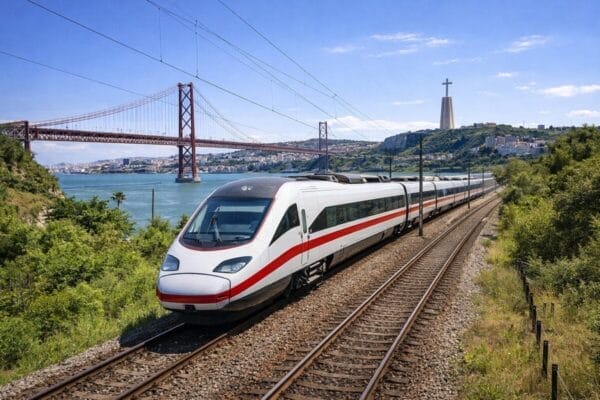
Portugal is preparing for a new era of transportation as the country advances plans for a modern high-speed rail network designed to connect its major cities more efficiently than ever before. The ambitious project aims to link Lisbon, Porto, and Coimbra through a fast, environmentally friendly rail system that will dramatically reduce travel times while strengthening tourism and economic development.
As global travelers increasingly seek sustainable transportation options, Portugal’s investment in high-speed rail reflects a broader shift toward greener mobility across Europe. The new rail corridor will not only transform domestic travel but will also position the country as a key link within the wider European rail network.
A Major Leap for Portugal’s Transport Infrastructure
The centerpiece of Portugal’s rail modernization is the Lisbon–Porto high-speed corridor. Spanning approximately 300 kilometers, the new railway line will connect the nation’s two largest cities with trains capable of traveling at significantly higher speeds than conventional rail services.
Currently, journeys between Lisbon and Porto typically take nearly three hours by road or standard train. Once the new high-speed line becomes operational, travel time is expected to drop to around one hour and fifteen minutes, making rail travel the fastest and most convenient option for passengers.
The project is being implemented in stages, with the first section scheduled for completion later in the decade. Along the route, cities such as Coimbra and Leiria will benefit from upgraded stations and improved rail infrastructure, creating new opportunities for both tourism and regional development.
Enhancing Sustainable Transportation
Portugal’s high-speed rail initiative aligns closely with national and European climate goals aimed at reducing carbon emissions from transportation. Rail travel is widely considered one of the most environmentally efficient modes of long-distance transport, producing significantly fewer emissions than cars or short-haul flights.
Currently, air travel between Lisbon and Porto remains a common choice for business travelers. However, the introduction of a high-speed rail alternative is expected to encourage many passengers to switch to trains, which are powered by electric energy and designed with modern energy-efficient technology.
This shift toward electrified rail travel will help Portugal reduce its environmental footprint while supporting its long-term sustainability strategy. By promoting rail as a primary mode of domestic transportation, the country aims to decrease road congestion, lower fuel consumption, and reduce greenhouse gas emissions.
Opening New Opportunities for Tourism
Portugal is already one of Europe’s most attractive travel destinations, drawing visitors with its historic cities, coastal landscapes, and rich cultural traditions. The high-speed rail network is expected to make these attractions even more accessible to international travelers.
Lisbon, the nation’s capital, is famous for its historic neighborhoods, iconic yellow trams, and vibrant cultural scene. Porto, located in the north, is known for its stunning riverside architecture, renowned wine heritage, and UNESCO-listed historic center.
By significantly reducing travel times between these cities, the high-speed rail system will make it easier for tourists to explore multiple destinations during a single trip.
Travelers arriving in Lisbon will be able to visit Porto in just over an hour, creating more flexible travel itineraries and encouraging longer stays within the country.
Connecting Travelers to Hidden Gems
Beyond Portugal’s major urban centers, the new rail corridor will also open doors to smaller destinations that are often overlooked by international tourists.
Cities like Coimbra, home to one of Europe’s oldest universities, will become more accessible thanks to improved transportation links. Known for its medieval architecture and vibrant student culture, Coimbra offers visitors a unique blend of history and modern energy.
Other regions along the route may also benefit from increased visitor numbers. Scenic areas such as the Douro Valley, famous for its vineyards and river landscapes, could see rising interest as travelers gain easier access through nearby rail stations.
Improved connectivity may also boost tourism in central Portugal, where charming towns, historic monasteries, and coastal landscapes offer authentic travel experiences beyond the country’s most famous cities.
Economic Growth and Regional Development
The benefits of the high-speed rail project extend far beyond tourism. Infrastructure improvements are expected to stimulate economic activity across multiple sectors, including construction, hospitality, retail, and transportation services.
Faster connections between cities will encourage business travel and collaboration, making it easier for companies to operate across different regions of the country.
Smaller cities along the rail route may also experience increased investment as improved accessibility attracts new businesses and tourism ventures.
The development of modern railway stations will further enhance urban areas, often serving as hubs for commercial activity, public transport connections, and urban regeneration projects.
Integration with Europe’s Rail Network
Portugal’s high-speed rail plans are part of a broader effort to strengthen cross-border connections within the Iberian Peninsula and across Europe.
Future rail links between Lisbon and Madrid are expected to significantly reduce travel time between the Portuguese and Spanish capitals. Once completed, these routes will provide an attractive alternative to air travel while supporting the development of the Trans-European Transport Network.
Improved international rail connectivity will make it easier for tourists and business travelers to move between Portugal and neighboring countries, strengthening economic cooperation and tourism flows across the region.
Challenges and Long-Term Vision
Large-scale infrastructure projects inevitably present challenges, and Portugal’s high-speed rail network is no exception. Construction costs, engineering complexities, and logistical planning all require careful coordination.
However, strong financial support from both national authorities and European funding programs has helped move the project forward. The phased construction approach allows progress to be made gradually while delivering early benefits as individual sections are completed.
As each stage of the network becomes operational, passengers will begin to experience faster travel times and improved mobility across the country.
A New Chapter for Travel in Portugal
Portugal’s high-speed rail network represents a transformative step toward modern, sustainable transportation. By connecting Lisbon, Porto, and Coimbra through a fast and efficient rail system, the country is creating a new travel experience for residents and visitors alike.
The project not only improves mobility but also strengthens Portugal’s position as a forward-thinking destination that values sustainability, innovation, and connectivity.
As the rail network expands in the coming years, travelers will gain faster access to Portugal’s cultural treasures, scenic landscapes, and historic cities—making it easier than ever to explore the country while embracing environmentally responsible travel.
With high-speed rail at the heart of its transportation future, Portugal is preparing to redefine how people move, travel, and discover the beauty of the Iberian Peninsula.
For more travel news like this, keep reading Global Travel Wire