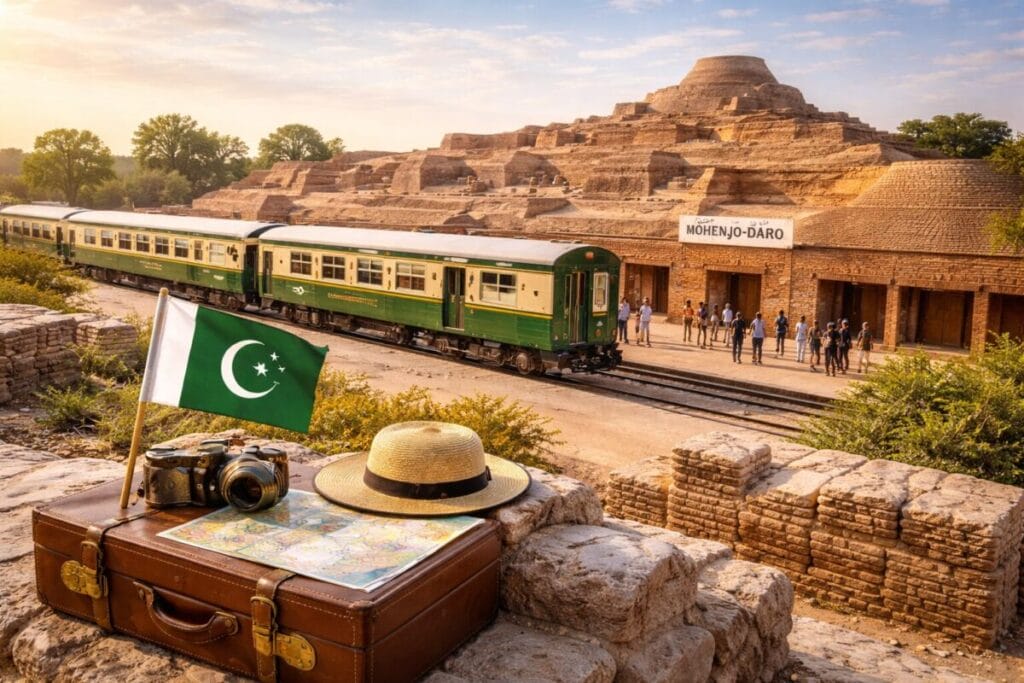
Sindh has taken a significant step toward reviving heritage tourism with the launch of the Special Mohenjo-Daro Train Safari, an initiative designed to reconnect travelers with one of the world’s oldest civilizations. The project reflects a renewed commitment by the provincial government to highlight Sindh’s historical legacy while offering a comfortable and immersive travel experience that blends culture, history, and scenic exploration.
The inaugural journey, which departed from Karachi on a Saturday morning, marked a milestone for tourism in the province. It brought together history enthusiasts, families, and culture seekers eager to explore the ancient city of Mohenjo-Daro, a globally renowned archaeological site that continues to intrigue scholars and visitors alike. By introducing a dedicated heritage train, Sindh is positioning itself as a key destination for cultural tourism in the region.
A new chapter for heritage tourism in Sindh
The Special Mohenjo-Daro Train Safari is part of a broader effort to reposition Sindh as a hub for historical and cultural travel. The province is home to thousands of years of history, with archaeological treasures linked to the Indus Valley Civilisation, one of the earliest urban societies in the world. Mohenjo-Daro stands at the heart of this legacy, representing advanced urban planning, engineering, and social organization dating back over four millennia.
Through this initiative, the provincial government aims to attract both domestic and international tourists by offering a structured, engaging, and accessible way to visit these ancient sites. The safari model brings heritage closer to modern travelers by combining transportation, accommodation, guided tours, and hospitality into a single, well-organized package.
A scenic and comfortable rail journey
The first safari journey carried more than 100 passengers from Karachi to Mohenjo-Daro, traveling through Sehwan and passing notable towns such as Rohri, Dadu, and Larkana. The approximately 14-hour journey was designed not only as a means of transport but as an experience in itself, allowing travelers to witness the diverse landscapes and cultural rhythms of rural Sindh.
The train was equipped with modern facilities to ensure passenger comfort throughout the trip. Quality meals, clean accommodation arrangements, and onboard services transformed the long-distance journey into a relaxing and enjoyable experience. By prioritizing comfort, the initiative demonstrates how heritage tourism can appeal to a wider audience, including families and senior travelers.
Stepping into the world of Mohenjo-Daro
Upon arrival in Larkana, passengers were taken to the archaeological site of Mohenjo-Daro, where guided tours offered a deeper understanding of the ancient city’s significance. Visitors explored the ruins of well-planned streets, sophisticated drainage systems, and residential structures that reflect remarkable urban development for their time.
Expert guides explained how the Indus Valley Civilisation demonstrated advanced knowledge of architecture, sanitation, and trade, challenging many modern assumptions about early human societies. The visit allowed travelers to experience history not as abstract theory but as a tangible, living narrative preserved in brick, stone, and layout.
The two-day tour package, priced at Rs25,000 per person, includes transportation, accommodation, meals, entry tickets, and guided tours. The package is designed to provide a comprehensive cultural experience while maintaining affordability and value for money.
Strong public response and rising demand
The public response to the Mohenjo-Daro Train Safari has been overwhelmingly positive. Authorities reported a surge in bookings, with applications continuing late into the night ahead of the launch. Due to high demand, an additional coach was added to accommodate more passengers, highlighting strong interest in heritage-based travel experiences.
Officials associated with tourism development described the initiative as a first-of-its-kind service from Karachi to Mohenjo-Daro. Its early success has reinforced confidence in Sindh’s tourism potential and demonstrated that cultural tourism can attract significant interest when supported by thoughtful planning and infrastructure.
Economic and cultural benefits of heritage tourism
Heritage tourism has the potential to play a transformative role in Sindh’s economic development. By drawing visitors to historic sites, the province can generate employment, support local businesses, and stimulate investment in hospitality and transport services. Communities near Mohenjo-Daro and along the train route stand to benefit directly from increased visitor activity.
Beyond economics, the initiative promotes awareness about cultural preservation. By educating visitors on the importance of protecting archaeological sites, the safari encourages responsible tourism and fosters respect for historical landmarks that face threats from neglect, environmental factors, and vandalism.
Expanding the vision for Sindh tourism
Encouraged by the success of the first journey, the provincial government is exploring options to expand the programme. Future plans may include additional routes, more frequent departures, and potential extensions to other historical destinations within Sindh. There is also interest in positioning the safari as an international cultural tourism product, attracting travelers from abroad seeking authentic heritage experiences.
Infrastructure improvements are also being considered, including upgraded visitor facilities at Mohenjo-Daro, improved transport links, and expanded accommodation options to meet growing demand. These developments are expected to enhance the overall visitor experience while supporting long-term tourism growth.
A promising future for cultural travel in Sindh
The Special Mohenjo-Daro Train Safari represents a meaningful step forward for Sindh’s tourism sector. By combining comfortable rail travel with deep cultural engagement, the initiative offers travelers a unique opportunity to connect with one of humanity’s earliest civilizations.
With strong public interest, expansion plans, and a clear focus on heritage preservation, the safari has the potential to reshape Sindh’s image as a premier cultural tourism destination. As more travelers discover the province’s ancient wonders, the Mohenjo-Daro Train Safari stands as a powerful example of how history, tourism, and economic development can move forward together.
For more travel news like this, keep reading Global Travel Wire