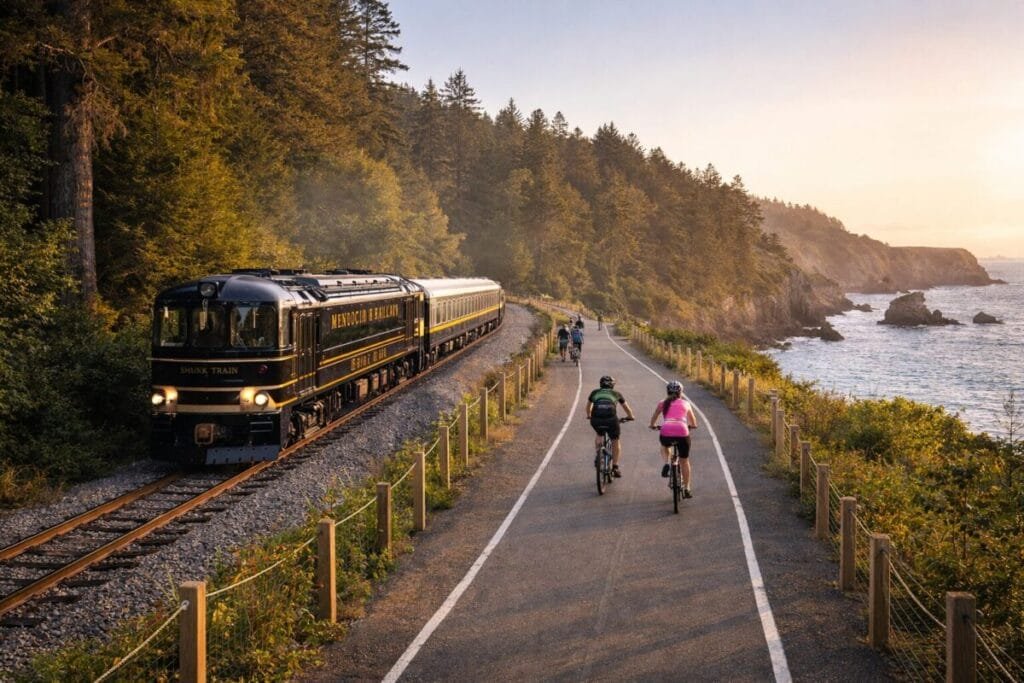
A bold new rail-and-trail proposal along Northern California’s scenic Mendocino Coast is poised to reshape regional tourism and sustainable transport. Mendocino Railway, operator of the historic Skunk Train, is developing a hybrid corridor that blends heritage rail travel with modern recreational trails for cyclists and pedestrians. The initiative aims to preserve the cultural legacy of the railway while expanding eco-friendly tourism opportunities and encouraging year-round visitation to communities such as Fort Bragg and Willits.
The project represents a growing trend in sustainable tourism development, where historic infrastructure is reimagined to serve both travelers and local residents. By combining rail operations with accessible recreational spaces, the proposal seeks to offer a balanced solution that supports environmental conservation, economic growth, and innovative mobility.
Revitalizing an Iconic Rail Experience
The Skunk Train has long been one of Northern California’s most beloved heritage attractions, carrying passengers through redwood forests, coastal landscapes, and historic logging regions. The route spans approximately 40 miles between Fort Bragg on the Pacific coastline and Willits inland, showcasing the natural beauty and cultural history of the Redwood Coast.
While the railway continues to attract visitors seeking nostalgic journeys, Mendocino Railway is expanding its vision beyond traditional heritage tourism. Officials believe that integrating a parallel recreational trail can enhance the corridor’s appeal by attracting outdoor enthusiasts such as hikers, cyclists, and eco-tourists.
Rather than converting the railway into a single-use trail—a model used in many rail-to-trail projects—the company plans to maintain active rail service. This approach preserves the historic identity of the Skunk Train while creating new opportunities for active travel and community engagement.
A Multi-Functional Corridor for Modern Travelers
The proposed rail-and-trail design reflects evolving travel trends, where visitors increasingly prioritize experiences that combine nature, sustainability, and physical activity. The multi-use trail would run alongside the railway alignment, providing a safe, car-free route through scenic landscapes.
By keeping rail infrastructure intact, the corridor retains flexibility for future passenger or freight services. This dual-purpose strategy positions the Mendocino Coast as a leader in innovative rural transport planning, offering a model that could inspire similar initiatives elsewhere.
Officials believe the integrated design will help distribute tourism more evenly throughout the region. Visitors arriving for cycling or hiking experiences may also choose to ride the Skunk Train, dine at local restaurants, and explore nearby attractions, creating a ripple effect that benefits local economies.
Aligning with Regional Trail Development
The rail-and-trail concept aligns with broader regional initiatives focused on expanding recreational infrastructure across Northern California. One of the most significant developments is the creation of a long-distance trail system stretching from the San Francisco Bay Area toward Humboldt County. Portions of this larger trail network are already operational and have demonstrated strong community support.
Mendocino Railway’s coastal proposal builds on these successes by integrating rail travel with trail access. Planners envision a seamless experience where visitors can combine train rides with outdoor exploration, offering multiple ways to experience the Redwood Coast’s natural and cultural landscapes.
Advancing Sustainability Through Innovation
Environmental sustainability is a key driver behind the project. Rail travel generally produces lower emissions compared with car-based tourism, and expanding active transportation options such as cycling and walking further reduces environmental impact.
In addition to recreational elements, the railway has explored new technologies aimed at improving sustainability. Pilot initiatives involving hybrid rail and road vehicles aim to shift freight transport away from highways and onto rail lines, potentially reducing emissions and easing road congestion.
These innovations align with broader state and regional goals to promote cleaner transportation systems while supporting economic development in rural communities.
Navigating Environmental and Regulatory Challenges
As with many infrastructure projects in environmentally sensitive regions, the rail-and-trail proposal faces regulatory review and environmental considerations. Sections of the railway corridor pass through habitats that support protected wildlife and aquatic ecosystems, requiring careful planning to minimize ecological disruption.
Environmental assessments will play a critical role in determining how the project moves forward. Authorities are evaluating factors such as habitat protection, waterway restoration, and sustainable construction practices. Mendocino Railway has emphasized its commitment to modern environmental standards and responsible stewardship of the landscape.
The company has also navigated legal discussions regarding land use and rail operations, reinforcing its intention to maintain federally regulated rail status while expanding recreational access.
Economic Opportunities for the Redwood Coast
Local leaders see significant economic potential in the rail-and-trail initiative. Tourism already serves as a major economic driver for Fort Bragg and surrounding communities, and expanded recreational infrastructure could attract new visitor segments.
Cyclists, hikers, and nature enthusiasts represent a growing market within the tourism sector, often seeking destinations that offer immersive outdoor experiences. By connecting scenic trails with heritage rail travel, the region could extend visitor stays and increase spending at local businesses, accommodations, and attractions.
The corridor may also improve access to well-known sites such as coastal viewpoints, historic trestles, and waterfront developments, encouraging travelers to explore beyond traditional destinations.
Collaboration and Future Outlook
The success of the project will depend on collaboration among multiple stakeholders, including local governments, environmental organizations, community groups, and tourism operators. Ongoing dialogue aims to balance economic growth with environmental protection and community needs.
Urban planners and transportation experts view the rail-and-trail model as a promising example of adaptive reuse, where historic infrastructure evolves to meet contemporary demands. If implemented successfully, the Mendocino Coast initiative could become a benchmark for sustainable tourism development and multi-use transportation corridors.
As the Skunk Train enters a new chapter, its legacy as a historic railway may merge with a forward-thinking vision centered on sustainability and innovation. By combining heritage travel with eco-friendly recreation, the rail-and-trail project offers a glimpse into the future of tourism—one where preservation, mobility, and environmental responsibility travel side by side.
For more travel news like this, keep reading Global Travel Wire