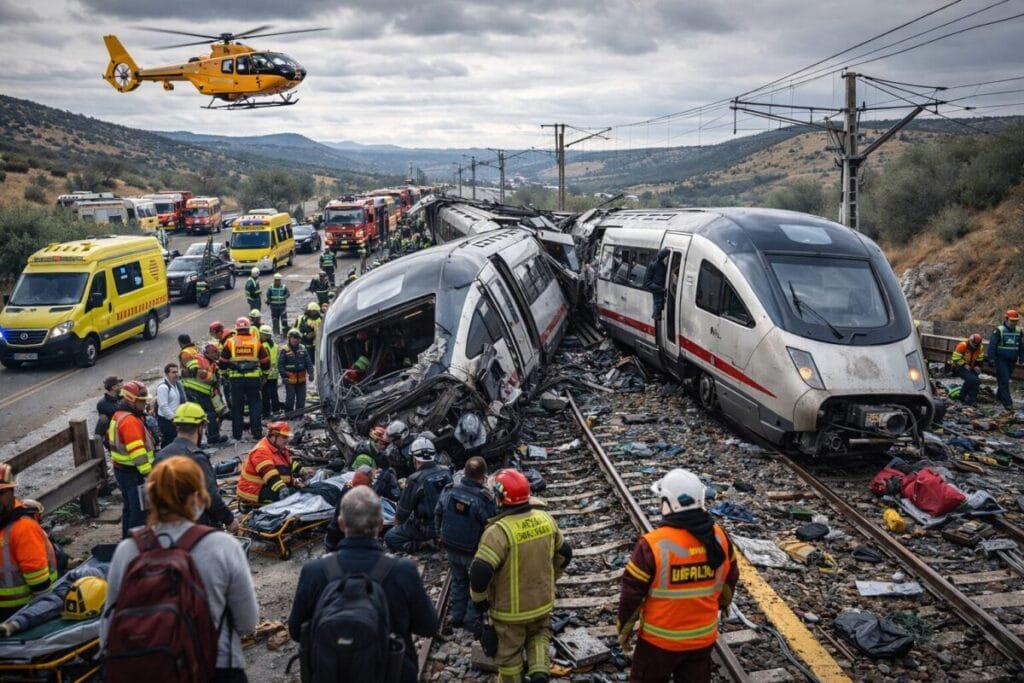
Travelers heading to southern Spain are facing ongoing disruptions following a deadly high-speed train collision near Adamuz in Córdoba province. The incident, which resulted in significant casualties and injuries, has created long-lasting effects on Spain’s rail network, particularly on high-speed routes connecting Madrid with key Andalusian destinations such as Malaga and Algeciras.
While authorities and rail operators have made progress restoring parts of the network, certain services remain limited or altered, prompting travel advisories urging passengers to prepare for delays and changes to their itineraries. The disruption has drawn widespread attention from the tourism industry, as Spain’s high-speed rail network plays a critical role in connecting major cities and supporting both domestic and international tourism.
Details of the High-Speed Train Collision
The collision occurred when two high-speed trains operating along the same route came into contact near Adamuz. Emergency responders quickly arrived at the scene to assist injured passengers and secure the area. Rescue teams worked through challenging conditions to evacuate travelers and provide medical care.
Survivor accounts described a chaotic situation inside the trains, with structural damage causing debris to fall into passenger areas. Authorities launched a full investigation into the incident, focusing on operational procedures, track management systems, and safety measures.
Spain’s rail operator immediately implemented emergency response plans, including rerouting passengers and providing replacement transport through buses and alternative rail connections. Despite these efforts, the complexity of restoring high-speed infrastructure has meant that disruptions continue weeks after the accident.
Impact on Key Tourist Routes in Andalusia
Southern Spain is one of Europe’s most popular tourism regions, known for historic cities, Mediterranean beaches, and cultural attractions. High-speed rail links between Madrid and Andalusian cities such as Seville, Malaga, and Córdoba are widely used by tourists seeking convenient travel options.
The crash has significantly affected these routes, particularly those leading to Malaga and Algeciras. Travelers heading toward coastal destinations or connecting to ferry services from southern ports have faced extended travel times and limited schedules. Although some high-speed services have resumed, reduced capacity and altered timetables remain in place.
Tourism professionals note that high-speed rail is essential for maintaining visitor flow between regions. Any disruption to these routes can have ripple effects on hotels, tour operators, and local businesses that depend on steady tourist arrivals.
Travel Challenges for Business and Leisure Visitors
The ongoing disruptions have created challenges for a wide range of travelers. Business passengers relying on punctual high-speed connections for meetings and conferences may need to adjust their schedules or consider alternative travel options. Southern Spain hosts numerous international events and trade activities, making reliable transport connections particularly important.
Leisure travelers are also affected, especially those with tight itineraries that include multiple destinations across Spain. Delays or service changes can reduce flexibility and lead to increased travel costs if passengers need to rebook tickets or switch transportation modes.
Families and international tourists unfamiliar with Spain’s transport system may find navigating the disruptions particularly stressful. Tourism authorities emphasize the importance of clear communication and advance planning to help visitors manage unexpected changes.
Replacement Transport and Alternative Options
To minimize disruption, rail operators have introduced replacement transport plans combining buses and modified train services. Passengers traveling on affected routes are encouraged to check updated schedules before departure and allow additional time for connections.
Increased demand for alternative transport, including domestic flights and long-distance buses, has created additional pressure on Spain’s wider travel network. As a result, travelers may encounter higher occupancy levels and longer waiting times on substitute routes.
Tourism experts recommend maintaining flexible plans and monitoring travel updates regularly. Arriving at stations early and confirming departure details can help reduce stress during periods of operational change.
Safety Reviews and Future Infrastructure Planning
The incident has prompted renewed discussion about rail safety standards and infrastructure resilience in Spain. High-speed rail remains one of the safest modes of transportation globally, but events such as this highlight the need for ongoing investment in monitoring systems, operational training, and technology upgrades.
Authorities are expected to review safety procedures and implement lessons learned from the accident to prevent similar incidents in the future. Such reviews are standard practice following major transportation events and often lead to improvements in operational protocols and passenger safety measures.
Broader Implications for Spain’s Tourism Industry
Spain’s tourism sector relies heavily on efficient transportation networks to connect visitors with diverse destinations. High-speed rail has been a cornerstone of the country’s tourism growth, enabling travelers to explore multiple regions within a short timeframe.
Although disruptions can temporarily affect visitor experience, industry analysts believe that transparent communication and swift restoration efforts can help maintain traveler confidence. Spain’s reputation as a well-connected destination is supported by ongoing infrastructure investment and strong coordination between transport authorities and tourism stakeholders.
Advice for Travelers Planning Trips to Southern Spain
Travelers planning journeys to Malaga, Algeciras, or other Andalusian destinations should remain prepared for schedule changes and possible delays. Allowing extra time, considering alternative routes, and staying informed about current travel conditions can help ensure smoother journeys.
The recovery process following the accident continues, and while progress has been made in restoring services, authorities emphasize patience and flexibility during this transitional period. As rail services gradually return to normal, travelers can expect improved reliability, but advance preparation remains essential for those traveling in the near term.
For more travel news like this, keep reading Global Travel Wire