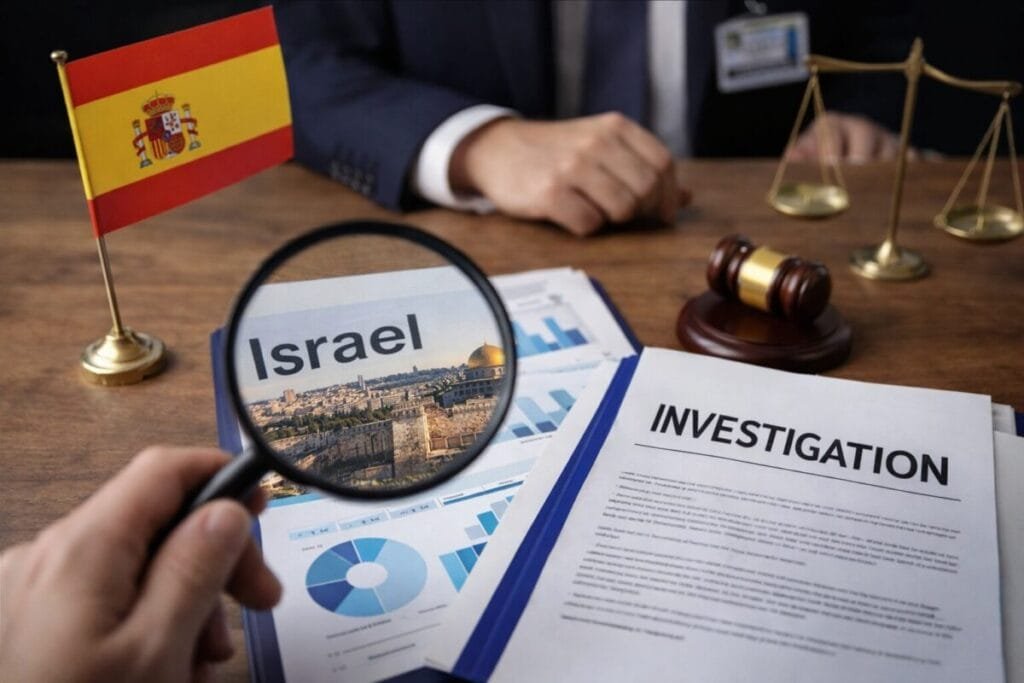
Spain has opened a formal legal investigation into tourism companies linked to Israel over allegations that travel promotions connected to occupied Palestinian territory were showcased during a major international tourism fair in Madrid. The case, which remains ongoing, is being closely watched by industry observers who argue it could set a new regulatory standard for how tourism companies market destinations in sensitive geopolitical regions.
The inquiry stems from concerns that certain travel packages and promotional materials displayed during the fair may have advertised tourist experiences or services in areas recognized internationally as occupied Palestinian land. Spain hosts the fair annually as part of its role as a global tourism gateway, drawing destinations, national tourism boards, travel operators, and airlines from around the world. Exhibitors are required to comply with Spanish regulations as well as European standards on advertising and consumer protection.
Legal teams within Spain’s consumer and foreign policy apparatus are now examining whether any promotional activity violated domestic laws that prohibit the commercialization or promotion of services connected to occupied territories. These laws also mandate transparency for consumers regarding the authenticity and legal status of advertised destinations.
The investigation is tied to a royal decree introduced by the Spanish government in September 2025, which implemented protective measures aligned with Spain’s foreign policy and international humanitarian law commitments. Among its provisions is a prohibition on advertising products or services that originate in or are connected to territories considered occupied under international law. The decree was enacted in the context of heightened conflict in the Gaza Strip and growing calls within Europe for commercial practices to remain consistent with international legal standards.
Spanish authorities are focusing on whether the marketing materials associated with the Israeli pavilion included travel experiences linked to Israeli settlements in the occupied West Bank, territories Spain does not recognize as part of Israel’s sovereign jurisdiction. The marketing in question reportedly included destination descriptions, guided tour packages, and cultural experiences that may have lacked clear disclosure regarding their disputed legal status.
Investigators are reviewing brochures, banners, digital displays, video content, and online listings, as well as sales conversations that may have occurred with trade fair visitors. Under Spanish consumer law, the omission of legally relevant information can constitute a breach, particularly if consumers may be misled about the origin or legitimacy of the services being sold. For the tourism sector, where destination authenticity is central to marketing, such legal requirements are becoming increasingly important.
This inquiry marks a significant moment for tourism governance in Europe. Long considered a politically neutral sector, tourism is now more frequently intersecting with geopolitical considerations. Governments are increasingly aware that travel marketing can normalize controversial territorial claims, influence public perception, and indirectly support settlement economies. Several European states have previously addressed labeling and customs rules for goods originating in occupied territories, but the Spanish case extends the scrutiny to tourism services—an area that until recently operated with fewer compliance obligations.
Industry analysts say the case could reshape how destinations present themselves at international tourism fairs. Exhibitors may be required to adopt more rigorous disclosure practices, ensure geographic accuracy in brochures and digital listings, and align promotional language with international legal frameworks. Trade fairs themselves may be prompted to adjust exhibitor guidelines to reduce legal risk and ensure alignment with host-country laws.
For Spain, a nation that positions itself as a global tourism leader, the inquiry reinforces its commitment to ethical tourism practices and international law. The country has made tourism transparency a priority in recent years, as part of a broader effort to balance rapid tourism growth with social and regulatory responsibility. The investigation also aligns with Spain’s foreign policy position regarding the legal status of Palestinian territories.
Tourism operators participating in the Madrid fair now face heightened expectations to verify the legality of their promotional content before engaging in future events. Depending on the outcome, companies found in violation could face financial penalties, forced corrective measures, or limitations on future participation in Spanish trade platforms. The inquiry also serves as a strong reminder that international tourism events do not operate above national law, and exhibitors must comply with host-country regulations even when representing foreign destinations.
Internationally, the situation has attracted attention from tourism boards, human rights organizations, and legal experts. Some argue that the Spanish model could serve as a reference point for other European countries, particularly those hosting large-scale tourism exhibitions. Others suggest the case may encourage tourism companies operating in disputed regions—from the Caucasus and Crimea to parts of North Africa and Asia—to review how they package and promote travel experiences to international audiences.
As the investigation continues, it highlights the growing importance of compliance, transparency, and accountability in global tourism marketing. For years, the sector has focused heavily on destination appeal, cultural storytelling, and experiential value. Now, legal and ethical considerations are becoming equally central. The outcome of Spain’s inquiry may not only impact the companies involved but could set a wider precedent for how tourism and geopolitics intersect in global marketplaces.
For more travel news like this, keep reading Global Travel Wire