London’s iconic St Pancras International station, a major gateway for high-speed rail travel between the United Kingdom and continental Europe, is preparing for significant upgrades aimed at tackling growing overcrowding concerns and improving the overall passenger journey. With international rail demand rising steadily, authorities are working on ambitious operational changes and infrastructure enhancements designed to streamline passenger flow, reduce waiting times, and restore the smooth travel experience Eurostar passengers have traditionally enjoyed.
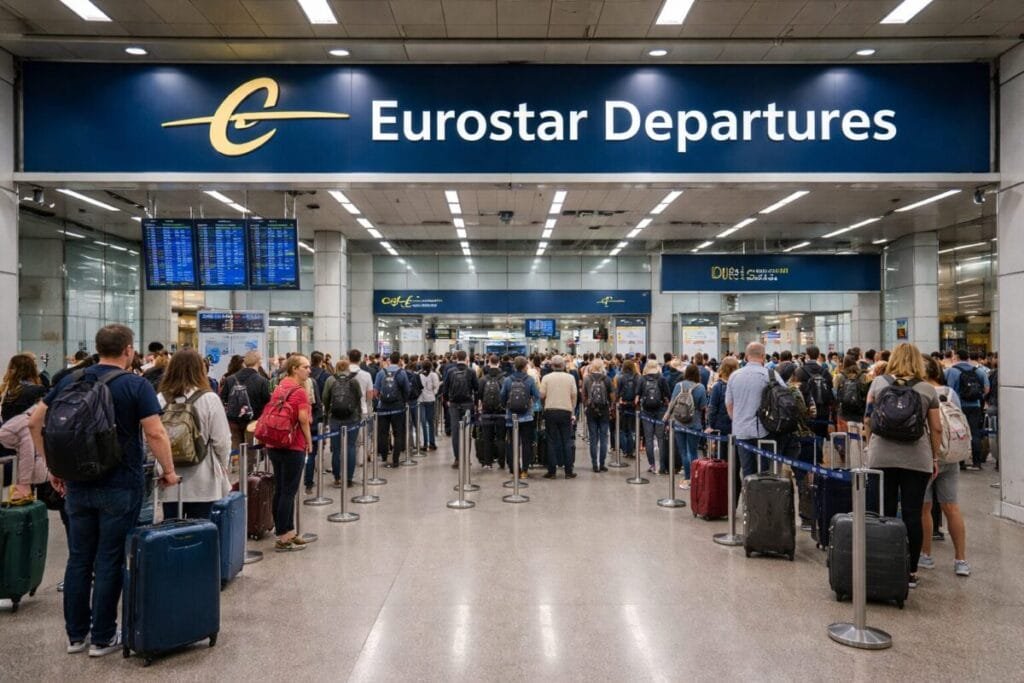
In recent years, travelers departing from the Eurostar terminal at St Pancras have reported increasing frustration due to crowded departure areas, longer processing times, and airport-like congestion. The once relaxed environment of international rail travel has gradually shifted as enhanced border controls, new security requirements, and rising passenger volumes place pressure on the station’s existing infrastructure.
Growing Demand and Changing Travel Requirements
High-speed rail travel has gained popularity among tourists and business travelers seeking a convenient and environmentally friendly alternative to flying. Eurostar services connecting London with cities such as Paris, Brussels, Amsterdam, and Lille remain central to European tourism and cross-border mobility. However, increased demand, combined with stricter immigration procedures introduced in recent years, has resulted in more complex boarding processes.
Passengers are currently advised to arrive well in advance of departure to complete security screening and border checks. While these measures are essential for international travel, they have significantly expanded the pre-departure process, creating bottlenecks inside the station. As a result, departure lounges frequently become overcrowded, leading to discomfort and longer waiting periods.
Station management has acknowledged that the current experience can feel similar to airport terminals, which contrasts with the traditional appeal of train travel as a faster and more relaxed option. Addressing this issue has become a priority as authorities seek to maintain the competitive advantage of rail over short-haul flights.
Proposed Operational Changes to Reduce Waiting Times
One of the key proposals under consideration involves allowing passengers to board trains shortly after clearing security and border control procedures rather than waiting in crowded departure areas. This approach could significantly reduce congestion by distributing passengers directly onto platforms instead of holding large groups in confined spaces.
The revised process aims to replicate the efficiency seen in domestic rail travel while maintaining necessary security standards for international journeys. By shortening dwell times in departure lounges, authorities expect to improve passenger comfort and reduce stress associated with long queues and overcrowded waiting areas.
Early planning suggests that such changes could potentially cut waiting periods by up to half an hour, though detailed timelines and implementation phases are still being evaluated. If successful, the new system could redefine how international rail stations manage passenger flow.
Major Renovation Project to Increase Capacity
Operational changes are expected to complement a broader renovation strategy designed to expand the station’s capacity. A substantial investment plan aims to transform St Pancras into a more adaptable transport hub capable of handling significantly higher passenger volumes in the coming years.
Current projections indicate that the terminal’s capacity could more than double, enabling it to accommodate thousands more passengers per hour. This expansion is seen as essential not only for managing existing Eurostar services but also for preparing for potential new operators entering the cross-Channel rail market later in the decade.
Infrastructure improvements may include redesigned circulation areas, upgraded security facilities, and reconfigured passenger zones to create a more efficient and spacious environment. These changes are expected to help distribute crowds more evenly across the station, reducing peak-time congestion.
Impact of Border Controls on Passenger Flow
A major factor contributing to the overcrowding issue has been the expansion of border processing requirements, including the installation of additional control points and automated systems for international travelers. While these measures strengthen security and streamline identity checks, they also occupy more physical space within the terminal.
As security and immigration areas expand, the remaining waiting space has become limited, leaving passengers with fewer seating options and less room to move comfortably. The upcoming redesign seeks to balance operational requirements with passenger comfort by optimizing layout and improving flow between checkpoints and boarding areas.
Enhancing Tourism Connectivity and Sustainable Travel
The success of Eurostar services plays an important role in supporting tourism between the UK and mainland Europe. High-speed rail offers travelers a city-center-to-city-center journey, reducing travel time and lowering environmental impact compared with short-haul flights. Improving the St Pancras experience is therefore crucial not only for daily commuters but also for international visitors choosing rail as part of their travel plans.
Tourism experts believe that smoother passenger processing and reduced overcrowding will encourage more travelers to opt for rail, strengthening cross-border tourism and economic connections between European cities. As sustainability becomes a key factor in travel decisions, efficient rail infrastructure can significantly influence tourism growth.
A New Vision for International Rail Travel
While the proposed changes are still evolving, they signal a strong commitment to addressing passenger concerns and modernizing the international rail experience. Authorities aim to restore the convenience and comfort that originally made Eurostar travel appealing while adapting to new security realities and rising demand.
For now, travelers departing from St Pancras should continue to plan their journeys carefully and allow sufficient time for pre-departure procedures. However, with comprehensive upgrades on the horizon, the future of international rail travel through London looks set to become more efficient, less stressful, and better aligned with the expectations of modern travelers.
As these improvements take shape, St Pancras International could once again become a model for seamless cross-border rail travel, combining efficiency, safety, and passenger comfort in one of Europe’s busiest transport hubs.
For more travel news like this, keep reading Global Travel Wire