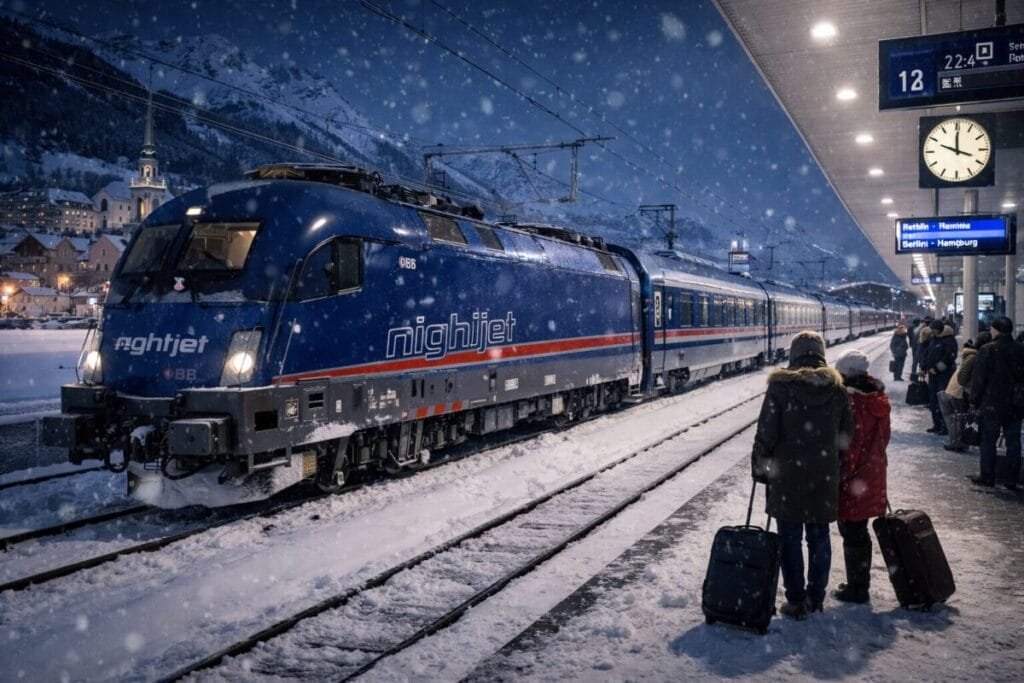
Europe’s rail renaissance has gained fresh momentum as Switzerland reinstates and expands its international night train services, strengthening connections with Austria, Germany, the Czech Republic, and the Netherlands. The move marks a significant step toward sustainable cross-border mobility and reflects growing demand for eco-friendly alternatives to short-haul air travel.
The renewed services provide direct overnight rail links between Switzerland and major European cities such as Vienna, Berlin, Prague, Amsterdam, and Hamburg. By restoring these routes, Switzerland is positioning itself at the center of a broader European strategy aimed at reducing aviation emissions while improving regional connectivity.
Strengthening Cross-Border Connectivity
The expansion of overnight rail services enhances access between key economic and cultural hubs across Central and Western Europe. Travelers can now board in cities like Zurich, Basel, or Geneva and arrive the following morning in capitals and major metropolitan centers throughout neighboring countries.
Austria benefits through enhanced connections to Vienna, while Germany gains improved links to Berlin and Hamburg. The Czech Republic’s capital Prague is also included in the expanded network, and the Netherlands sees strengthened service between Switzerland and Amsterdam.
These connections support both tourism and business travel by offering seamless overnight journeys that maximize time at the destination. Instead of spending valuable daytime hours in transit, passengers travel while they sleep and arrive ready to begin their activities.
Sustainability at the Core of the Initiative
Environmental responsibility is central to the return of Switzerland’s night train services. Rail travel generates significantly lower carbon emissions per passenger compared to air travel, particularly on short- and medium-haul routes. Switzerland’s rail network is powered largely by renewable energy sources, including hydropower, further reducing the environmental footprint of these services.
As European governments continue working toward climate targets and emission reduction goals, rail travel has re-emerged as a practical solution. Night trains, in particular, provide a compelling alternative to flights between cities separated by distances of 600 to 1,200 kilometers—routes where aviation has traditionally dominated.
By investing in overnight rail, Switzerland is contributing to Europe’s broader strategy to promote sustainable mobility and reduce reliance on carbon-intensive transport.
Comfort and Convenience Redefined
Modern night trains have evolved significantly from earlier generations. Today’s services are designed to offer a comfortable and efficient travel experience, combining practicality with hospitality.
Passengers can choose from reclining seats, couchette compartments, or private sleeper cabins equipped with bedding and personal storage space. Many services include onboard dining options, breakfast service, and upgraded amenities that make the journey both relaxing and productive.
Unlike airport travel, night trains eliminate long security lines and extensive waiting times. City-center departure and arrival points also simplify onward connections, allowing travelers to step directly into urban districts without additional transfers from distant airports.
For many travelers, the ability to sleep during the journey translates into both time savings and reduced accommodation costs, making overnight rail an attractive option for weekend trips and business travel alike.
Part of Europe’s Broader Rail Revival
Switzerland’s expansion is part of a wider European rail revival. Countries including Austria and Germany have significantly increased investment in overnight services in recent years. Austria’s national rail operator has expanded its Nightjet network across multiple European corridors, while Germany has committed to strengthening long-distance rail infrastructure.
Across the continent, governments are prioritizing rail as a central component of sustainable transportation policy. Infrastructure upgrades, modern rolling stock, and integrated ticketing systems are being developed to create a more unified European rail network.
The renewed focus on rail is also supported by shifting consumer preferences. Travelers increasingly seek slower, more immersive journeys that reduce environmental impact while enhancing comfort and experience.
Economic and Tourism Benefits
The restoration of night train routes offers tangible benefits for tourism and regional economies. Easier access to Swiss cities encourages inbound tourism, while residents gain more convenient connections to neighboring countries.
Tourism boards across Austria, Germany, the Czech Republic, and the Netherlands stand to benefit from improved accessibility, particularly for short city breaks and cultural travel. Night trains make it feasible for travelers to visit multiple destinations within a single trip without relying on flights.
Business travel also gains from enhanced overnight connectivity. Professionals can depart in the evening and arrive at morning meetings in another country without losing productivity to daytime travel.
Additionally, expanded rail operations create employment opportunities within the rail sector, including train operations, maintenance, and hospitality services.
Addressing Infrastructure and Coordination Challenges
Despite the advantages, expanding cross-border night train services presents logistical challenges. Coordinating timetables, ticketing systems, and operational standards across multiple countries requires close cooperation among rail operators and government agencies.
Infrastructure investment is also necessary to ensure that tracks, stations, and maintenance facilities can support increased overnight services. Competitive pricing remains essential to attract passengers who may otherwise opt for low-cost flights.
However, the growing popularity of sustainable travel suggests strong long-term demand. As more travelers prioritize environmentally responsible choices, night trains are likely to continue gaining traction.
The Future of Sustainable European Mobility
The revival of Switzerland’s night train network signals a transformative moment for European mobility. By reconnecting major cities through comfortable and climate-friendly rail services, the initiative strengthens both connectivity and environmental responsibility.
With Austria, Germany, the Czech Republic, and the Netherlands now more closely linked through overnight rail, the network forms part of a larger shift toward integrated European transportation. As additional routes are developed and infrastructure investments continue, night trains may once again become a cornerstone of continental travel.
For travelers seeking efficient, sustainable, and comfortable journeys, the return of overnight rail offers a compelling alternative. Switzerland’s leadership in restoring these services highlights the growing role of rail in shaping a cleaner, more connected future for European travel.
For more travel news like this, keep reading Global Travel Wire