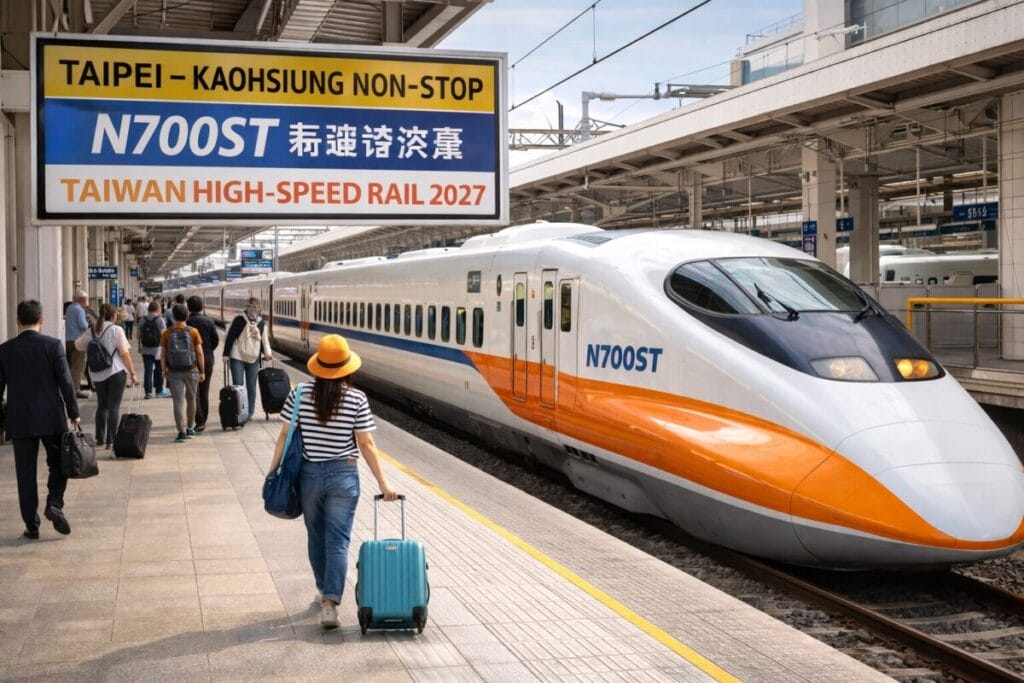
Taiwan’s high-speed rail network is preparing for a major leap forward as it readies the introduction of the advanced N700ST train fleet, scheduled to begin operations in 2027. The move represents a significant investment in passenger comfort, operational efficiency, and long-term capacity growth, reinforcing the rail system’s role as the backbone of intercity travel on the island. With enhanced onboard features, higher seating capacity, and expanded non-stop services, the new trains are expected to reshape the travel experience for both business and leisure passengers.
The arrival of the N700ST trains comes at a time when demand for high-speed rail travel in Taiwan continues to rise steadily. As road congestion and air travel pressures increase, rail remains the most reliable and sustainable option for long-distance journeys between the country’s major urban centers.
Next-generation trains for a growing network
The N700ST trains represent the next generation of high-speed rail technology tailored to Taiwan’s operational needs. A total of twelve trainsets will be delivered starting in August 2027, with full fleet deployment expected by the end of 2028. Once fully operational, these trains will increase peak-hour passenger capacity by approximately 25 percent, helping to ease crowding during the busiest travel periods.
The additional capacity is particularly important for the Taipei–Kaohsiung corridor, the most heavily used high-speed rail route in Taiwan. This north–south axis connects the political, financial, and industrial centers of the island, making it critical for economic activity, tourism, and daily commuting.
Faster journeys through expanded non-stop services
One of the most anticipated features of the N700ST rollout is the expansion of non-stop services between Taipei and Kaohsiung. Currently, a limited portion of weekly services operate without intermediate stops, offering the fastest possible travel time between the two cities. With the new fleet, the proportion of non-stop trains is expected to increase, providing more passengers with quicker and more direct journeys.
For business travelers, this improvement translates into time savings and greater schedule predictability. For leisure travelers and tourists, it enhances convenience and makes high-speed rail an even more attractive alternative to domestic flights.
Enhanced passenger comfort and onboard experience
Passenger experience has been a central focus in the design of the N700ST trains. The new fleet introduces improved seating ergonomics, quieter cabins, and upgraded climate control systems to ensure a more comfortable ride across long distances. Interior layouts have been optimized to balance capacity with personal space, allowing passengers to travel in greater comfort even during peak hours.
Modern amenities are expected to support a more personalized journey, catering to the needs of diverse passenger groups, including families, seniors, and business travelers. These enhancements reflect Taiwan High-Speed Rail’s commitment to maintaining world-class service standards as ridership continues to grow.
Smarter booking and greater transparency
Alongside the new trains, Taiwan High-Speed Rail is upgrading its booking system to offer passengers more flexibility and transparency. Travelers will be able to view and select the type of train operating on their chosen service, including whether it is an N700ST model.
This feature empowers passengers to make informed decisions based on comfort preferences or travel priorities, without affecting ticket prices. While operational adjustments may occasionally require train substitutions, the added visibility represents a significant improvement in customer experience and trust.
Record ridership highlights rail’s growing role
The launch of the N700ST trains coincides with a period of record growth for Taiwan’s high-speed rail network. Annual ridership recently surpassed 80 million passengers for the first time, underscoring the system’s central role in national mobility.
This sustained growth reflects changing travel habits, with more residents and visitors choosing rail for its speed, reliability, and environmental benefits. Looking ahead, Taiwan has set ambitious targets to reach 100 million annual passengers by the early 2030s, and the expanded capacity offered by the N700ST fleet will be critical in achieving this goal.
No immediate fare increases planned
Despite the significant upgrades in service and infrastructure, authorities have confirmed that there are no immediate plans to increase ticket prices during the rollout phase of the new trains. This decision ensures that improved services remain accessible to a broad segment of the population, reinforcing high-speed rail as a public-friendly mode of transport.
Maintaining stable fares while enhancing capacity and comfort demonstrates a long-term strategy focused on value, sustainability, and inclusive mobility rather than short-term revenue gains.
Supporting tourism and sustainable travel
From a tourism perspective, the enhanced high-speed rail services will further strengthen Taiwan’s appeal as a destination that is easy to explore. Faster non-stop connections between major cities allow visitors to maximize their time, encouraging multi-city itineraries and short-break travel.
High-speed rail also supports sustainable tourism by reducing reliance on short-haul flights and private vehicles. As environmental considerations become increasingly important for travelers, rail’s lower carbon footprint adds to its attractiveness.
A new era for Taiwan’s rail future
The introduction of the N700ST trains marks a defining moment in the evolution of Taiwan’s high-speed rail system. By combining increased capacity, faster journeys, enhanced comfort, and smarter digital services, the new fleet sets a new benchmark for intercity rail travel in the region.
As the trains are gradually integrated into daily operations through 2028, passengers can expect a more efficient, reliable, and enjoyable travel experience. Taiwan’s continued investment in high-speed rail innovation not only strengthens domestic connectivity but also positions the island as a global reference point for modern, passenger-focused rail transport.
For more travel news like this, keep reading Global Travel Wire