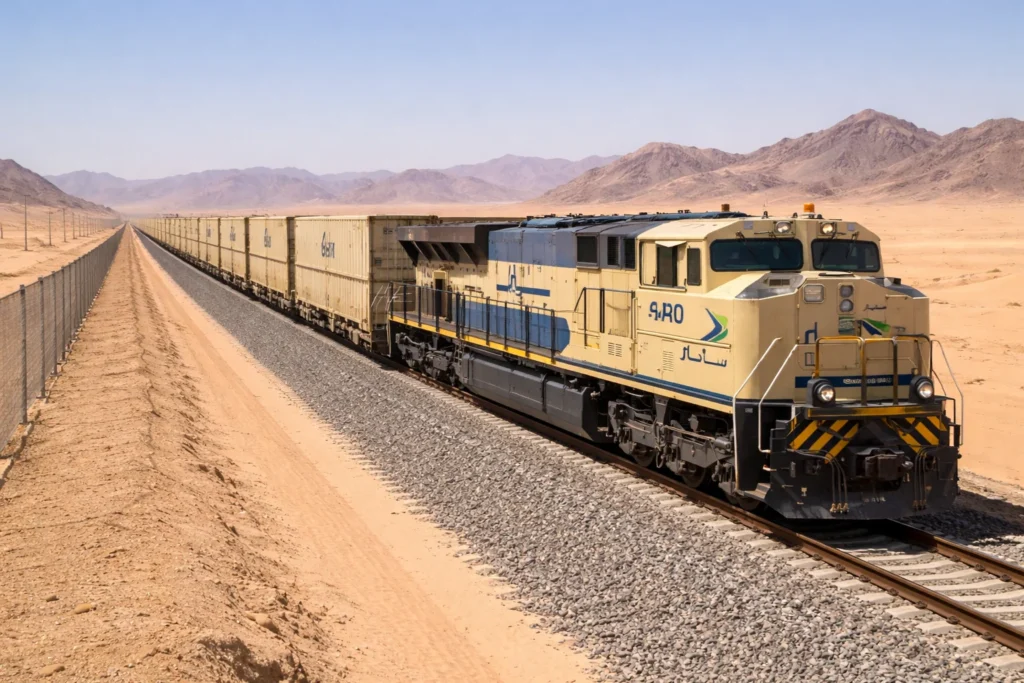
Saudi Arabia rail corridor development has reached a major milestone with the launch of a new 1,700-kilometer international freight route designed to connect Gulf ports with the Kingdom’s northern border. While the immediate purpose is to improve cargo movement and supply chain efficiency, the wider significance extends to tourism, national mobility, and Saudi Arabia’s long-term ambition to become one of the world’s most connected destinations.
The new route, introduced by Saudi Arabia Railways (SAR), links key maritime gateways in the Eastern Region directly with Al-Haditha Port near the Jordanian border. By creating a faster land bridge between ports and inland trade routes, the corridor strengthens the Kingdom’s role as a strategic hub between Asia, the Gulf, and the wider Middle East.
For tourism stakeholders, the project signals another major investment in transport infrastructure—an essential pillar for visitor growth under Vision 2030.
Saudi Arabia Rail Corridor Strengthens National Connectivity
Modern tourism depends on seamless movement. Travelers increasingly choose destinations where airports, highways, rail systems, and city transport work together efficiently. The new Saudi Arabia rail corridor contributes to that goal by expanding the Kingdom’s logistics backbone and supporting wider national connectivity.
The route connects major Eastern Region ports including King Abdulaziz Port, King Fahd Industrial Port, and Jubail Commercial Port with the northern frontier. Although designed for freight, such infrastructure often creates wider benefits for passenger mobility, regional development, and destination access over time.
As transport corridors grow stronger, cities become easier to reach, investment increases, and tourism ecosystems become more competitive.
Vision 2030 and Tourism Growth
Saudi Arabia’s Vision 2030 strategy has placed tourism at the center of economic diversification. The Kingdom is investing in cultural attractions, heritage restoration, luxury resorts, entertainment districts, sports events, and global tourism promotion.
To support these ambitions, large-scale transport upgrades are essential. Visitors expect smooth arrivals, efficient intercity travel, and reliable infrastructure that allows them to explore more than one destination during a trip.
Rail development supports that transformation by complementing aviation and road travel. It can reduce pressure on highways, improve goods movement for hotels and tourism businesses, and lay foundations for future passenger connectivity.
The launch of a major new corridor therefore aligns closely with Saudi Arabia’s wider tourism ambitions.
Why Freight Infrastructure Matters for Tourism
Freight projects may appear separate from tourism, but strong logistics systems are vital for visitor economies. Hotels, restaurants, resorts, convention centers, shopping districts, and attractions all rely on dependable supply chains.
When cargo moves faster and more efficiently, tourism businesses benefit through:
Better Supply Availability: Hotels and hospitality venues receive goods more reliably.
Lower Delivery Pressure: Reduced transport delays help maintain service standards.
Event Readiness: Large conferences and festivals depend on efficient logistics.
Retail Growth: Tourism shopping districts need steady product movement.
Stronger Investment Appeal: Modern infrastructure attracts global brands and developers.
As Saudi Arabia welcomes more visitors, these behind-the-scenes advantages become increasingly important.
Major Cities and Destinations Could Benefit
The new corridor enhances the broader transport landscape across several important economic zones. This can indirectly support tourism growth in major cities and emerging destinations.
Riyadh
As the capital city and a rising center for conferences, entertainment, and business tourism, Riyadh benefits from stronger national logistics and infrastructure confidence.
Eastern Region
The Eastern Province, including Dammam and nearby coastal destinations, can gain from improved port efficiency, business travel demand, and future transport expansion.
Northern Gateway Regions
The northern border connection strengthens Saudi Arabia’s position in regional overland trade and could support future tourism flows linked to neighboring markets.
Red Sea and Mega Projects
As the national network grows stronger, it supports wider tourism developments across the Kingdom by improving supply chains and construction logistics.
Environmental and Road Safety Benefits
A major advantage of rail freight is the reduction of heavy truck traffic on highways. Moving more containers by rail can improve road safety, reduce congestion, and lower infrastructure wear.
For tourism, this matters because safer and smoother highways improve the experience for domestic road travelers, tour buses, rental car visitors, and intercity leisure traffic.
Rail also supports sustainability objectives by lowering emissions compared with large-scale road freight. Sustainable transport is becoming increasingly important for travelers who consider environmental impact when choosing destinations.
Saudi Arabia’s continued rail expansion helps strengthen its image as a future-focused destination investing in smarter mobility.
Regional Connectivity and Cross-Border Potential
The corridor’s connection to Al-Haditha Port near Jordan enhances Saudi Arabia’s role in regional trade and cross-border integration. Stronger transport links with neighboring countries can support business mobility, investment flows, and future tourism opportunities.
Well-connected countries often benefit from:
- More stopover travel
- Stronger business event markets
- Multi-country itineraries
- Improved investor confidence
- Easier regional movement
- Stronger destination branding
As the Middle East becomes increasingly interconnected, Saudi Arabia’s transport leadership can help attract more international visitors.
What This Means for Travelers
Although the route is currently freight-focused, travelers can still view the project as positive news. Every major transport investment strengthens the overall visitor environment by improving reliability, efficiency, and national development.
Tourists may benefit over time through:
Better Services: Stronger supply chains support hotels and attractions.
Modern Infrastructure: Confidence rises when transport systems continue to expand.
Sustainable Growth: Rail helps support greener mobility goals.
Future Opportunities: Freight corridors can lead to broader transport development.
Enhanced Accessibility: National connectivity often improves destination reach.
Strong Outlook for Saudi Tourism
Saudi tourism has been growing rapidly thanks to visa reforms, international events, mega projects, and increasing global awareness of the Kingdom’s attractions. Historic sites, desert experiences, coastal resorts, mountain escapes, and urban entertainment are drawing new visitor segments each year.
Transport investment remains one of the strongest foundations for sustaining that growth. Airports, roads, ports, and railways all play a role in creating a world-class tourism destination.
The new 1,700km Saudi Arabia rail corridor demonstrates that infrastructure development is advancing at pace alongside tourism expansion.
A New Chapter in Saudi Arabia’s Connected Future
The opening of the Saudi Arabia rail corridor is more than a freight milestone. It represents a broader vision of national transformation where logistics, sustainability, tourism, and regional leadership move forward together.
For businesses, it offers faster cargo movement and stronger trade efficiency. For communities, it supports development and investment. For travelers, it signals a country building modern systems designed for the future.
As Vision 2030 continues to reshape the Kingdom, rail corridors like this one are set to become an important part of Saudi Arabia’s global tourism success story.