Seattle has introduced a new contactless payment system across its regional transit network. The initiative aims to improve travel for visitors ahead of the FIFA World Cup 2026.
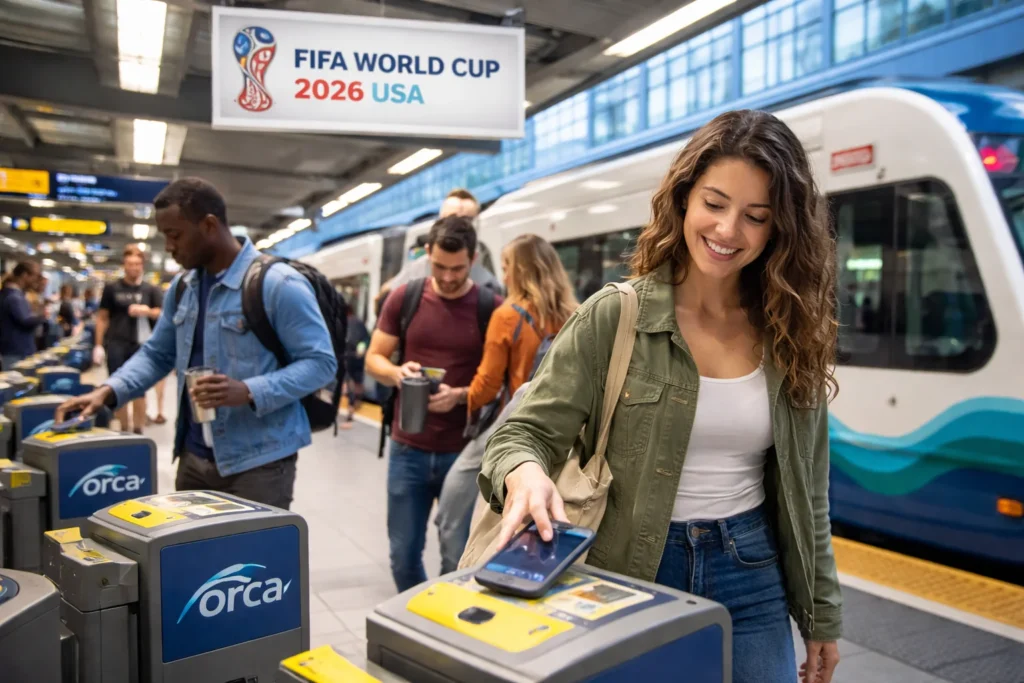
Sound Transit, in partnership with transport technology providers, has launched “Tap to Pay” across the Orca fare system. This system allows passengers to use contactless credit cards, debit cards, or mobile wallets to access public transport.
The upgrade supports light rail, buses, and ferry services across the Puget Sound region. Officials describe it as a key step in preparing for a major surge in international visitors.
Simplified Travel for Global Visitors
Authorities expect Seattle to host around 750,000 visitors during the World Cup. Managing this volume requires efficient and user-friendly transport systems.
The Tap to Pay feature removes the need for physical transit cards. Visitors can simply tap their existing payment method to board services.
Transport officials say this creates a more inclusive and accessible system. It reduces confusion for international travellers unfamiliar with local ticketing systems.
The Orca system, which stands for One Regional Card for All, has long served as the backbone of public transport payments in the region.
Transition from Closed to Open Payment System
Originally, the Orca system relied on a closed-loop smart card model. Passengers needed to purchase and reload dedicated transit cards.
Now, the system has evolved to support open payments. This allows direct use of bank cards and digital wallets without prior registration.
Despite the upgrade, Orca cards remain widely used. Around 79 percent of fares in the region are still paid using the traditional card system.
Officials confirm that both systems will continue to operate together. This ensures flexibility for residents and visitors alike.
Enhancing Mobility During Major Events
The World Cup is expected to place significant pressure on Seattle’s transport network. Efficient fare systems will play a key role in managing demand.
Contactless payments can reduce queues and speed up boarding times. This helps maintain smooth operations during peak travel periods.
Similar systems are being introduced in other host cities, including Houston and Atlanta. These efforts form part of a broader national strategy to support international travel.
Transport authorities aim to create a seamless experience for fans moving between stadiums, hotels, and attractions.
Travel Experience and Tourist Benefits
For tourists, ease of movement is a critical part of the travel experience. Complex ticketing systems can create barriers and reduce satisfaction.
The Tap to Pay system simplifies navigation across multiple transport modes. Visitors can switch between buses, trains, and ferries using a single payment method.
Passengers using contactless payments receive a standard adult fare. They also benefit from a two-hour transfer window between services.
However, discounted fares are not available through Tap to Pay. Travelers eligible for reduced fares must continue using Orca cards.
Supporting a Modern Tourism Infrastructure
Seattle’s investment in smart mobility reflects a broader trend in global tourism. Cities are adopting digital solutions to improve visitor experiences.
Efficient transport systems help distribute tourists across different areas. This reduces congestion in popular locations and supports local economies.
The Puget Sound region offers diverse attractions, from waterfront areas to cultural districts. Improved transport access makes these destinations easier to explore.
Authorities believe that modern payment systems will encourage more people to use public transport. This supports sustainability goals and reduces reliance on private vehicles.
Operational and Security Measures
To ensure smooth operations, ticket inspection procedures have also been updated. Inspectors will not scan contactless cards directly.
Instead, passengers may be asked to provide the last four digits of their card number. This allows verification of fare payment while maintaining security.
Officials emphasize that the system is designed to protect user data while ensuring compliance with fare regulations.
Preparing for a Global Audience
Seattle’s preparations highlight the importance of infrastructure in major international events. The World Cup will bring visitors from across the globe, each with different travel expectations.
By introducing Tap to Pay, the city aligns itself with global standards in urban mobility. Many international cities already use similar systems.
This alignment helps create a familiar experience for travellers. It reduces learning curves and improves overall satisfaction.
Future of Smart Travel in the United States
The launch of contactless payments in Seattle signals a shift in how US cities approach public transport. Digital solutions are becoming central to urban planning.
As tourism continues to grow, cities must adapt to changing visitor needs. Seamless mobility will play a crucial role in shaping travel experiences.
Seattle’s approach may serve as a model for other destinations. By combining technology with accessibility, the city is preparing for a future where travel is faster, easier, and more connected.