Global tourism is entering a new phase in 2026, where travelers are prioritizing meaningful experiences over traditional sightseeing. According to tourism board insights and international travel data, the modern traveler is increasingly driven by culture, accessibility, and immersive experiences. This shift is particularly evident among outbound travelers who are choosing destinations that offer a balance of convenience and depth.
Government tourism authorities and aviation bodies have emphasized that improved connectivity, streamlined visa policies, and digital travel awareness are playing a major role in shaping these new travel preferences. As a result, a select group of countries is emerging as standout destinations, reflecting broader international travel trends and evolving expectations.
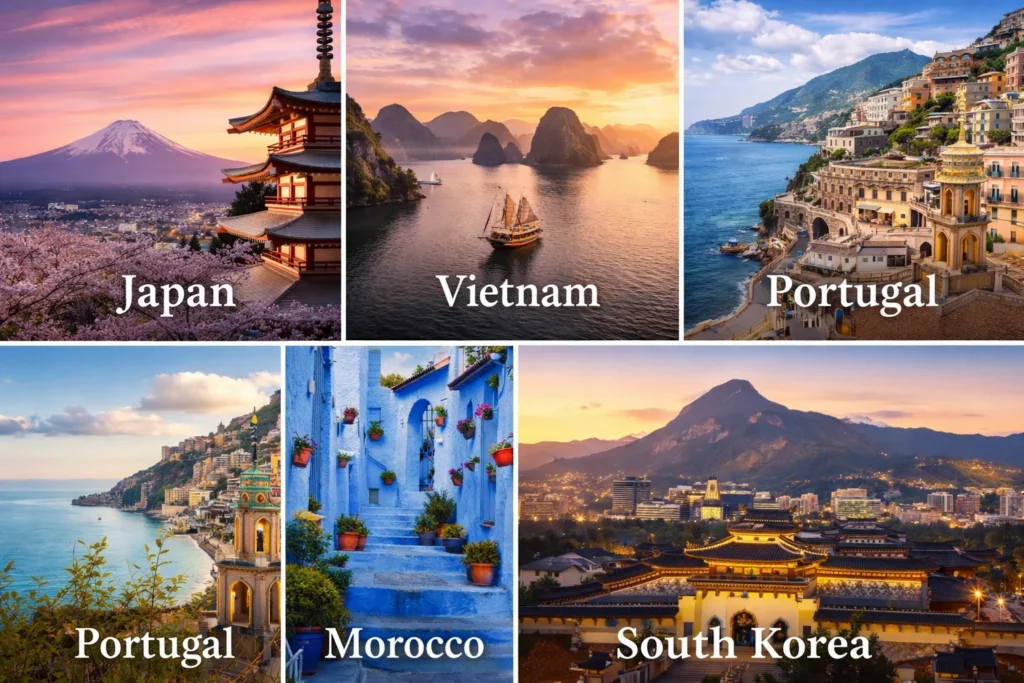
Japan continues to rank among the most sought-after destinations, supported by consistent tourism promotion efforts and improved accessibility. Tourism authorities in Japan have worked to simplify visa processes and enhance travel infrastructure, making it easier for international visitors to explore the country. The appeal of Japan lies in its seamless blend of tradition and modernity. Visitors can experience bustling urban centers alongside historic temples and cultural retreats. Official tourism campaigns have highlighted experiences such as traditional accommodations and wellness tourism, which are gaining popularity among global travelers.
Vietnam has rapidly positioned itself as a leading destination in Southeast Asia, supported by government initiatives to promote tourism growth. The introduction of e-visa systems and increased flight connectivity have made travel planning more convenient. Tourism statistics indicate rising visitor numbers, reflecting the country’s growing appeal. Vietnam’s diverse offerings, from natural landscapes to cultural heritage sites, align with the global trend of experiential travel. Authorities have focused on developing sustainable tourism practices to ensure long-term growth while preserving natural and cultural assets.
Portugal is gaining attention as a destination that embodies the concept of slow tourism. European tourism boards have emphasized the importance of sustainable and immersive travel experiences, and Portugal stands out for its ability to offer both. The country’s inclusion in the Schengen visa system allows travelers to combine multiple destinations, enhancing its appeal. Official tourism strategies in Portugal have focused on promoting regional experiences, encouraging visitors to explore beyond major cities. This approach supports local economies and provides travelers with a more authentic experience.
Morocco is experiencing a surge in global interest, supported by national tourism campaigns aimed at showcasing its unique cultural identity. Tourism authorities have invested in infrastructure and promotional initiatives to attract international visitors. The country offers a distinct travel experience, combining historic cities, desert landscapes, and vibrant markets. Government data highlights increasing visitor arrivals, reflecting the success of these efforts. Morocco’s appeal lies in its ability to offer a diverse range of experiences within a single destination, making it attractive to travelers seeking something different.
South Korea has emerged as a major tourism destination, driven by its global cultural influence and government-backed tourism initiatives. The rise of cultural exports, including entertainment and lifestyle trends, has significantly increased interest in the country. Tourism authorities have responded by enhancing visitor services and promoting key destinations. Cities like Seoul offer a mix of historic and modern attractions, while regions such as Busan and Jeju Island provide alternative experiences. Official statistics indicate steady growth in international arrivals, supported by improved connectivity and targeted marketing campaigns.
The popularity of these destinations reflects a broader transformation in global tourism. Travelers are no longer focused solely on iconic landmarks but are seeking deeper connections with the places they visit. This includes engaging with local culture, exploring regional cuisines, and participating in unique experiences. Tourism boards worldwide are adapting to these preferences by promoting experiential travel and investing in infrastructure that supports diverse visitor needs.
Aviation plays a critical role in enabling these trends. Government aviation authorities have emphasized the importance of expanding air connectivity to support tourism growth. Increased direct flights and improved airport infrastructure have made it easier for travelers to reach emerging destinations. This connectivity is essential in sustaining the momentum of international travel and ensuring that destinations remain accessible.
Sustainability is another key factor shaping travel decisions. Governments and tourism organizations are implementing policies to promote responsible travel practices. This includes managing visitor flows, protecting natural resources, and encouraging environmentally friendly tourism. The destinations highlighted for 2026 are actively working toward these goals, aligning with global efforts to create a more sustainable tourism industry.
Economic impact remains a significant consideration. Tourism contributes to job creation, supports local businesses, and drives investment in infrastructure. Official data from various countries indicates that increased visitor numbers are having a positive effect on national economies. By focusing on quality experiences and sustainable growth, destinations can maximize these benefits while minimizing potential challenges.
Digital influence is also playing a major role in shaping travel trends. Tourism boards are leveraging digital platforms to reach a global audience, providing information and inspiration to potential travelers. This approach has proven effective in highlighting lesser-known destinations and promoting unique experiences.
Looking ahead, the future of international travel is expected to be defined by flexibility, personalization, and sustainability. Governments and industry stakeholders are working together to ensure that tourism continues to grow in a way that benefits both travelers and local communities. Investments in technology, infrastructure, and policy development will be key to achieving this goal.
The emergence of these five destinations as top choices for 2026 is not coincidental. Each country offers a unique combination of accessibility, cultural richness, and immersive experiences. This aligns with the evolving expectations of travelers who are seeking more than just a visit—they are looking for meaningful journeys.
As international travel continues to expand, the focus will remain on creating experiences that resonate with modern travelers. By embracing innovation and sustainability, the global tourism industry is well-positioned to meet these demands and continue its upward trajectory.
For more travel news like this, keep reading Global Travel Wire