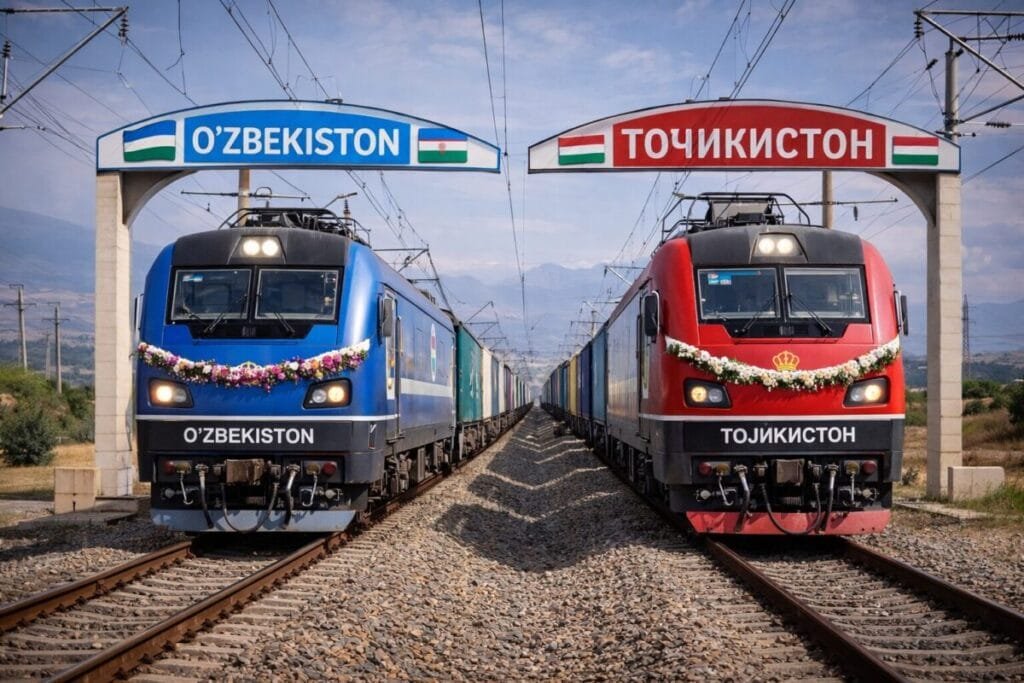
Uzbekistan and Tajikistan have taken a significant step toward deepening regional integration by strengthening their railway cooperation, introducing enhanced cross-border freight operations and improved transport infrastructure. The move is expected to increase trade efficiency, support economic development, and enhance connectivity across Central Asia, positioning the region as an increasingly important logistics and tourism corridor.
The latest agreement between railway authorities from both countries focuses on expanding freight processing capacity at shared border stations, allowing more train movements daily. With the rising demand for cross-border shipments, the new measures aim to streamline cargo operations, reduce delays, and provide faster and more reliable rail services for businesses and travelers alike.
Growing Trade Driving Railway Expansion
The expansion of railway cooperation comes amid rapidly growing trade ties between Uzbekistan and Tajikistan. Bilateral trade has witnessed significant growth in recent years, reflecting stronger economic collaboration and increasing demand for efficient transport networks. As trade volumes rise, both countries recognize the need for modernized rail systems capable of handling higher cargo capacity.
Uzbekistan has been actively pursuing economic reforms and expanding international trade partnerships, contributing to higher export volumes and greater integration with regional markets. Meanwhile, Tajikistan’s growing trade activity has increased the need for reliable transport routes, particularly given its landlocked geography and reliance on neighboring countries for access to international markets.
Rail transport has emerged as a vital solution for meeting these logistical challenges. Compared to road transport, railways offer cost-effective, high-capacity options that can support large-scale cargo movement, making them essential for industries such as agriculture, energy, mining, and manufacturing.
Enhanced Border Operations and Freight Efficiency
One of the key elements of the cooperation initiative is improving operational efficiency at border checkpoints. By increasing the number of trains processed daily and introducing streamlined customs and handling procedures, railway authorities aim to eliminate bottlenecks that previously slowed cross-border trade.
Efficient cargo handling is expected to significantly reduce transit times, improving supply chain reliability for exporters and importers. Faster freight movement also strengthens Central Asia’s role in international trade corridors, enabling smoother connections between Asian and European markets through multimodal transport routes.
The collaboration includes coordinated planning between railway administrations, better scheduling systems, and investments in digital monitoring technologies designed to enhance transparency and operational coordination.
Infrastructure Modernization Supporting Growth
Both Uzbekistan and Tajikistan are investing heavily in rail infrastructure upgrades to support the growing volume of freight traffic. Modernization efforts include track rehabilitation, improved signaling systems, and the development of new logistics hubs capable of handling larger shipments.
Uzbekistan, which has positioned itself as a regional transport hub, is upgrading key sections of its railway network to increase speed and capacity. These improvements are intended to attract international transit traffic and enhance the country’s competitiveness within global supply chains.
For Tajikistan, strengthening rail connectivity through Uzbekistan provides access to broader regional markets and reduces reliance on more expensive transport alternatives. Enhanced infrastructure not only facilitates trade but also opens new opportunities for tourism and passenger connectivity, allowing easier movement between Central Asian destinations.
Economic Benefits and Job Creation
The expansion of railway cooperation is expected to generate substantial economic benefits for both countries. Improved logistics infrastructure will lower transportation costs, making exports more competitive and supporting the growth of key sectors such as agriculture, textiles, minerals, and energy resources.
In addition to economic growth, the project will create employment opportunities across construction, railway operations, maintenance, and logistics services. As infrastructure projects expand, local communities may benefit from increased investment and improved access to regional markets.
Stronger rail networks also encourage private-sector investment by providing reliable transport solutions that reduce operational risks for businesses. This creates a positive cycle of development, where improved connectivity leads to higher trade volumes, which in turn drives further infrastructure investment.
Tourism Potential and Regional Travel Opportunities
While freight transport remains the primary focus of the cooperation agreement, improved railway connectivity has significant implications for tourism across Central Asia. Efficient rail links between Uzbekistan and Tajikistan can support cross-border tourism routes, enabling travelers to explore historical cities, cultural landmarks, and natural landscapes more easily.
Central Asia is gaining attention as a tourism destination known for its Silk Road heritage, diverse architecture, and scenic mountain regions. Enhanced rail infrastructure could encourage future passenger services that connect popular destinations, supporting sustainable travel and regional tourism growth.
Rail travel is particularly appealing for international visitors seeking immersive experiences, as it provides an opportunity to travel through remote landscapes while accessing multiple countries in a single journey.
Strengthening Diplomatic and Regional Cooperation
Beyond economic benefits, the railway partnership reflects growing diplomatic collaboration between Uzbekistan and Tajikistan. Improved transport infrastructure fosters closer political and cultural ties, encouraging cooperation on broader regional initiatives.
Central Asian countries are increasingly working together to improve connectivity and develop shared economic strategies. Projects aimed at expanding rail corridors across the region highlight a collective effort to transform Central Asia into a major transit hub linking Asia with Europe and the Middle East.
A Vision for a Connected Central Asia
The enhanced railway cooperation between Uzbekistan and Tajikistan represents more than an infrastructure project; it is a strategic investment in the future of regional connectivity. By improving transport efficiency, expanding trade networks, and creating new opportunities for tourism, the initiative contributes to the broader vision of a more integrated and economically resilient Central Asia.
As modernization efforts continue and cross-border operations become more efficient, railways are set to play a crucial role in shaping the region’s economic landscape. With stronger partnerships and ongoing infrastructure development, Uzbekistan and Tajikistan are paving the way for a new era of connectivity that supports sustainable growth, regional collaboration, and expanding travel opportunities.
For more travel news like this, keep reading Global Travel Wire