Malaysia strengthens its position in architectural tourism as modern homes in Kuala Lumpur, Pahang and Selangor capture global interest with sustainable design and cultural integration. These properties demonstrate how contemporary architecture can embrace natural landscapes and cultural heritage while meeting environmental expectations. Travelers increasingly seek immersive design experiences, and Malaysia responds with residential projects that merge art, engineering and ecology.
Architectural tourism has become a powerful sector globally. Many travelers now visit destinations not only for nature or cuisine but for contemporary structures, design museums and sustainable infrastructure. Malaysia aligns with this trend through homes that showcase tropical adaptation, craftsmanship and hybrid cultural aesthetics.
Lapatoo House Blends Japanese and Tropical Styles
Lapatoo House sits in Kuala Lumpur and draws attention for its fusion of Japanese architecture and Malaysian tropical modernism. The home spans more than 6,100 square feet and maximizes daylight and airflow. The upper floor cantilevers outward to shade the deck below, while an infinity pool stretches from the living area and merges visually with outdoor terraces.
The timber ceiling, skylights and open-plan ground floor connect interiors with gardens and city views. The rooftop entertainment room offers panoramic vistas and highlights how architecture can elevate the urban tourism experience. Lapatoo House also shows how hybrid styles can respond to tropical climates without compromising comfort or aesthetics. This design attracts interest from architecture students, international travelers and homeowners seeking cross-cultural inspiration.
Rainforest Residence Offers Eco-Retreat Tourism
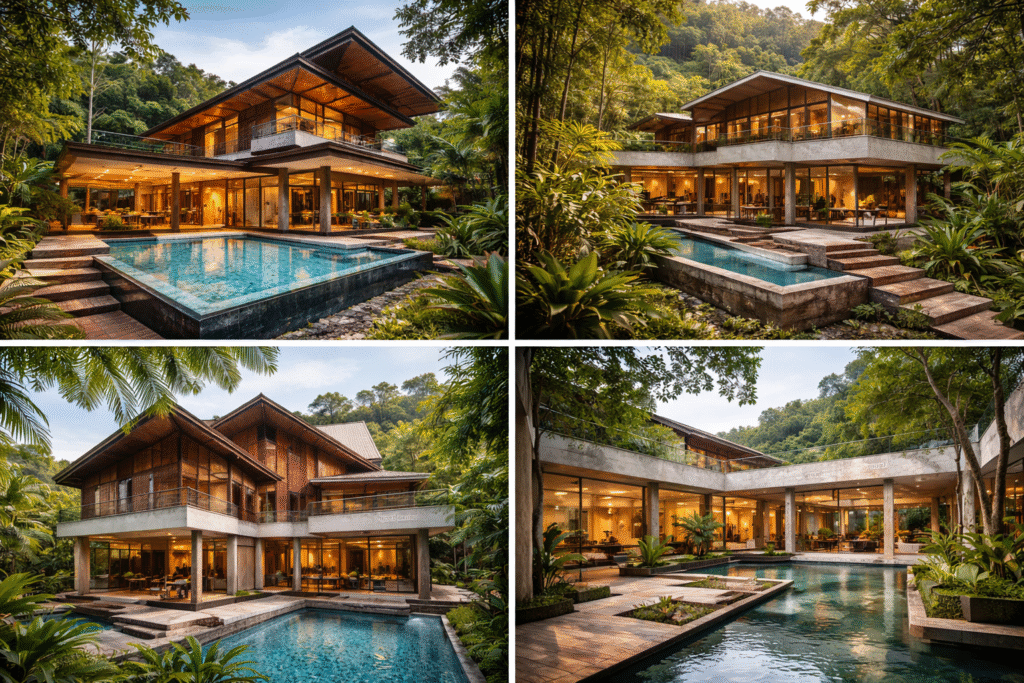
In Pahang, the Rainforest Residence in Janda Baik draws travelers who value solitude, nature and wellness. Designed for an artist couple, the home uses a concrete outer shell with timber, steel and glass detailing. Terraces, balconies and walkways blur the line between house and forest. Visitors experience natural ventilation, rainforest soundscapes and passive cooling through an oculus above the staircase.
Rainforest Residence demonstrates sustainable tourism principles by minimizing reliance on air-conditioning and using insulation to regulate indoor temperatures. Nature-centered design aligns with eco-tourism trends that prioritize low-impact travel, wellness and environmental education. Travelers visit Janda Baik for retreats, forest bathing and creative workshops, all supported by properties that respect ecological balance.
Modern Malay Residence in Petaling Jaya Marries Tradition and Technology
In Petaling Jaya, a modern family house blends Malay architectural influence with sustainable modern features. Gable roofs, timber louvres and shading strategies manage tropical heat and reduce energy consumption. The staggered layout enhances airflow and privacy while integrating a bar and garden for socializing.
Inside, a double-height living space includes a rotating television that serves multiple rooms. A floating staircase and lift improve accessibility and enhance energy efficiency. This residence highlights a broader trend in Malaysia: the revival of vernacular architecture through modern engineering. Travelers interested in cultural heritage find inspiration in how Malay design evolves without losing identity.
Terrace House Transformation Shows Adaptive Reuse Potential
In Ampang Hilir, a forty-year-old terrace house underwent a bold redesign that doubled natural lighting and added city views. Designers removed part of the slab to create a double-height living room, while a former water tank became a mezzanine that functions as a workspace by day and lounge by night.
Decor curated from flea markets, including a World War II propeller, gives the home character and history. Cross-ventilation, daylighting and minimalist material use transform a once-cramped home into a modern urban dwelling. Travelers interested in renovation culture and sustainability note how adaptive reuse reduces waste and preserves urban fabric.
Borderless House Brings Modernist Tourism to Selangor
In Selangor, the Borderless House pushes modernist design with inspiration from Mies van der Rohe’s Barcelona Pavilion. Sixty fragmented concrete walls define an open plan that erases traditional interior boundaries. Spaces unfold gradually through double-height volumes, reflective surfaces and geometric alignment. Deep overhangs manage sunlight and encourage natural ventilation.
This home illustrates how modernist principles adapt to tropical climates while honoring minimalist values. Design enthusiasts visit Selangor to study how the Borderless House uses form, materiality and spatial sequencing to create calm environments without mechanical excess. The residence also highlights a movement toward borderless architecture that connects living spaces with gardens and courtyards.
Tourism Driven by Sustainable Design Trends
Malaysia’s residential architecture now influences international design dialogues. The homes share three major themes: sustainability, innovation and cultural respect. Travelers gain new reasons to visit Malaysia as architects, students and eco-conscious explorers tour homes, attend design festivals and participate in workshops.
Tourism economists note growing demand for destinations that showcase architecture aligned with sustainability goals. Governments and local businesses benefit when design houses become cultural magnets that attract foreign visitors and global media attention.
Malaysia’s Role in Global Architectural Futures
Malaysia’s 2025 residential projects position the country at the forefront of sustainable architectural experimentation. These homes show how aesthetics, sustainability and cultural continuity can coexist. Their influence extends beyond tourism as developers, urban planners and educators study these models and apply lessons to new regions.
Architectural tourism now serves as a bridge between culture, environment and lifestyle. Malaysia’s commitment to sustainable housing invites travelers to experience a future where design respects nature, embraces heritage and enhances human comfort.
For more travel news like this, keep reading Global Travel Wire