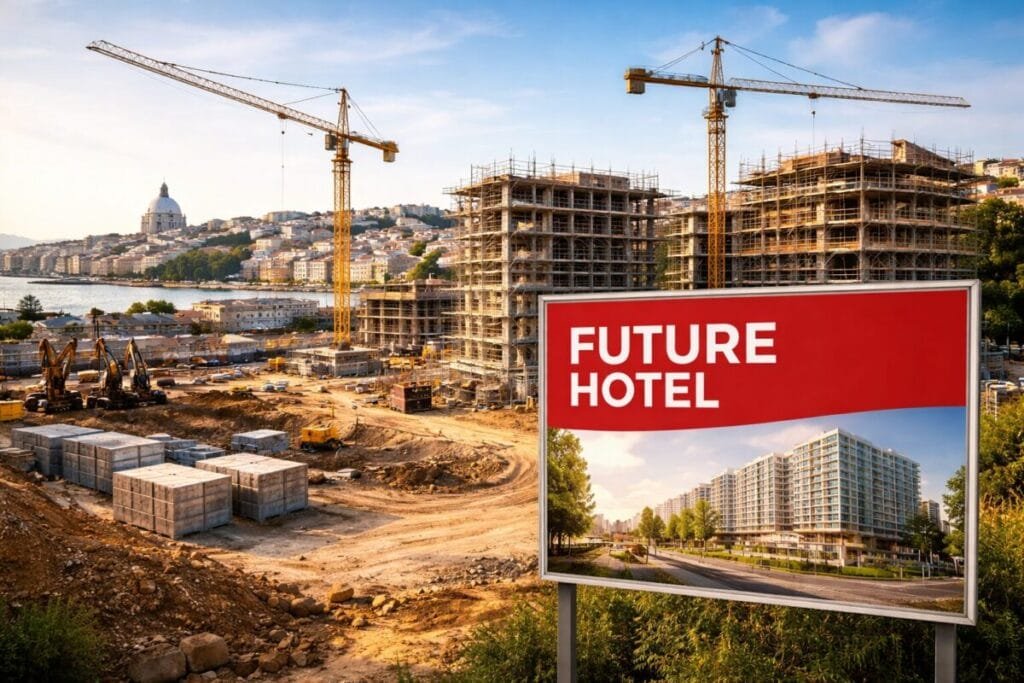
A planned four-star hotel development in Lisbon’s Marvila district has entered the spotlight after a legal complaint raised questions about compensation and urban planning decisions. The dispute reflects broader challenges faced by European cities experiencing rapid tourism growth and real estate transformation.
Public prosecutors received a complaint claiming that the municipality may have undervalued urban compensation linked to the project. Critics argue that Lisbon could have lost significant revenue through lower-than-expected compensation figures. Supporters of the project highlight economic benefits tied to investment and regeneration.
The case draws attention because Lisbon continues attracting international visitors and investors. Tourism growth drives infrastructure development while increasing pressure on housing availability.
Compensation Disagreement Creates Political Tension
The controversy centers on compensation linked to the hotel development at Quinta da Graça in Marvila. Opposition politicians claim the calculated amount undervalues land and construction factors. They argue that the municipality should have secured higher compensation to support public services and infrastructure.
Municipal leaders supporting the project defend their approach. They emphasize the importance of encouraging private investment to accelerate regeneration in emerging neighborhoods. Supporters believe balanced compensation structures help attract developers willing to transform underutilized areas.
Political debate reflects competing priorities between economic growth and social equity. The outcome may influence future urban development negotiations across Lisbon.
Marvila Emerges as Lisbon’s New Regeneration Zone
Marvila sits along the Tagus River about five kilometers from central Lisbon. The district has evolved from an industrial zone into a rapidly growing creative and residential hub. Former factories and warehouses now host art studios, co-working spaces, and modern residential projects.
Urban planners identify Marvila as a key expansion area for Lisbon’s eastward growth corridor. Improved transportation links and proximity to business districts increase its appeal to investors and residents. Developers see opportunities to create mixed-use environments that combine housing, culture, and hospitality.
Tourism experts note that emerging neighborhoods like Marvila offer visitors alternative experiences beyond traditional historic districts. New hotels aim to attract travelers seeking modern accommodations in vibrant creative areas.
Tourism Growth Versus Affordable Housing Concerns
The hotel project highlights ongoing tension between tourism development and affordable housing needs. Critics argue that expanding hospitality projects may accelerate gentrification and reduce housing options for local residents. Rising property prices and demand from international buyers intensify these concerns.
Supporters of tourism investments emphasize economic benefits such as job creation and improved infrastructure. Hotels often contribute to local economies by attracting visitors who spend money in surrounding businesses. The challenge lies in balancing tourism expansion with policies that protect housing affordability.
Lisbon faces increasing pressure to manage growth responsibly. Authorities explore strategies that encourage investment while maintaining social balance within neighborhoods.
Urban Planning Challenges in a Rapidly Growing City
Lisbon’s popularity as a travel destination has grown significantly in recent years. Increased demand for accommodation drives new development projects across the city. Urban planners must navigate complex decisions involving infrastructure, community needs, and environmental considerations.
The Marvila dispute reflects wider discussions about transparency and fairness in development agreements. Stakeholders call for clearer guidelines to ensure that public interests remain protected during negotiations with private investors.
Municipal finances also play a role in the debate. Compensation agreements influence funding available for public services, transportation, and community projects. Policymakers aim to create frameworks that balance economic growth with long-term sustainability.
Investment Interest Remains Strong Despite Legal Dispute
Despite ongoing legal challenges, investor interest in Marvila remains high. The district’s waterfront location and evolving cultural scene attract developers seeking new opportunities. Hospitality companies view the area as a strategic location for future tourism growth.
International investors often prioritize emerging neighborhoods with strong potential for appreciation. Marvila’s transformation aligns with trends seen in other European cities where industrial zones become creative hubs. New businesses and cultural initiatives continue to shape the district’s identity.
Tourism stakeholders believe that carefully planned development could enhance the area’s appeal while supporting local communities.
Future Implications for Lisbon’s Tourism Strategy
The legal outcome of the Marvila hotel dispute may influence Lisbon’s broader urban strategy. Authorities must address concerns related to compensation models, transparency, and community impact. Decisions made in this case could set precedents for future development agreements.
Lisbon aims to maintain its status as a leading European destination while managing rapid growth responsibly. Urban regeneration projects play a key role in distributing tourism beyond crowded historic neighborhoods. Balanced planning can help ensure sustainable development that benefits both visitors and residents.
Lisbon Balances Growth, Tourism, and Community Needs
The Marvila case highlights the complexities faced by cities navigating tourism-driven transformation. Economic opportunity, housing affordability, and cultural identity intersect within ongoing planning debates. Lisbon continues working toward solutions that encourage innovation while protecting community interests.
As legal proceedings move forward, travelers and investors watch closely. Marvila’s evolution represents a broader story about modern urban development in Europe. The district’s future may shape how Lisbon balances tourism expansion with social responsibility in the years ahead.
For more travel news like this, keep reading Global Travel Wire