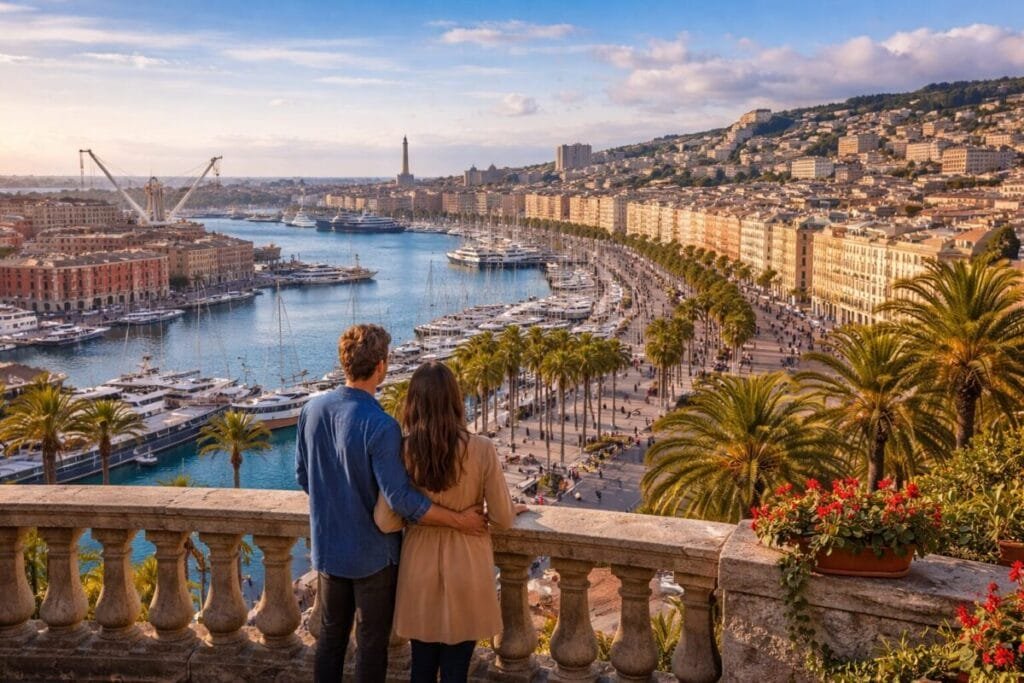
International travel patterns are undergoing a notable realignment this winter as a growing wave of visitors from the United Kingdom, Germany, France, Switzerland, the United States, Spain and Canada shift their attention to Genoa in northern Italy. Long overshadowed by Rome, Florence and Venice, the Ligurian port city has quietly transformed into one of Europe’s most compelling winter city-break choices. Stronger airline connectivity, competitive hotel pricing and mild temperatures have created conditions that align with the desires of modern travelers seeking cultural depth, outdoor accessibility and value without the seasonal crowds that dominate Italy’s tourism hotspots.
Traditionally associated with summer cruises and maritime heritage, Genoa is now expanding beyond its port identity to position itself as a viable year-round destination. Airline scheduling offers one of the clearest signals of this shift: carriers such as Ryanair, Lufthansa and easyJet have increased winter capacity to Genoa, supporting a broader move toward off-season travel across Europe. These new and expanded routes have filled aircraft seats during months once considered low yield for Mediterranean destinations. The result is a noticeable uptick in winter arrivals that is being felt across hotels, restaurants and cultural attractions.
Why Travelers Are Choosing Genoa Over Rome This Winter
The shift in traveler preference can be traced to several converging forces. First, Genoa’s climate gives it a structural winter advantage. Sheltered between the Ligurian Sea and the Apennine mountains, the city benefits from milder conditions than many inland European destinations. February daytime temperatures frequently reach 14°C to 16°C under clear skies, offering a taste of spring at a time when much of the continent remains cold and overcast. Outdoor promenades, waterfront cafés and public piazzas remain in active use throughout winter, reinforcing the appeal for visitors seeking warmth without resort-style pricing.
Second, value matters. In winter, Genoa’s hotels — ranging from international chains such as Hilton, Accor and Marriott to independent boutique properties — offer significantly lower nightly rates compared to Rome or Florence. This pricing dynamic allows travelers to book higher quality accommodations for less, a trend particularly attractive to cost-aware British, German and French travelers taking short weekend trips. Industry reports indicate winter occupancy levels have increased steadily since 2023, with February weekends now performing strongly for both international and domestic markets.
Third, the city offers authenticity that is often cited as a missing element in Italy’s most touristed cities. Genoa’s historic center, one of the largest medieval old towns in Europe, remains a lived-in urban environment rather than a curated tourist stage. Narrow streets, called caruggi, reveal bakeries, wine bars, textile shops and seafood markets that operate for locals first and visitors second. Winter amplifies this everyday rhythm, allowing travelers to experience Italian life without the intensity of summer tourism.
Travel Demand Supported by Expanded Airline Capacity
Airlines have acted quickly to capitalize on this growing demand. Ryanair continues to anchor Genoa’s low-cost access for UK travelers, particularly through London Stansted, where flight times average just over two hours and fares in winter remain highly competitive when booked in advance. Lufthansa supports Central European travel through connections from major German hubs, enabling easy weekend or extended-stay city breaks for both business and leisure passengers. easyJet, meanwhile, has extended certain Genoa routes from seasonal to year-round schedules, reflecting confidence in winter demand.
Genoa Airport, located approximately 20 minutes from the city center, recorded its highest passenger totals to date in 2025, with winter volumes showing the fastest percentage growth. For travelers accustomed to long transfers from airports serving Rome or Venice, the compact accessibility of Genoa is a strong advantage.
Hotels See Bookings Surge as Winter Tourism Matures
Hospitality performance further confirms the shift. International hotel groups such as Hilton, Accor and Marriott report stronger winter booking curves than pre-2020 levels, with room demand driven by culinary tourism, cultural attraction visits, football fixtures and leisure city-breaks. Winter also helps balance Genoa’s tourism economy, reducing reliance on cruise season peaks and distributing visitor spending across a broader calendar window.
Dining contributes meaningfully to the city’s winter appeal. Genoa’s culinary identity, celebrated for pesto, focaccia and seafood, thrives in colder months. Local markets and bakeries operate uninterrupted through winter, and restaurants benefit from slower rhythms that encourage longer meals and deeper engagement. Cultural institutions — including palazzi museums, maritime exhibits and historic churches — remain open year-round, offering value-driven visitor experiences without timed-entry queues.
Winter Travel Preferences Align with Genoa’s Strengths
The rise of Genoa reveals a broader pattern in winter travel preferences. Travelers want warmth without extreme heat, heritage without congestion, and value without scarcity. Airlines want stable year-round routes. Hotels want occupancy outside peak months. Tourism boards want distribution that avoids seasonal strain. Genoa sits squarely at the intersection of all these goals.
And while this trend does not replace Italy’s marquee cities, it complements them. Winter travel is no longer confined to Christmas markets or ski resorts. Mild-weather cultural cities with strong airline access are gaining relevance — and Genoa is benefiting early.
As demand from the UK, Germany, France, Switzerland, Spain, Canada and the United States continues to rise, Genoa is rapidly transforming from Italy’s overlooked port city into its smartest winter city-break choice.
For more travel news like this, keep reading Global Travel Wire