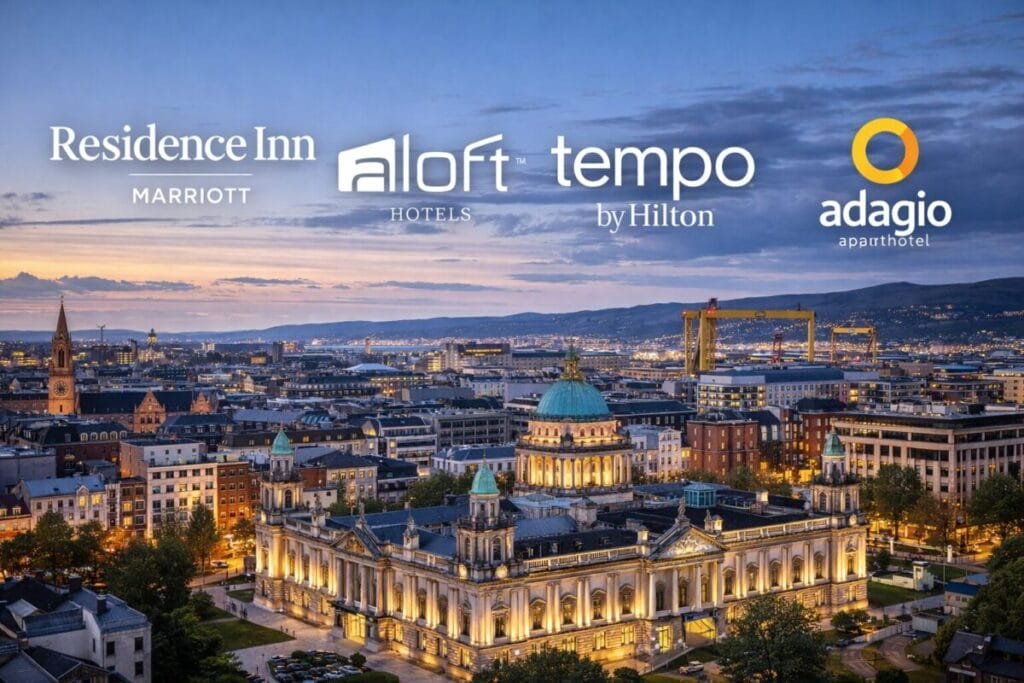
Northern Ireland’s tourism sector is entering an exciting new phase as a wave of highly anticipated hotel developments promises to reshape travel experiences across Belfast and surrounding regions. Leading global brands such as Residence Inn, Aloft, Tempo by Hilton, YOTEL, and Adagio are introducing innovative accommodation concepts that reflect evolving traveler preferences, ranging from tech-driven stays to wellness-focused hospitality and extended-stay solutions.
These projects signal growing confidence in Northern Ireland’s tourism potential, with investors and hotel operators recognizing the increasing demand for high-quality accommodations that cater to both leisure and business travelers. As visitor numbers continue to rise, the addition of diverse hotel offerings will strengthen the region’s position as a competitive European destination.
YOTEL Belfast Brings Technology and Modern Design to the City Centre
One of the most anticipated additions is the arrival of YOTEL in Belfast city centre. Known globally for its sleek, technology-driven hospitality concept, the brand aims to attract a new generation of travelers seeking efficient, stylish accommodations.
The planned property will feature compact yet thoughtfully designed rooms optimized for modern lifestyles, along with shared social spaces, fitness facilities, and flexible work areas. This model appeals particularly to young professionals, solo travelers, and business visitors who prioritize convenience and connectivity.
Beyond accommodation, the development is expected to contribute to urban revitalization by enhancing the surrounding area’s appeal as a vibrant social and commercial hub. The introduction of a globally recognized lifestyle brand also highlights Belfast’s growing reputation as a modern, forward-thinking destination.
Tempo by Hilton Introduces Wellness-Focused Hospitality
Another key project set to shape Belfast’s hospitality landscape is the debut of Tempo by Hilton, a brand centered on wellness, balance, and contemporary travel experiences. Designed to meet the needs of health-conscious travelers, the hotel will feature fitness-focused amenities, thoughtfully designed rooms, and communal areas promoting relaxation and productivity.
Located near one of Belfast’s cultural districts, the hotel is strategically positioned to attract visitors interested in both cultural exploration and business travel. Hilton’s strong global network is likely to bring increased international attention to Belfast, helping the city compete with other European capitals for high-value tourism and corporate events.
The emphasis on wellness reflects broader industry trends, as travelers increasingly seek accommodations that support healthy lifestyles during their journeys.
Aloft and Residence Inn Strengthen Titanic Quarter’s Appeal
The Titanic Quarter, already one of Belfast’s most iconic tourism areas, is set to benefit significantly from a dual-brand development featuring Aloft and Residence Inn by Marriott. Together, these properties will provide a combination of short-term and extended-stay options, appealing to a wide range of travelers.
Aloft is known for its energetic atmosphere, modern design, and social spaces that cater to younger guests and urban explorers. In contrast, Residence Inn focuses on apartment-style accommodations designed for longer stays, offering fully equipped kitchens and flexible living areas ideal for business travelers, digital nomads, and relocating professionals.
This dual approach reflects the evolving nature of travel, where guests increasingly look for flexibility and personalized experiences. The expansion also enhances the Titanic Quarter’s status as a major destination combining history, innovation, and modern entertainment.
Adagio Aparthotel Expands Flexible Living Options
Adagio’s planned aparthotel introduces a hybrid hospitality model blending hotel services with residential-style living. This concept responds to growing demand for longer stays and flexible travel arrangements, particularly among remote workers and international professionals.
Guests will benefit from self-contained apartments designed to provide comfort and independence while maintaining access to traditional hotel amenities. Communal spaces and networking-friendly environments aim to foster social interaction, aligning with trends toward co-living and community-driven travel experiences.
The addition of Adagio reflects Belfast’s evolving demographic of visitors, including digital nomads and extended-stay travelers seeking a balance between work and leisure.
Dundonald Development Expands Tourism Beyond Belfast
While many new projects focus on Belfast city centre, planned developments in Dundonald highlight efforts to spread tourism benefits across the wider region. Located near popular leisure and sports facilities, the new hotel aims to attract families, event attendees, and visitors exploring County Down’s natural landscapes.
By improving accommodation options outside the city, this project supports regional tourism growth and encourages travelers to explore destinations beyond traditional urban hubs. Expanding infrastructure in surrounding areas strengthens Northern Ireland’s overall tourism strategy by promoting diverse travel experiences.
Economic Impact and Tourism Growth Potential
The arrival of multiple international hotel brands is expected to generate significant economic benefits, including job creation, increased investment, and enhanced infrastructure. New hotels not only accommodate rising visitor numbers but also stimulate local businesses such as restaurants, transportation services, and cultural attractions.
As Belfast continues to host international conferences, festivals, and sporting events, expanded accommodation capacity ensures the city can meet growing demand without compromising quality. Increased competition among hotel brands may also drive innovation, improving guest experiences and elevating service standards.
Northern Ireland’s Emerging Position in European Tourism
The upcoming hotel openings reflect a broader trend of Northern Ireland emerging as a compelling travel destination. Known for its rich history, dramatic landscapes, and vibrant cultural scene, the region is attracting increasing global attention.
Improved connectivity, strategic tourism marketing, and ongoing investment in hospitality infrastructure are helping position Belfast and surrounding areas as accessible and attractive for international visitors.
Future Outlook for Northern Ireland Hospitality
As these new properties prepare to open over the coming years, they represent more than just additional rooms—they signal a transformation in how travelers experience Northern Ireland. From tech-forward accommodations and wellness-focused design to extended-stay flexibility and regional expansion, the hospitality sector is evolving to meet changing expectations.
With Residence Inn, Aloft, Tempo by Hilton, YOTEL, Adagio, and the Dundonald development leading the way, Northern Ireland’s tourism industry is poised for a new era of growth. These projects highlight the region’s commitment to innovation, diversity, and quality, ensuring that future visitors will enjoy a broader range of accommodation options and richer travel experiences.
For more travel news like this, keep reading Global Travel Wire