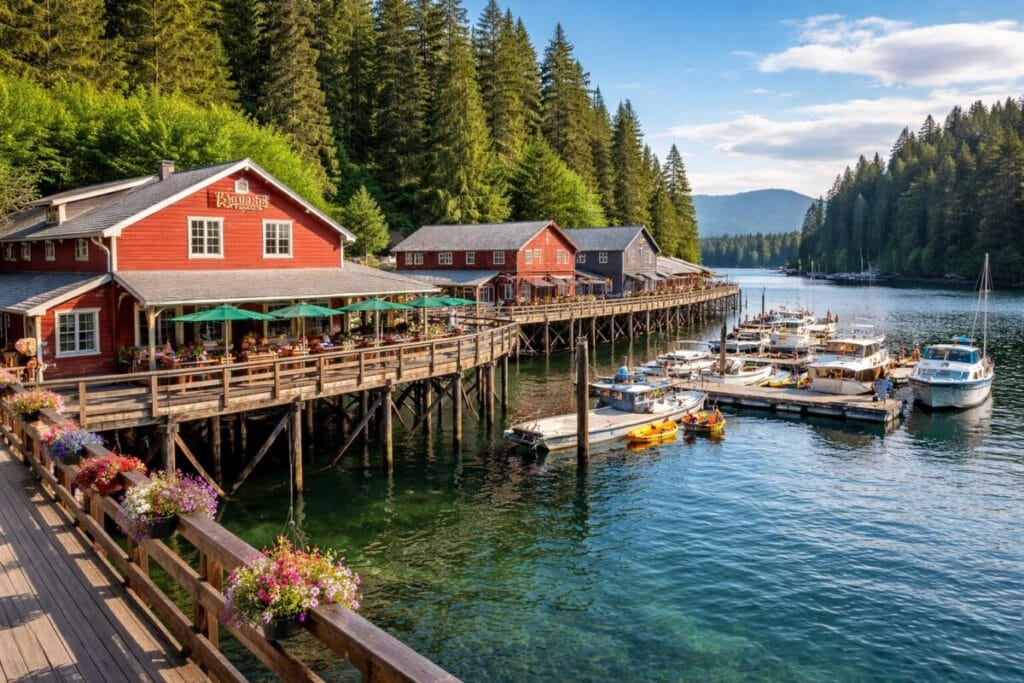
Telegraph Cove Resort, one of Canada’s most recognized ecotourism destinations on Vancouver Island’s North Island, is completing a remarkable comeback story after a devastating fire severely affected the property at the end of 2024. The resort, beloved for its coastal boardwalk, historic buildings, and wildlife-oriented adventures, is now preparing to welcome travelers in 2026 with renewed facilities, strengthened sustainability measures, and a tourism model that supports both the local community and Vancouver Island’s thriving outdoor industry.
Located near Port McNeill, Telegraph Cove has long been a gateway for marine wildlife viewing and low-impact adventure tourism. Its quiet location, rich natural surroundings, and access to protected waters have made it a top choice for whale watching, kayaking, and cultural travel. For decades, the resort has contributed to the growth of ecotourism in British Columbia, drawing visitors from across North America, Europe, and Asia who seek immersive nature-based travel experiences.
The fire that struck on December 31, 2024, however, dealt a blow to the resort’s operations. Flames destroyed part of the iconic boardwalk and caused significant damage to the Killer Whale Café and Old Saltery Pub, two venues that defined the resort’s warm, communal atmosphere. Early 2025 was marked by uncertainty as travelers, industry partners, and local residents waited to learn whether the resort would reopen at all.
By spring 2025, owners Gordie and Marilyn Graham made their intentions clear. Not only would Telegraph Cove Resort reopen, but it would return stronger and better suited to modern ecotourism expectations. Reconstruction efforts accelerated throughout the year, and limited operations resumed as trails, moorage facilities, and accommodations reopened while building restoration continued. Visitors in 2025 were able to witness the rebuilding process firsthand, a living reminder of the region’s resilience.
As 2026 begins, reconstruction is entering its final stretch. The new Killer Whale Café and Old Saltery Pub are nearing completion, designed to maintain the resort’s historical character while providing more efficient, sustainable, and weather-resilient infrastructure. The Grahams emphasized that the goal is not to replace Telegraph Cove’s identity, but to reinforce it. The new spaces preserve traditional timber elements, coastal influences, and waterfront views while integrating improved accessibility and modern amenities favored by today’s eco-conscious travelers.
The rebuilding process has highlighted the resort’s longstanding commitment to environmental stewardship. Telegraph Cove Resort plans to introduce more sustainable materials, reduce energy consumption across buildings, and enhance waste and water management practices once reopening is complete. These measures align with British Columbia’s wider push to strengthen responsible tourism, particularly in sensitive coastal environments where wildlife protection and visitor education are core priorities.
Telegraph Cove Resort has played a significant role in shaping ecotourism on Vancouver Island. The North Island region is home to some of Canada’s most remarkable wildlife encounters, including orca sightings, humpback whale feeding grounds, black bear habitats, and migratory bird routes. The resort’s proximity to British Columbia’s protected waters makes it one of the few places in the world where travelers can observe marine life within minutes of departure. Over the years, the resort has partnered with local operators offering whale watching tours, grizzly bear excursions, kayaking expeditions, and cultural tours, strengthening the region’s tourism ecosystem.
Community support has been crucial throughout the recovery. Residents, tourism operators, carpenters, and local businesses rallied behind the Grahams, understanding the resort’s importance not only as a business but as a cultural landmark and economic driver. Telegraph Cove supports seasonal employment, contributes to the visitor economy, and attracts travelers to local museums, wildlife centers, restaurants, and ferry-linked destinations throughout the North Island region.
Looking ahead, the 2026 reopening marks more than a return to normal operations—it represents the beginning of a new chapter. Telegraph Cove Resort aims to expand its appeal to travelers seeking longer stays, transformative outdoor experiences, and meaningful connections with nature. With international travel demand to Canada expected to remain strong over the next several years, the resort is positioned to benefit from trends favoring sustainability, slow travel, and community-based tourism.
For visitors, Telegraph Cove will once again offer the quiet charm and stunning views it has always been known for. Families, nature photographers, and adventure travelers will be able to enjoy renovated dining spaces, restored boardwalks, and improved accommodations with the same coastal character that made the resort a beloved destination. The Grahams are optimistic about the future, noting that the most rewarding part of the rebuilding process has been witnessing how much the resort means to returning guests and the community.
The resort’s comeback serves as a reminder of the resilience of both the tourism sector and the communities that support it. Telegraph Cove Resort’s story is not simply one of reconstruction—it is a story of renewal, environmental stewardship, and continued relevance in a rapidly evolving global travel landscape. For those in search of pristine wilderness, marine wildlife, and authentic coastal experiences, Telegraph Cove remains a destination worth waiting for.
For more travel news like this, keep reading Global Travel Wire