Oman is rapidly becoming a leading luxury travel destination in the Middle East. The country is boosting its hospitality sector with a 25% increase in hotel inventory, while Oman Air expands its network to serve more travelers. With over 9,600 new hotel rooms planned by 2030, the Sultanate is preparing for a tourism boom driven by global demand for cultural and luxury experiences.
Hospitality Sector Expands with Global Brands
Oman’s government has identified tourism as a key pillar of economic diversification. To support this vision, major hotel groups are opening new properties across the country. JW Marriott, Anantara, Mandarin Oriental, and St. Regis are among the luxury names entering the Omani market.
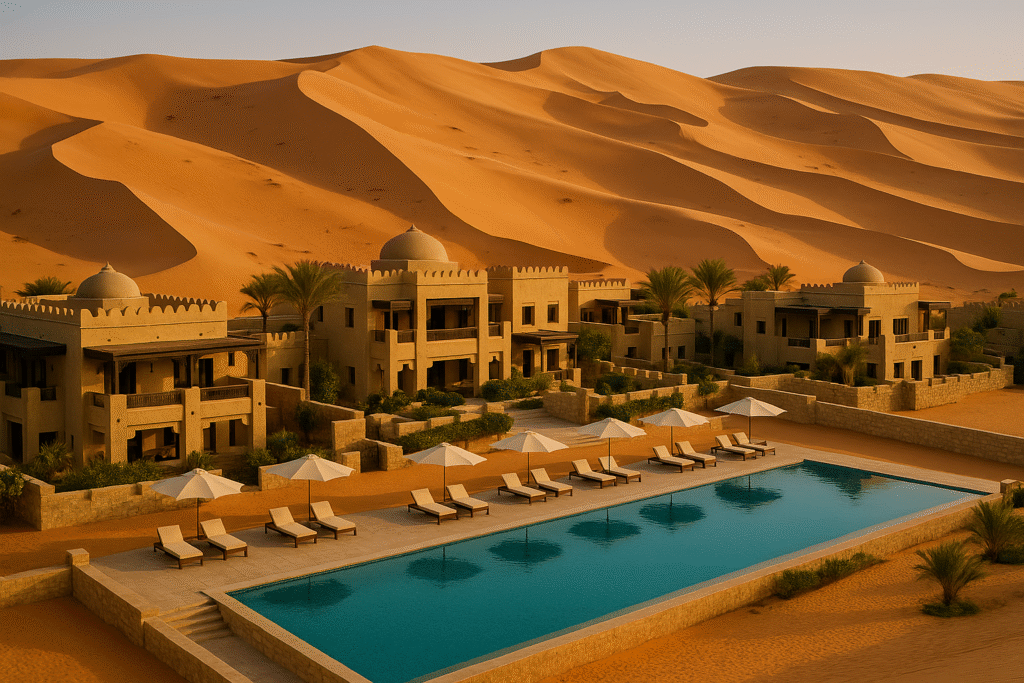
These brands are not only opening city hotels in Muscat but also unique desert resorts and mountain retreats. The combination of global standards with Arabian heritage creates a distinctive travel experience. Oman’s room inventory, currently at 36,000, will rise to over 45,000 by 2030.
The sector is forecast to generate 5.5 billion dollars in 2024. High-end properties are seeing the strongest growth, with revenues projected to increase by 18% compared to last year. Tourists are drawn to Oman’s peaceful beaches, dramatic mountains, and cultural landmarks.
Oman Air Expands Global Connectivity
Oman Air is playing a central role in this tourism surge. The airline has expanded routes to major destinations, making the Sultanate more accessible. New services link Muscat to cities like Beijing, Rome, and Salalah, while regional routes connect Oman with Gulf neighbors including Abu Dhabi, Dubai, and Riyadh.
In early 2025, Oman Air recorded a threefold increase in point-to-point passenger traffic. This sharp rise highlights the growing popularity of Oman as a stopover and as a final destination. The airline is investing in new aircraft and enhancing services at Muscat International Airport. The airport has become a hub for seamless transfers across Asia, Europe, and the Gulf.
SalamAir, the country’s low-cost carrier, also supports tourism growth. It offers affordable connections from Dubai, Doha, and Muscat, making Oman accessible to budget travelers. Together, Oman Air and SalamAir provide options for both luxury and budget tourists.
New Hotels Transform the Luxury Landscape
Oman’s luxury hospitality scene is undergoing a dramatic transformation. The JW Marriott Muscat will bring a blend of fine dining, elegant suites, and business facilities to the capital. Its central location makes it ideal for visitors to explore the Royal Opera House Muscat and the Sultan Qaboos Grand Mosque.
In the mountains, Anantara Al Jabal Al Akhdar Resort is already attracting attention. Nestled in the Hajar range, it offers infinity pools, panoramic views, and authentic Arabian hospitality. It has become one of the most sought-after retreats in the Middle East.
Mandarin Oriental Muscat is blending modern service with traditional design. Guests can enjoy lavish spa treatments, gourmet dining, and ocean views. Its mix of luxury and cultural authenticity is setting a new benchmark for the capital’s hospitality.
Meanwhile, St. Regis Muscat is expected to open by 2026 along the coast. The resort will feature signature butler service, pristine beaches, and high-end dining. It is designed to serve discerning travelers who expect exclusivity and comfort.
Why Tourists Choose Oman
Travelers are increasingly attracted to Oman because it combines modern luxury with cultural depth. Visitors can explore ancient forts, bustling souqs, and desert landscapes before retreating to five-star resorts. Oman also offers world-class diving, mountain trekking, and cultural festivals.
Government initiatives support this growth by promoting sustainable tourism. Regulations encourage eco-friendly hotel design and protect natural landscapes. This approach ensures that tourism growth benefits local communities while preserving Oman’s unique environment.
Travel Tips for First-Time Visitors
Tourists planning a trip to Oman should consider several essentials:
- Best time to visit: October to April offers cooler temperatures, ideal for outdoor exploration.
- Currency: The Omani Rial (OMR) is the official currency. ATMs are widely available in Muscat and major towns.
- Dress code: Modesty is expected. Light, conservative clothing is suitable for public spaces and religious sites.
- Language: Arabic is the official language, but English is widely spoken in tourist areas.
- Visa requirements: Many travelers can apply for an eVisa online before arrival. Always check requirements before travel.
- Transport: Car rentals are common, and taxis are available. Domestic flights connect Muscat with Salalah and Sohar.
Oman Air Flight Options for Tourists
Oman Air connects the Sultanate with major hubs in Europe and Asia. Direct flights operate from London, Paris, Frankfurt, Mumbai, Kuala Lumpur, and Beijing. Regional travelers benefit from short flights within the Gulf Cooperation Council.
For domestic travelers, flights to Salalah, Sohar, and Khasab provide quick access to Oman’s regional highlights. Combined with SalamAir’s budget options, the network supports both premium and budget markets.
Conclusion
Oman is emerging as one of the Middle East’s most exciting destinations. With a 25% increase in hotel capacity and expanded flight routes, the country is ready to welcome more visitors than ever before.
Luxury hotels from JW Marriott, Anantara, Mandarin Oriental, and St. Regis are redefining the nation’s hospitality landscape. Meanwhile, Oman Air ensures smooth connections from across the globe.
Oman’s mix of cultural heritage, natural beauty, and modern luxury is unmatched. As the country expands its tourism infrastructure, it is set to shine as a top global travel destination in 2025 and beyond.
For more travel news like this, keep reading Global Travel Wire