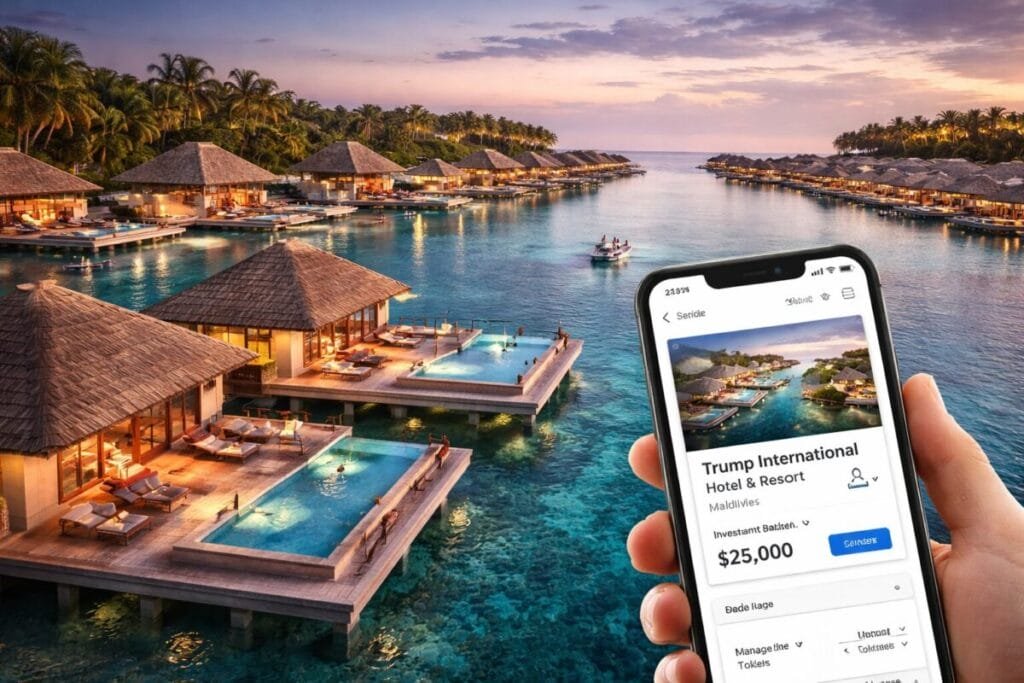
The upcoming Trump International Hotel & Resort Maldives has unveiled a new investment model built on blockchain technology. Developers plan to combine luxury hospitality with tokenized real estate offerings. This initiative marks a significant shift in how investors access high-end resort developments.
World Liberty Financial, alongside Securitize and DarGlobal, leads the financial structuring of the project. Through tokenization, accredited investors can purchase fractional revenue interests tied to the resort’s performance. This structure creates a modern pathway into premium hospitality assets.
The resort aims to complete construction by 2030. Once operational, it will feature around 100 ultra-luxury beach and overwater villas. Developers position the property as a flagship destination within the Maldives tourism market.
A new chapter for tokenized real estate in global tourism
Tokenization converts ownership interests into digital tokens secured on blockchain networks. In this case, investors gain exposure to revenue streams linked to the resort. This structure offers a regulated and transparent investment framework.
Real estate has historically presented barriers to entry due to high capital requirements. Tokenization allows fractional participation in large-scale developments. Consequently, eligible investors can diversify portfolios with smaller allocations.
Developers view this model as a bridge between decentralized finance and traditional hospitality investment. The integration of blockchain adds efficiency and transparency to the process. Investors can track transactions and ownership records digitally.
Luxury tourism growth supports investment appeal
The Maldives remains one of the world’s most sought-after luxury travel destinations. Government tourism authorities continue to promote sustainable resort development across the archipelago. The country consistently attracts high-spending travelers seeking exclusivity and privacy.
Overwater villas and beachfront estates drive strong demand within the market. International tourism reports highlight the Maldives as a leader in premium island hospitality. This environment strengthens the long-term outlook for the Trump International Hotel & Resort Maldives.
Luxury tourism trends show increasing interest in branded residences and experiential stays. Developers design this resort to align with those preferences. Investors benefit from exposure to a globally recognized hospitality brand within a stable tourism sector.
Blockchain technology transforms real estate finance
Blockchain technology allows developers to issue digital securities tied to tangible assets. In this project, tokens represent loan revenue interests associated with the resort. The structure complies with U.S. securities regulations for accredited investors.
This regulated framework ensures oversight and investor protection. Tokens fall under private placement guidelines within existing securities laws. International investors may participate under offshore regulations.
Digital issuance reduces reliance on traditional intermediaries. As a result, transactions may process faster and with greater efficiency. Developers can raise capital while maintaining compliance standards.
Industry leaders note that real estate tokenization has long presented technical and legal challenges. Advances in regulatory clarity and digital infrastructure now support more scalable solutions. This development signals growing maturity within the sector.
Benefits for investors and developers
Fractional ownership stands out as a major advantage of tokenized real estate. Investors can participate in high-value hospitality assets without full property acquisition. This structure increases accessibility for qualified participants.
Blockchain systems also enhance transparency. Ownership records and transactions remain stored on secure digital ledgers. This approach reduces administrative friction and supports accountability.
For developers, tokenization broadens access to capital markets. Companies can attract funding from diverse geographic regions. The global appeal of the Maldives strengthens investor interest.
Additionally, hospitality projects often require substantial upfront financing. Tokenized structures offer alternative capital channels beyond conventional bank lending. This flexibility can accelerate development timelines.
Regulatory oversight shapes the offering
The investment structure operates within established securities regulations. Accredited investors in the United States may participate under Regulation D guidelines. International participants may invest under Regulation S provisions.
These frameworks ensure that offerings comply with financial laws. Regulatory compliance provides credibility within institutional and private investor communities. Developers emphasize structured governance and oversight throughout the process.
Issuing tokens on public blockchain networks adds technological transparency. However, investors must understand transfer restrictions and eligibility requirements. Compliance remains central to the offering’s design.
Maldives strengthens its role in luxury hospitality innovation
The Maldives government continues to support high-end resort expansion under controlled development strategies. Authorities prioritize environmental sustainability and premium tourism standards. Resort developers must meet strict regulatory and environmental criteria.
The Trump International Hotel & Resort Maldives aligns with these tourism objectives. Ultra-luxury accommodations, branded experiences, and integrated services aim to attract global elites. The combination of exclusivity and digital finance innovation sets this project apart.
As luxury travel evolves, investors seek exposure to experiential destinations. Island resorts offer both lifestyle prestige and potential financial returns. Tokenization introduces a new layer of accessibility to this market.
Future outlook for tokenized hospitality assets
Industry analysts expect continued growth in tokenized asset markets. Blockchain adoption across finance and real estate continues to expand. Hospitality developments may increasingly explore similar funding mechanisms.
The success of this project could establish a blueprint for future resorts worldwide. Developers in other tourism hotspots may replicate the model. Technology-driven finance could reshape how large-scale travel projects secure capital.
Investors also monitor broader trends in decentralized finance integration. Real-world asset tokenization bridges traditional investment structures with digital innovation. The hospitality sector now stands at the intersection of these two forces.
A transformative step for global real estate investment
The Trump International Hotel & Resort Maldives tokenization initiative represents a pivotal moment in hospitality finance. By merging blockchain technology with luxury tourism development, the project introduces a modern investment framework.
Accredited investors gain structured access to a high-profile resort within one of the world’s premier travel destinations. Developers gain diversified funding channels supported by regulatory oversight.
As construction advances toward the 2030 target, the market will observe closely. This initiative may influence how future luxury resorts finance expansion. Tokenized real estate could soon become a mainstream component of global tourism investment strategies.
For more travel news like this, keep reading Global Travel Wire