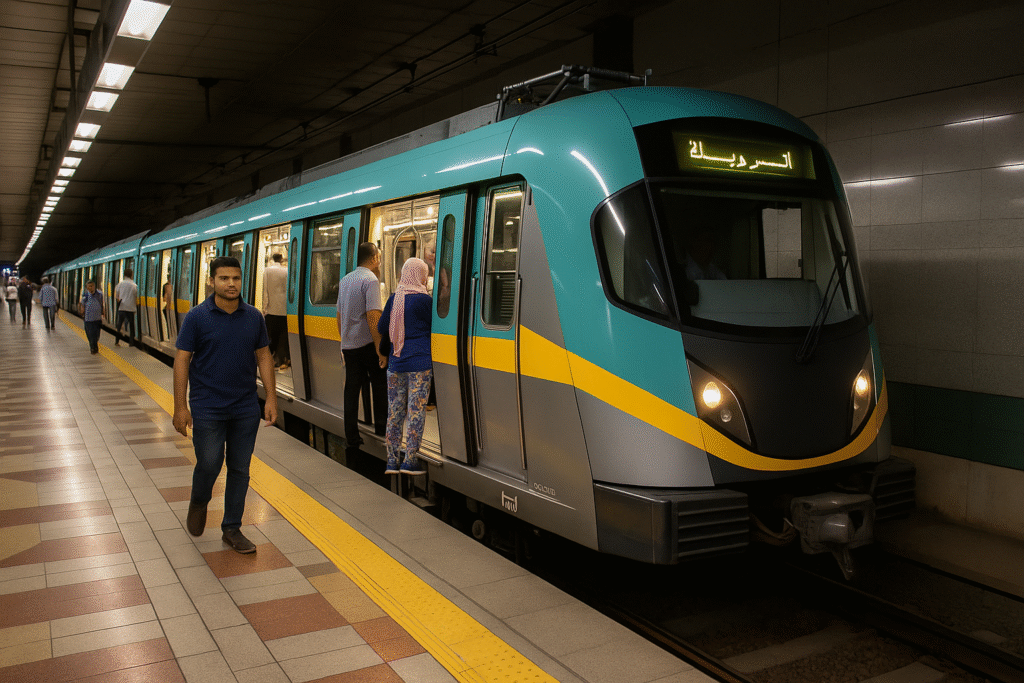
The Cairo Metro, one of Africa and the Middle East’s busiest urban transport networks, is about to undergo a major transformation. Spanish rolling stock manufacturer CAF has signed contracts worth over €450 million with Egypt’s National Authority for Tunnels (NAT) to modernise and maintain parts of the system. The agreements mark a pivotal step in Egypt’s broader plan to upgrade its transport infrastructure, reduce congestion, and deliver modern, efficient services to millions of commuters.
The contracts focus primarily on Lines 1 and 2, two of the oldest and most heavily used routes in the network. They include full modernisation of trains, long-term maintenance commitments, and refurbishment of key workshops. By combining technical expertise with financial support from Spain, this project is set to redefine urban mobility in Cairo.
Line 2: Comprehensive Modernisation
The largest portion of the contracts is dedicated to Cairo Metro Line 2. A total of 39 trains will be modernised to extend their service life by up to 30 years. The upgrades will cover every critical system, from traction equipment and auxiliary converters to advanced braking systems.
Passenger comfort is also central to the project. CAF will redesign interiors to create a cleaner, brighter, and more modern environment. Upgrades include new train control and management systems (TCMS), Wi-Fi connectivity, CCTV cameras for enhanced safety, and advanced passenger information systems. These changes will ensure that commuters experience a safe, efficient, and user-friendly journey every day.
Upgraded Maintenance at Shubra
Beyond train modernisation, CAF will overhaul the Shubra workshops, the main facility responsible for maintaining Line 2’s fleet. This upgrade will allow for faster, more efficient servicing of trains and prepare the workshops for long-term operational demands. With better infrastructure in place, CAF and NAT will be able to keep the fleet in top condition, reducing downtime and improving overall reliability.
This is not only about fixing trains; it is about building capacity for sustainable operations. Shubra will become a cornerstone for the future of metro maintenance in Egypt.
Ten-Year Commitment for Line 2
CAF’s involvement does not end with refurbishment. Under a separate agreement, the company will maintain the 39 modernised Line 2 trains for the next ten years. This long-term partnership ensures continuity, quality control, and quick response to operational challenges. It reflects Cairo’s growing emphasis on building partnerships that guarantee durability and reliability, not just short-term fixes.
Line 1: Continued Upgrades and Maintenance
Line 1, Cairo’s first metro line, also receives attention under the new contracts. CAF will maintain 23 trains operating on the line for a decade. This will begin once the ongoing modernisation of Line 1, initiated under a 2021 contract, is complete.
As part of this project, CAF will also refurbish the maintenance depot at Kozzika, which serves Line 1’s trains. These efforts are vital to sustaining the line’s role as the backbone of Cairo’s urban mobility network. Line 1 carries hundreds of thousands of passengers daily, and improved reliability will make a noticeable difference in everyday life for Cairo’s residents.
Financing Backed by Spain’s FIEM
The contracts are supported financially through Spain’s Business Internationalisation Fund (FIEM), overseen by the Spanish Ministry of Economy, Trade, and Business. This program supports Spanish companies working abroad, strengthening their global presence while supporting partner nations in upgrading key infrastructure.
The FIEM backing highlights the strong international cooperation behind this deal. It positions CAF not only as a supplier but also as a long-term partner in Egypt’s transport modernisation journey.
Responding to Cairo’s Urban Growth
Cairo’s rapid population growth and urban expansion have placed immense pressure on its transport system. The metro remains the most efficient way to move millions of people across the city every day. However, rising demand has exposed weaknesses in the aging fleet, with delays, overcrowding, and safety concerns becoming more frequent.
The modernisation of Lines 1 and 2 directly addresses these challenges. With advanced technology, better passenger facilities, and reliable maintenance, the metro will be equipped to handle future growth. This is not just about trains; it is about ensuring that Cairo remains mobile and connected as it grows into one of the world’s largest megacities.
Economic and Social Impact
Improving the metro system carries significant benefits beyond transport. A modernised fleet means more efficient daily commutes, less traffic congestion on Cairo’s crowded roads, and lower emissions from private vehicles. This supports Egypt’s broader environmental and sustainability goals.
Economically, the contracts will create jobs in maintenance, engineering, and operations, while also fostering local expertise. The metro’s increased efficiency will boost productivity by cutting travel delays and improving connectivity between business districts and residential areas.
Looking Ahead
CAF’s €450 million contracts with the National Authority for Tunnels mark a new chapter in Cairo’s transport story. By focusing on the modernisation and long-term maintenance of Lines 1 and 2, the project addresses both immediate needs and future challenges.
For passengers, this means safer, more comfortable, and more reliable journeys. For Cairo, it means reduced congestion, stronger sustainability credentials, and a step forward in becoming a world-class city with modern public transport.
As Egypt continues to invest in infrastructure, the Cairo Metro’s transformation stands as a flagship project—one that blends international cooperation, advanced technology, and a vision for sustainable urban growth.
For more travel news like this, keep reading Global Travel Wire