Thousands of travellers faced chaos after a major Eurostar disruption hit Europe’s busiest rail route. A power failure inside the Channel Tunnel stopped services between the United Kingdom and mainland Europe. The incident unfolded on 30 December 2025 during peak Christmas and New Year travel.
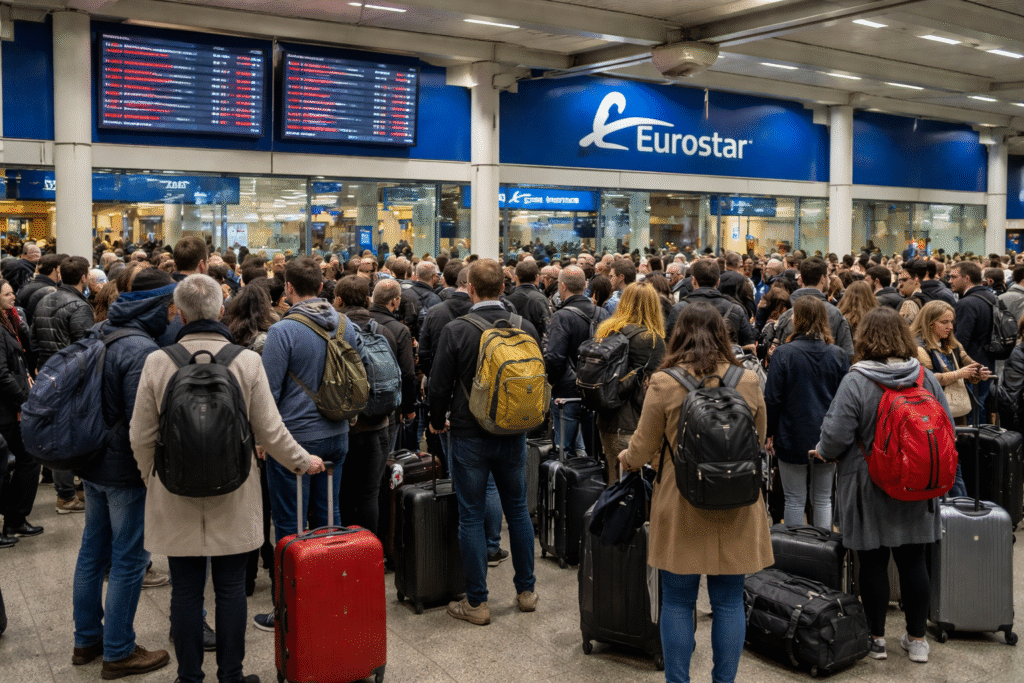
Passengers filled platforms at London St. Pancras and Paris Gare du Nord. Many families expected smooth holiday journeys but faced sudden cancellations instead. The breakdown affected routes to France, Belgium, and the Netherlands.
Rail staff struggled to manage crowds as information changed by the hour. Travellers searched for hotels, refunds, and alternative transport options.
Channel Tunnel Power Failure Triggers Widespread Disruption
The disruption began after a power failure struck overhead electrical systems in the tunnel. These systems supply energy to high-speed trains travelling beneath the English Channel.
The situation worsened when a LeShuttle train stopped inside the tunnel. That blockage prevented other services from passing through.
Engineers moved quickly to inspect cables, transformers, and safety systems. However, repairs required time due to the tunnel’s complex infrastructure.
Eurostar suspended all cross-Channel services as a safety precaution. Operators prioritised restoring power and clearing stranded trains.
Passengers Left Stranded Across Major European Cities
The shutdown stranded passengers across multiple countries. London, Paris, Brussels, and Amsterdam saw heavy congestion at stations.
Many travellers missed hotel check-ins, tours, and family gatherings. Some passengers reported overnight waits with limited support.
Parents struggled to manage tired children during long delays. International visitors faced language barriers and rising accommodation costs.
Station staff distributed updates, but uncertainty dominated the situation. Crowds grew restless as departure boards showed repeated cancellations.
Government Travel Advisories Urge Caution
UK authorities issued urgent travel advice following the disruption. Officials urged travellers to delay non-essential Eurostar journeys.
French and Belgian transport agencies echoed similar warnings. They advised passengers to expect ongoing disruption for several days.
Officials stressed the importance of checking train status before travel. They also encouraged flexibility with accommodation and onward connections.
Holidaymakers faced tough choices between waiting or changing routes. Many decided to postpone travel until services stabilised.
Eurostar Offers Refunds and Flexible Rebooking
Eurostar announced emergency passenger support measures. The operator allowed free ticket changes for affected travellers.
Passengers could also request full refunds for cancelled journeys. Customer service teams worked extended hours to manage demand.
Eurostar advised travellers not to arrive at stations without confirmation. Officials warned that crowding could worsen delays and safety risks.
The company promised frequent service updates as repairs continued. However, full restoration timelines remained uncertain.
Alternative Travel Options See Heavy Demand
As trains stopped, travellers turned to alternative transport options. Airlines reported sharp booking increases on short-haul European routes.
Flights between London, Paris, Brussels, and Amsterdam filled quickly. Prices rose as demand surged across multiple carriers.
Ferry services from Dover and other ports offered another option. These routes required longer travel times and additional planning.
Long-distance coach operators also saw rising interest. However, road congestion slowed many journeys.
Travel experts warned that alternatives could face delays as well. They urged early booking and realistic expectations.
Holiday Travel Plans Require Flexibility
The disruption highlighted the risks of peak season travel. Experts recommend building buffer days into holiday itineraries.
Travellers should keep accommodation bookings flexible when possible. Travel insurance can help cover unexpected delays and expenses.
Mobile devices should remain charged for real-time updates. Passengers should also store important documents offline.
Food, water, and warm clothing remain essential during long waits. Prepared travellers handle disruptions more effectively.
Economic and Tourism Impact Grows
The Eurostar disruption carries wider tourism implications. Cities relying on holiday visitors face sudden booking cancellations.
Hotels, attractions, and tour operators reported lost revenue. Local transport systems experienced sudden pressure from stranded visitors.
Tourism officials stressed the importance of infrastructure resilience. They highlighted the need for rapid cross-border coordination.
Industry analysts expect short-term recovery once services resume. However, confidence may take longer to rebuild.
Final Advice for Travellers
Travellers should monitor official travel advisories closely. Only travel when confirmation shows services operating normally.
Consider alternative routes if travel remains urgent. Plan extra time for connections and border controls.
The Channel Tunnel power failure shows how fast plans can change. Prepared travellers reduce stress and avoid costly mistakes.
Until full repairs conclude, caution remains essential. Holiday journeys demand patience, flexibility, and constant updates.
For more travel news like this, keep reading Global Travel Wire