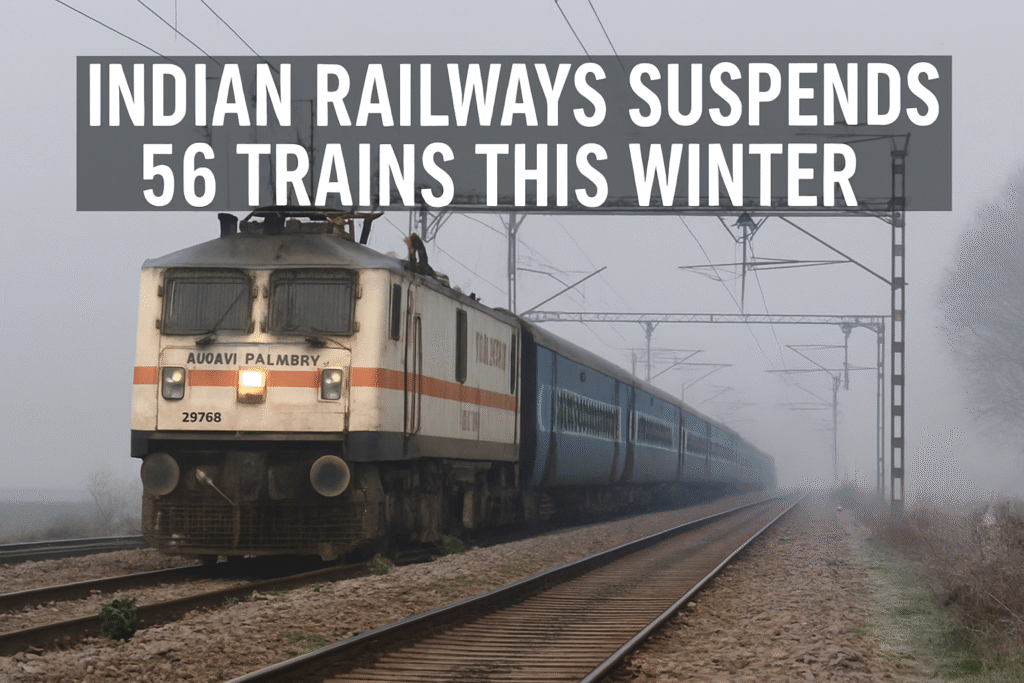
Indian Railways suspends fifty-six trains across North India during the winter fog season. These suspensions run from December 1, 2025, to March 1, 2026. The move protects passengers from the severe fog that hits the northern region each winter. Dense fog reduces visibility and increases risks on major routes. This safety decision affects Punjab, Haryana, Uttar Pradesh, Delhi, and parts of Rajasthan.
The Chandigarh–Amritsar Express ranks among the most affected services. This train carries daily commuters, pilgrims, and long-distance travelers. Its suspension highlights the scale of the winter challenge faced by the network.
Dense Fog Makes Winter Travel Difficult in North India
North India experiences thick fog from December to February each year. The fog limits visibility and slows down train operations. Drivers struggle to see signals on time. Dispatchers also find it harder to manage traffic on busy routes. These conditions increase the risk of collisions and delays.
Indian Railways uses a winter fog management plan each year. This plan identifies vulnerable routes and prepares operational changes. The 2025-2026 winter forecast shows stronger fog events. This led officials to suspend select trains for safety.
The goal focuses on running fewer trains with greater control. This approach reduces congestion. It also gives crews more time to manage fog-affected sections.
Key Suspended Trains Across Northern States
The list includes intercity, express, and long-distance trains. These services link major hubs and popular pilgrimage cities. Passengers across Punjab, Haryana, Uttarakhand, Rajasthan, and Delhi feel the impact.
Some key suspended trains include:
- Garib Rath Express: Chandigarh–Amritsar
- Yognagari Jammu Tawi Express: Chandigarh/Jalandhar–Jammu
- Lalkuan–Amritsar Express: Amritsar–Uttarakhand
- Jan Sewa Express: Punjab–Uttarakhand
- Kalka–Vaishno Devi Express: Kalka–Katra
- Nangal Dam Express: Nangal–Delhi
- Amritsar–Chandigarh Express
- Amritsar–Ajmer Express: Amritsar–Rajasthan
- Akal Takht Express: Amritsar–Kolkata
- Durgyana Express: Amritsar–Varanasi
- Intercity Express: Jalandhar–New Delhi
These trains carry thousands of passengers each day. Their suspension forces travelers to shift to buses, taxis, or alternate trains with limited seats.
Impact on Passengers Across Northern Routes
Travelers in Punjab face the largest disruption. Amritsar routes link with Kolkata, Jammu, Varanasi, Rajasthan, and Delhi. Many pilgrims also depend on these trains for temple visits. The suspension slows travel plans and creates longer road journeys.
Commuters from Chandigarh also feel a sharp impact. The Chandigarh–Amritsar route works as a reliable daily link. Its suspension requires passengers to switch to buses or indirect trains. These shifts increase travel time and costs.
Winter tourism also faces disruption. Travelers heading to Rajasthan, Delhi, Katra, and Uttarakhand depend on these trains. Many trips now require route changes.
Fog Protocols for Trains That Continue Operating
Indian Railways continues to operate many trains despite the fog. However, strict protocols guide their movement. Drivers use fog-safe signaling techniques. Trains move at lower speeds through affected zones.
Some locomotives use fog-safe lighting equipment. These devices help drivers spot signals earlier. Track inspectors monitor rail lines more frequently during the fog season. Station staff also handle crowd control to support smooth operations.
Speed restrictions remain one of the most important safety tools. These restrictions help prevent accidents but also increase delays.
Passengers Advised to Monitor Travel Updates
Indian Railways urges travelers to check schedules regularly. Fog can cause sudden rescheduling. Passengers should track updates through stations, helplines, and mobile alerts. Travel plans may need adjustments on short notice.
Travelers heading to busy stations like Chandigarh, Ludhiana, Jalandhar, and Amritsar must stay alert. These stations see the highest impact from winter fog. Passengers should arrive early to avoid crowd surges and platform confusion.
Families, senior citizens, and long-distance travelers should plan backup transport options. The fog season creates unpredictable travel patterns. Flexibility helps reduce stress during this period.
Why Winter Suspensions Improve Safety
Railway officials emphasize that safety takes priority during harsh winter months. Dense fog can hide signals and crossings. Reduced visibility also slows rescue efforts in emergencies.
Fewer trains offer dispatchers more control over the network. This helps reduce cascading delays that affect hundreds of trains each day. It also limits the number of trains that may face long fog-related halts.
This strategy also helps maintenance crews handle weather-sensitive areas. Fog often leads to moisture buildup on tracks and signals. Crews need clear track windows to perform safety checks.
Regional Travel Faces Seasonal Challenges
North India sees heavy winter tourism. Many travelers visit pilgrimage sites like Vaishno Devi, Golden Temple, Haridwar, and Mathura. Winter weddings also create high travel demand across Punjab and Haryana.
The suspension affects several important travel sectors:
- Pilgrims heading to religious sites
- Students traveling to Delhi and Chandigarh
- Workers commuting between major cities
- Families traveling for weddings
- Tourists exploring Rajasthan and the Himalayas
Despite disruptions, Indian Railways assures travelers that safety remains the guiding principle behind each suspension.
Conclusion
Indian Railways suspends fifty-six trains this winter to protect travelers from dense fog risks. This includes the Chandigarh–Amritsar Express and several major long-distance services. The decision limits delays, reduces accidents, and supports safer operations across North India. Passengers should plan ahead, monitor schedules, and adapt their travel plans as the winter fog season progresses.
For more travel news like this, keep reading Global Travel Wire