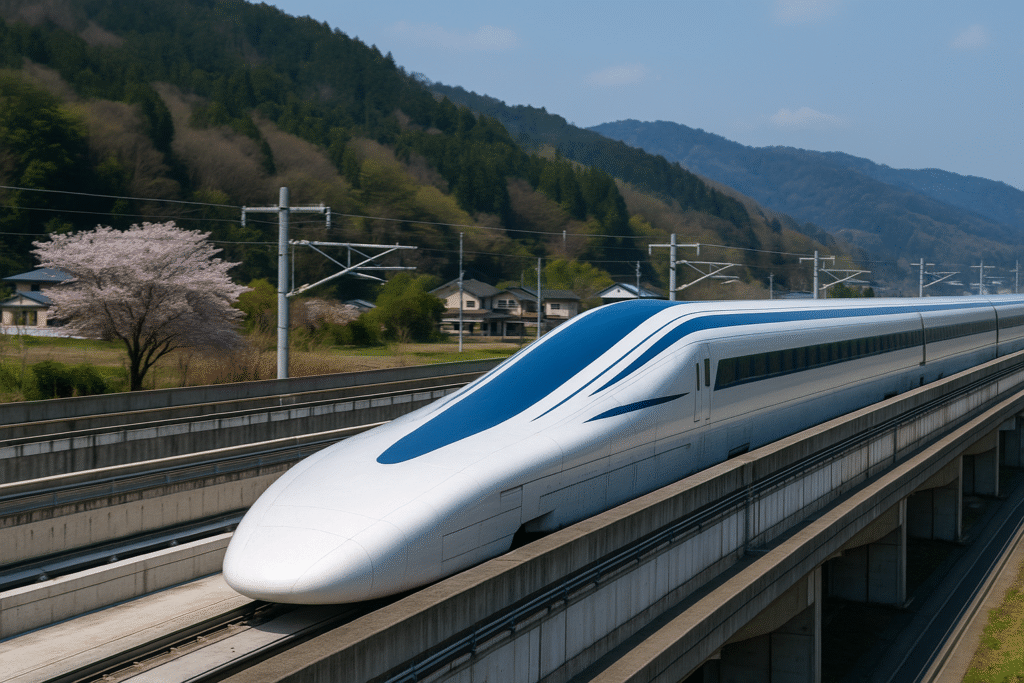
Japan has revealed its latest breakthrough in transportation: a revolutionary maglev train. This high-speed rail system is ready to change how people travel between Tokyo and Nagoya. With a journey time of only 40 minutes, the train blends speed, comfort, and sustainability into one world-class service.
The maglev train uses superconducting magnetic levitation technology to float above the tracks. By eliminating wheel-to-rail friction, the train achieves speeds of up to 500 kilometers per hour. Travelers will save hours on intercity journeys while enjoying smoother and quieter rides.
Tokyo to Nagoya in Just 40 Minutes
Travelers who often move between Tokyo and Nagoya will see their lives transformed. Current train services take much longer, but the new maglev will cover the same route in less than an hour. The reduced travel time will boost business connectivity and tourism while easing pressure on flights.
The train’s speed not only saves time but also provides new opportunities for tourism. Visitors will be able to explore Tokyo’s bustling districts and Nagoya’s cultural landmarks in a single day. The route will redefine tourism itineraries, making multi-city travel easier and more convenient.
Passenger Comfort at the Heart of Design
Unlike older trains, the maglev train focuses on comfort without unnecessary complexity. Seats are non-reclining but angled at 15 degrees, perfect for a 40-minute ride. Designers concluded that reclining seats add weight and cost without improving comfort for such a short trip.
The lightweight seats use fewer parts, which reduces maintenance and creates more cabin space. Passengers enjoy wider aisles, extra legroom, and easy movement inside the cabin. The design emphasizes function and comfort, ensuring every passenger feels relaxed and at ease.
The M10 prototype, revealed in July, highlights these design choices. Its sleek, modern interior provides a clear view of how the commercial service will look. Spacious cabins and carefully planned seating ensure passengers travel in comfort without sacrificing style.
Eco-Friendly and Sustainable Technology
Sustainability plays a central role in the maglev project. By removing wheels and track friction, the train consumes less energy compared to traditional high-speed trains. This technology makes it one of the most efficient transport systems in the world.
The magnetic levitation system not only lowers energy use but also reduces noise. Communities near the tracks will face less sound pollution, while passengers experience a quieter ride. The smooth journey ensures travelers arrive relaxed, free from the fatigue caused by noisy environments.
The ergonomic seat design further supports energy efficiency. Each cushioned seat distributes body weight evenly, reducing discomfort. This thoughtful detail adds to passenger satisfaction while keeping the train lightweight and energy conscious.
Overcoming Challenges and Delays
Despite its promise, the project has faced hurdles. The Tokyo-Nagoya line was originally scheduled for completion in 2027. However, disputes over construction and route issues have delayed progress. Authorities now expect the line to open after 2034.
These delays have not dampened enthusiasm for the project. Once operational, the maglev line will eventually extend to Osaka, linking three major Japanese cities. This extension will form one of the fastest and most advanced intercity transport systems in the world.
While the timeline has shifted, the long-term vision remains strong. Japan continues to invest in research, safety testing, and community engagement to ensure the system meets global standards of efficiency and reliability.
A Global Model for Future Rail Travel
The Japanese maglev train sets new global standards for high-speed travel. By combining record-breaking speed with sustainable technology and thoughtful design, it shows how rail systems can adapt to the modern era.
For tourism, the train creates new opportunities. Travelers can explore Japan’s cultural and economic hubs in less time, encouraging more multi-destination trips. Business travelers will also gain faster, more reliable connections between key economic centers.
Japan’s leadership in maglev technology demonstrates how countries can reduce environmental impact while enhancing mobility. The project highlights a balance between innovation and responsibility, making it a model for nations worldwide.
Conclusion
Japan’s new maglev train marks the start of a transportation revolution. With speeds up to 500 kilometers per hour, energy-efficient technology, and passenger-focused design, it redefines how people experience rail travel.
Although the Tokyo-Nagoya line faces delays, its eventual launch will reshape Japan’s transport map. Tourists, business travelers, and everyday passengers will benefit from unmatched speed, comfort, and sustainability.
When extended to Osaka, the maglev system will stand as a global symbol of innovation and progress. Japan has shown that the future of travel is fast, quiet, eco-friendly, and passenger-centered. The maglev train represents more than just transport—it represents a vision of how modern societies can move forward.
For more travel news like this, keep reading Global Travel Wire