Saudi Arabia prepares for a major rail expansion that reshapes domestic and regional travel. The Kingdom aligns these developments with Vision 2030. The program aims to diversify the economy, grow tourism, and enhance national mobility. New rail routes create faster travel, reduce road congestion, and offer greener transportation choices for visitors and residents.
A New Rail Era for Pilgrims and Tourists
The Kingdom invests heavily in modern rail solutions that support religious tourism. Millions of pilgrims travel to Mecca and Medina every year for Hajj and Umrah. Travel demand continues to climb as Saudi Arabia opens its doors to more international visitors. The rail network answers that demand with faster connections and improved comfort. The trains cut travel time between major cities and increase capacity during peak pilgrimage seasons.
Haramain High-Speed Railway Connects Holy Cities
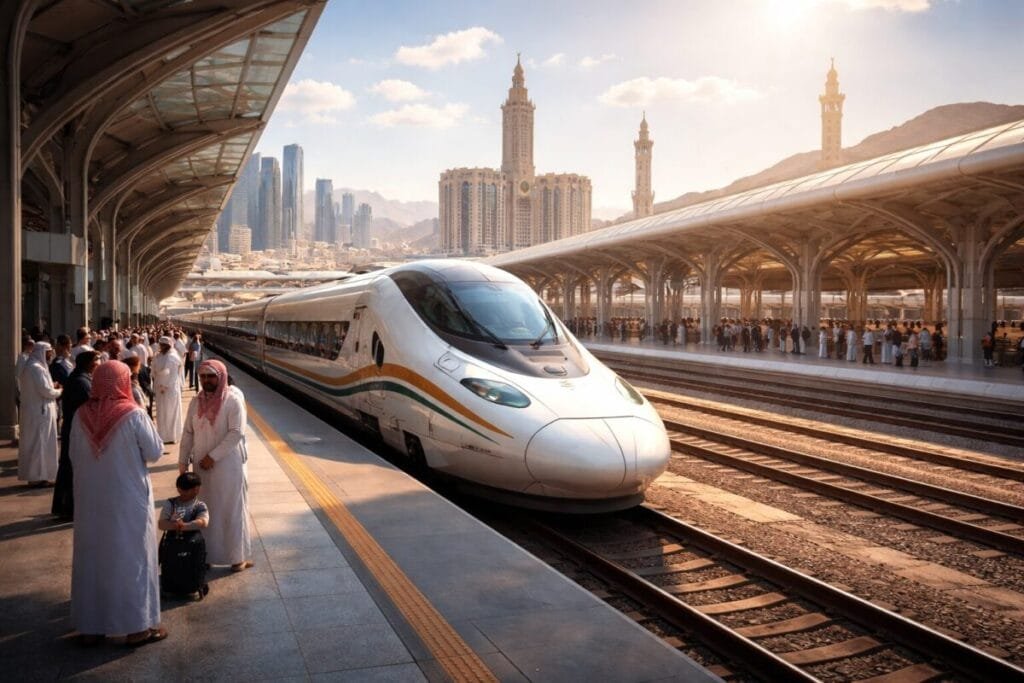
The Haramain High-Speed Railway stands at the center of the network. The line links Mecca, Medina, and Jeddah. The trains reach speeds near 300 kilometers per hour. The service shortens travel time between Mecca and Medina to under two and a half hours. The railway also connects to King Abdulaziz International Airport. This link allows international arrivals to reach holy sites with ease. The Haramain line handles large crowds during Hajj and Umrah and strengthens the tourism sector.
Growth Along the Western Coastline
The Haramain route improves more than pilgrimage travel. It stimulates hotel growth and boosts visitor movement between coastal cities. Restaurants, museums, resorts, and event spaces along the route receive more tourists. The western coast develops into a tourism corridor that stretches from Medina to Jeddah. This corridor attracts both leisure travelers and business visitors.
Dammam to Riyadh Route Strengthens Eastern Travel
The Dammam to Riyadh rail line enhances travel in the eastern region. The trains move passengers between the political capital and the industrial east. The route supports business travel and connects workers to key energy and logistics industries. The government notes strong ridership on this line due to job growth and increased urban expansion. The line also reduces pressure on highways that once carried most of the region’s traffic.
Landbridge Project Links Red Sea to the Gulf Coast
The Saudi Landbridge Project ranks among the most transformative transport initiatives. It connects Jeddah on the Red Sea to Dammam on the Arabian Gulf through Riyadh. This project creates the first direct rail connection between the two coasts. The route reduces freight travel times by several days and improves cargo flow between two major ports. Passenger service will also open new tourism possibilities by linking coastal resorts, cruise terminals, and heritage sites.
Construction progress continues as part of a larger freight and logistics strategy. Portions of the network enter phased development through the late 2020s. Authorities expect long-term economic gains from trade, tourism, and streamlined shipping.
Regional Rail Connectivity Through the GCC Network
Saudi Arabia collaborates with neighboring Gulf countries to create a unified Gulf Cooperation Council railway. The GCC network will connect Saudi Arabia with Kuwait, Bahrain, Qatar, the United Arab Emirates, and Oman. This connection will reduce travel times across the Gulf and support new tourism circuits. Travelers will move between cities without lengthy border queues or airport transfers.
The Saudi-Kuwait section enters the early construction phase in 2026. The full network will strengthen regional tourism and business cooperation. Rail travel will also support new travel packages that bundle multiple Gulf countries into one itinerary.
Urban Rail Growth in Dammam
Urban rail solutions also expand. The Dammam Metro introduces a modern public transit system for the growing metropolitan area. The system links Tarout Island, Qatif, Dhahran, and Dammam. The metro eases congestion on crowded urban highways and creates greener transport options. The service benefits residents, office workers, and tourists who visit the coastal region. This investment aligns with the Kingdom’s urban development plans and supports lifestyle upgrades for citizens.
Tourism Demand Drives Infrastructure Ambition
Saudi Arabia expects tourism arrivals to grow rapidly under Vision 2030. The government sets ambitious targets and builds infrastructure to support them. Rail travel plays a crucial role because it moves large numbers of travelers with lower emissions. Rail also delivers smoother logistics for events, religious gatherings, and cruise tourism. New stations become travel hubs that link airports, seaports, hotels, and cultural sites.
Tour operators plan new rail-based travel itineraries that highlight heritage, culture, and entertainment. Visitors will enjoy easier access to museums, UNESCO heritage sites, seaside resorts, culinary districts, and modern megaprojects. Major cities develop new attractions that complement the rail network and enhance visitor spending.
A New Future for Rail Travel in Saudi Arabia
Saudi Arabia moves closer to its goal of becoming a top global tourism destination. The rail network expands in 2026 and strengthens both domestic and regional mobility. The lines support pilgrims, business travelers, tourists, and freight carriers. The Kingdom anticipates stronger economic performance as travel grows and infrastructure modernizes. Rail travel will shape a new era of tourism and improve life for residents across the country.
For more travel news like this, keep reading Global Travel Wire