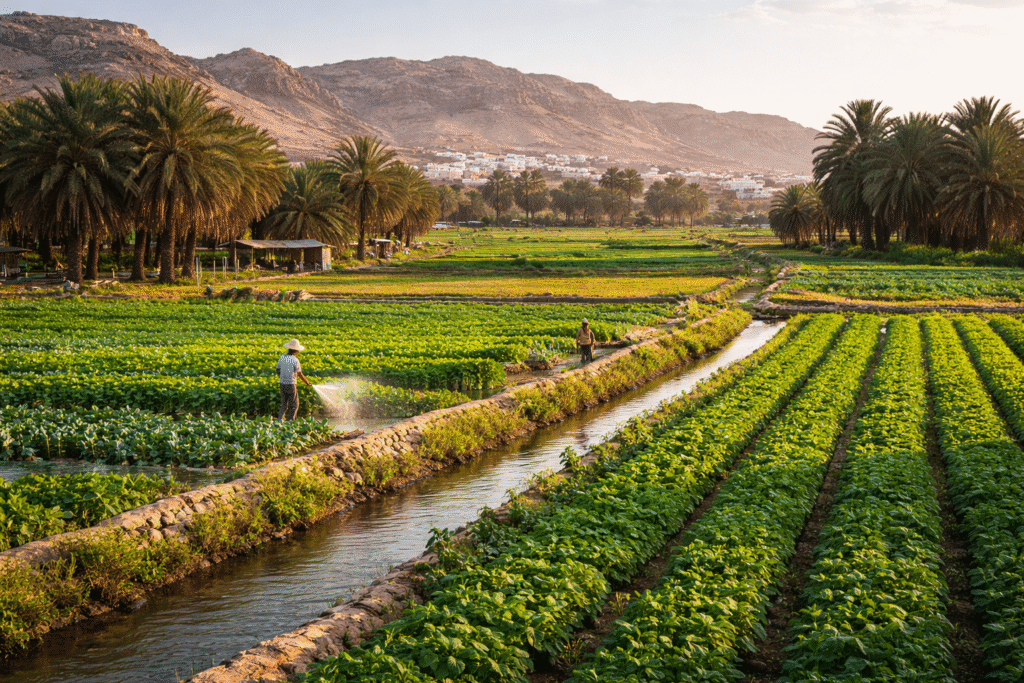
Buhair Valley in Bahrain surprises travelers who expect endless desert scenery. This fertile area introduces a calm, green environment shaped by agriculture and tradition. The valley stands apart from urban skylines and busy coastlines.
Visitors discover a working rural landscape rather than a designed attraction. Buhair Valley reflects Bahrain’s long relationship with land, water, and food production.
A Landscape That Breaks Desert Expectations
Most visitors associate Bahrain with sand, sea, and modern development. Buhair Valley challenges that image through cultivated fields and open farmland. Green patches stretch across low ground, creating visual contrast against surrounding dry terrain.
This setting shows how geography and water access can reshape even arid regions.
What Defines Buhair Valley
Buhair Valley sits within a natural depression that supports fertile soil. Groundwater access allows continuous farming despite limited rainfall. Farmers have relied on this land for generations.
The valley focuses on productivity, not decoration. Crops, irrigation channels, and soil patterns define its character.
Why Buhair Valley Matters for Tourism
Buhair Valley adds depth to Bahrain’s tourism offerings. It supports rural and agricultural tourism rather than mass attractions. Travelers gain insight into everyday landscapes that guidebooks often overlook.
The valley encourages slower travel and observation instead of scheduled activities.
Location Away From Coastal Routes
Buhair Valley lies inland, far from Bahrain’s main coastal corridors. Quiet roads and open surroundings enhance its peaceful atmosphere. Visitor numbers remain low due to its understated presence.
Reaching the valley feels like entering a hidden side of the kingdom.
Farming Communities Shape the Valley
Local farmers manage the land using inherited knowledge and modern techniques. They grow crops suited to Bahrain’s climate and soil conditions. Farming here requires constant adaptation and resilience.
Visitors observe real agricultural life rather than curated demonstrations.
Seasonal Changes Shape the Experience
Buhair Valley changes appearance throughout the year. Cooler months bring greener fields and increased activity. Warmer periods show drier tones and slower rhythms.
These seasonal shifts give the valley a living and dynamic identity.
Challenging Desert Stereotypes
Buhair Valley disrupts the idea that Bahrain lacks greenery. The cultivated land highlights how natural depressions support agriculture. This contrast creates strong visual and educational appeal.
Travelers often leave with a broader understanding of Bahrain’s environment.
Informal Agricultural Tourism
Tourism in Buhair Valley remains observational and unstructured. Visitors learn by watching irrigation, planting, and harvesting practices. No formal tours define the experience.
This simplicity strengthens the valley’s authenticity.
Crops and Local Food Production
Farmers grow crops adapted to local conditions and water availability. This production supports local food systems and preserves farming knowledge. Agriculture here plays a role in national food resilience.
Visitors gain awareness of Bahrain’s rural economy.
A Quiet Nature Escape
Buhair Valley offers silence and open space. Natural sounds replace traffic and crowds. Wind, birds, and distant farming activity shape the atmosphere.
This calm appeals to travelers seeking mental and sensory rest.
Photography and Visual Appeal
Photographers find strong compositions in the valley’s textures. Furrowed fields, irrigation lines, and wide skies create natural patterns. The contrast between green land and dry surroundings enhances visual impact.
Early mornings provide soft light and cooler temperatures.
Best Time to Visit Buhair Valley
Cooler months offer the best conditions for visiting. Morning and late afternoon hours improve comfort and lighting. Seasonal planting influences color and density of fields.
Planning visits around these factors improves the experience.
Sustainable Tourism Responsibility
Buhair Valley functions as active farmland. Visitors must respect crops, water systems, and private land. Observation should never interfere with daily farming work.
Responsible behavior supports long-term sustainability.
Educational Value for Travelers
The valley demonstrates how people adapt to environmental limits. It shows practical land use in arid regions. Students and researchers benefit from real-world observation.
Learning happens naturally through presence.
Comparison With Other Nature Sites
Unlike coastal reserves, Buhair Valley represents managed nature. Human activity shapes every part of the landscape. This balance separates it from wilderness-focused destinations.
The distinction enriches Bahrain’s tourism diversity.
Appeal to Slow and Mindful Travelers
Buhair Valley suits travelers without strict schedules. Walking, observing, and reflecting define the visit. The valley asks for patience rather than participation.
This aligns with slow travel values.
Challenges Facing Buhair Valley
Water scarcity and urban expansion threaten agricultural areas. Economic shifts also affect farming viability. Preserving Buhair Valley requires careful planning and awareness.
Tourism recognition can support conservation efforts.
Cultural Importance of Buhair Valley
The valley represents continuity in a modernizing nation. Agriculture remains part of Bahrain’s identity. Buhair Valley reflects that heritage through daily practice.
Travelers gain cultural understanding beyond monuments.
Integrating Buhair Valley Into Travel Plans
Buhair Valley complements heritage sites and coastal attractions. Its calm atmosphere balances busier destinations. Travelers experience a fuller picture of Bahrain.
Balanced itineraries improve travel satisfaction.
Practical Tips for Visitors
Wear comfortable shoes for walking
Carry water and sun protection
Visit during cooler hours
Respect private farmland
Expect minimal facilities
A Green Reminder of Bahrain’s Roots
Buhair Valley Bahrain offers a rare rural perspective. Its green fields and quiet rhythms contrast sharply with desert imagery. The valley reveals how life thrives through adaptation.
For more travel news like this, keep reading Global Travel Wire