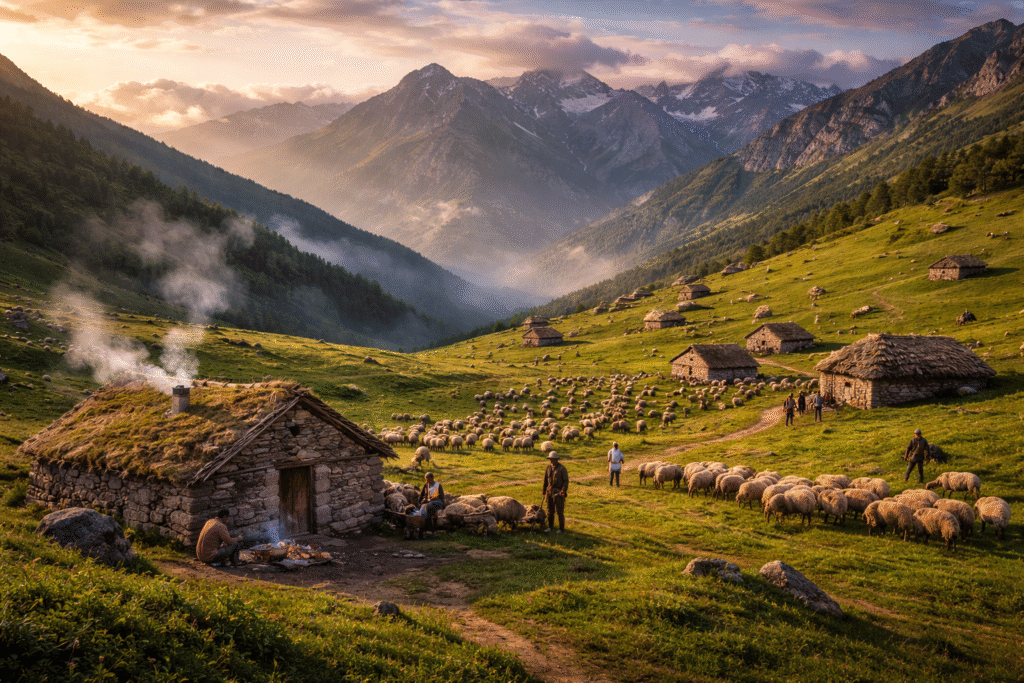
Lak Mountain Pastures stand among Dagestan’s most distinctive summer landscapes. These high-altitude grazing lands emerge above permanent villages during warmer months. Families move livestock uphill, transforming open meadows into living seasonal communities.
This migration creates a rare tourism experience rooted in tradition. Visitors witness a lifestyle shaped by altitude, weather, and movement. Tourism here focuses on observation, respect, and cultural understanding.
Unlike developed resorts, Lak Mountain Pastures offer simplicity. The landscape, people, and rhythm of summer define the experience. This approach appeals to travelers seeking authenticity and silence.
Seasonal Life Unfolds Above the Valleys
Lak Mountain Pastures operate only during summer. Snow retreats, grass grows, and herders return to ancestral grazing grounds. Temporary shelters appear, marking the return of seasonal life.
Families build lightweight dwellings and animal enclosures. These structures support daily work without altering the land permanently. By autumn, people leave and the landscape returns to stillness.
This impermanence shapes tourism value. Travelers experience a fleeting world that exists only for a few months. Each visit feels different due to weather, movement, and human activity.
Geography Shapes the High-Altitude Experience
The pastures sit above Lak-populated villages at elevations where forests thin. Wide meadows stretch toward rocky ridgelines and open skies. Narrow streams cut through grasslands and feed livestock.
The absence of permanent buildings enhances the sense of scale. Travelers often describe the space as expansive and calming. Wind, light, and cloud movement define each hour.
Temperatures change quickly throughout the day. Mornings feel crisp, while afternoons bring warmth and clear views. Evenings cool rapidly, reinforcing the need for preparation.
Climate Determines Access and Travel Timing
Visitors reach Lak Mountain Pastures mainly from late spring to early autumn. Snowmelt opens access routes and supports grazing. Outside this season, harsh conditions return.
Sudden weather shifts remain common even in summer. Local knowledge plays a vital role in safe travel. Guides help visitors understand routes, conditions, and timing.
This seasonal access limits mass tourism. The short window preserves the environment and cultural rhythm. Responsible travelers respect these natural boundaries.
Nomadic Traditions Sustain Cultural Identity
Seasonal movement defines life in the Lak Mountain Pastures. Families move livestock uphill to protect lower fields and ensure fresh grazing. This practice reflects centuries of environmental adaptation.
Migration follows practical needs rather than symbolism. Herders establish working camps that support animals and families. Each structure serves a purpose during the season.
Visitors who observe this process gain insight into mobility as identity. The movement itself carries cultural meaning and shared memory.
Daily Life Centers on Work and Community
Life on the pastures follows a steady routine. Days begin early with herding and grazing. Families prepare food and maintain shelters throughout the day.
Despite physical demands, the atmosphere remains calm. Evenings bring shared meals and conversation. Families reconnect with neighbors who return each summer.
Travelers who spend time observing daily life develop deeper respect. Survival at altitude requires discipline, cooperation, and knowledge.
Land and Memory Shape Lak Cultural Meaning
For the Lak people, mountain pastures represent belonging. Specific grazing areas connect to families and communities. These links pass through generations.
Stories, routes, and landmarks anchor memory within the landscape. Knowledge lives through repetition and use rather than written records.
Tourism that respects this relationship enhances understanding. Visitors learn that empty land often holds deep cultural meaning.
Slow Tourism Defines the Visitor Experience
Tourism in Lak Mountain Pastures aligns with slow travel values. Visitors walk, observe, and remain present. Silence becomes part of the attraction.
There are no fixed attractions or schedules. Weather and daily work shape each experience. This unpredictability creates authenticity.
Photography focuses on atmosphere rather than monuments. Light, animals, and movement tell the story of the land.
Cultural Interaction Remains Natural and Respectful
Encounters with herders happen naturally. Hospitality follows tradition rather than performance. Visitors may receive tea or food during conversation.
These exchanges feel informal and genuine. No staged activities interrupt daily work. Respect and patience remain essential.
Travelers who listen more than speak gain the most insight. Cultural understanding grows through shared time rather than explanation.
Responsible Travel Protects Fragile Landscapes
Mountain pastures remain sensitive ecosystems. Noise, litter, and careless movement cause damage. Visitors must follow leave-no-trace principles.
Travelers should ask permission before entering grazing areas. Photography requires consent and awareness. Respect supports trust and long-term access.
Summer remains a working season for herders. Tourism should never disrupt livestock or routines.
Tourism Supports Traditional Livelihoods
Small-scale tourism provides supplementary income. Local guiding, food sharing, and village stays create economic support. This income strengthens traditional practices.
Tourism adds value without replacing pastoral life. Cultural knowledge gains recognition and respect.
This balance helps preserve heritage while supporting livelihoods.
Lak Mountain Pastures Enrich Dagestan Tourism
Lak Mountain Pastures add depth to Dagestan’s tourism identity. They complement destinations focused on architecture and history. These landscapes highlight seasonal life and cultural continuity.
Travelers who include the pastures gain a fuller understanding of the region. The contrast between villages and summer camps reveals adaptability.
Access often requires local guidance and flexible planning. Travelers who value immersion find the journey rewarding.
Where Summer Follows the Wind
Lak Mountain Pastures exist between movement and stillness. They appear each summer through human presence and grazing. They fade quietly with the changing season.
Visitors step into a living cycle shaped by generations. The experience offers understanding rather than spectacle.
These high-altitude landscapes remind travelers that life can still follow seasons. Culture, land, and community remain deeply connected in Dagestan’s mountains.
For more travel news like this, keep reading Global Travel Wire