Libya enters 2026 with a tourism story unlike any other destination in the Mediterranean region. A small but growing number of travellers now venture into a country known more for geopolitical headlines than holiday brochures. These visitors do not find beaches filled with resorts or theme parks. Instead, they encounter a nation in transition, where unmatched archaeological treasures coexist with state security protocols and rigid logistics.
A Tourism Experience Defined by Security
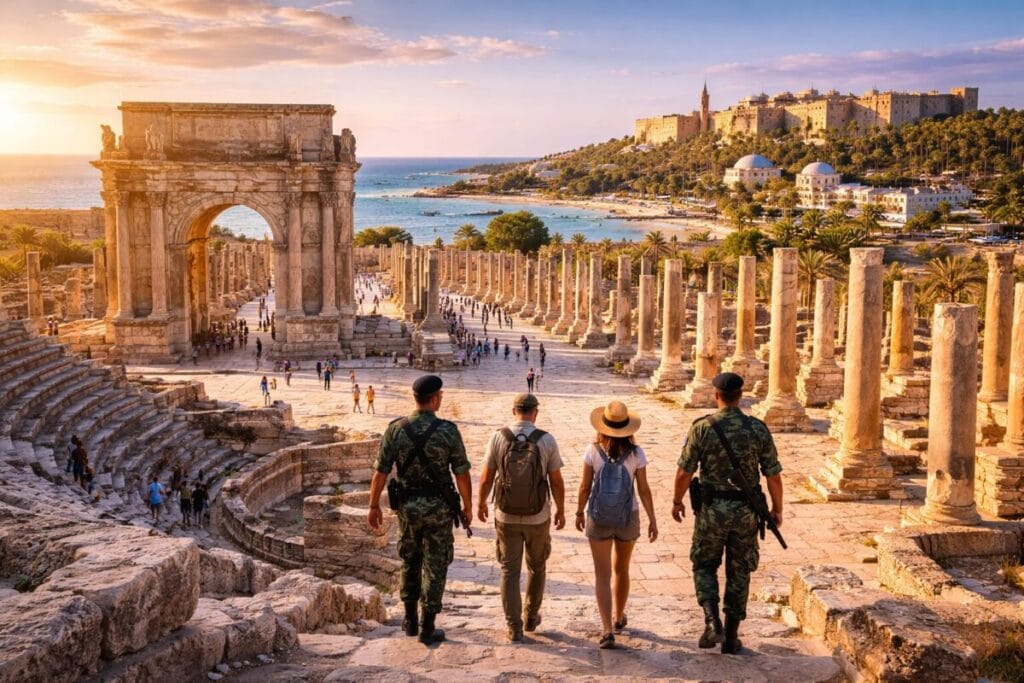
The defining characteristic of travel within Libya is the required police escort. Foreign visitors cannot explore the country in the independent style associated with backpack travel. Authorities require escorts or sanctioned guides who coordinate checkpoints and ensure that visitors avoid restricted areas. Libya continues to rebuild institutions, and the escort system helps different local forces manage movements across regions.
Travellers describe the escorts as protective rather than confrontational. They clear checkpoints, avoid delays, and communicate with local officers. The arrangement removes spontaneity. Stopping at roadside cafés or detouring into small towns requires approval from the escort team. It reminds visitors that Libya remains open but not yet relaxed.
The Visa Barrier Still Challenges Travellers
The most difficult step for prospective visitors is obtaining entry. Libya has experimented with digital visa systems, though implementation varies. Most travellers rely on tour operators who arrange Letters of Invitation and coordinate airport procedures. Processing times range from one week to several months depending on nationality and season.
The government seeks to encourage tourism to diversify an economy still linked to oil, yet bureaucracy slows progress. Travellers usually arrive through Mitiga International Airport in Tripoli. The main Tripoli International Airport remains under redevelopment and reconstruction. Smaller airports in Misrata and Benghazi serve regional flights, but most foreign tourism funnels through the capital.
Tripoli: Mediterranean Heritage With Modern Complexities
Tripoli introduces visitors to a blend of Italian colonial architecture, Ottoman alleyways, and post-conflict infrastructure. The Old City pulses with coffee vendors, copper artisans, and small merchant stalls. The rhythms feel timeless. Walk a few blocks outside the historic core and the scenery shifts to military checkpoints, government buildings, and concrete neighbourhoods shaped by decades of political change.
Accommodation options remain limited. Foreign travellers rely on international brands for comfort and stability. Boutique hotels remain rare, and mid-range options often lack consistency. This creates a divide between high-priced international hotels and basic guesthouses that target domestic travellers.
Leptis Magna: A Global Archaeological Crown Jewel
The greatest reward for many visitors is Leptis Magna. Located east of Tripoli, the Roman city amazes historians and archaeologists who compare it favorably to major sites across the Mediterranean. Walking through the Arch of Septimius Severus or across the waterfront basilica gives travellers a vivid sense of Roman engineering and urban planning.
Leptis Magna offers scale without tourist pressure. There are no queues, no vendors selling souvenirs, and no loudspeaker tours. Visitors can sit inside the amphitheatre and hear only the wind and the waves. Few places of this caliber remain so untouched. UNESCO notes the site as one of the most complete Roman cities in existence, and Libya’s lack of mass tourism keeps it remarkably intact.
Hospitality in a Country Seeking Normalcy
Libyans make strong impressions on visitors who enter the country with caution or curiosity. Locals often thank tourists for visiting and express pride in their heritage. Shopkeepers offer tea, children ask for photos, and families invite guests to share meals. The warmth contrasts sharply with the structured security environment that surrounds daily travel.
This hospitality reflects a population aware of its international image. Many Libyans want visitors to witness culture, food, and history rather than conflict footage on foreign television.
Practical Realities of Traveling in Libya
Credit cards rarely function outside of international hotels. Travellers must carry new US Dollars or Euros for exchange. Much of the economy relies on informal currency markets due to restrictions and banking limitations. Travellers must prepare for cash-based transactions during their entire stay.
Connectivity varies. Tripoli maintains stable mobile and data networks, but coverage declines rapidly toward the Saharan interior or eastern regions. Crossing between western Tripoli and eastern Benghazi requires extra paperwork due to competing political administrations. Tour operators handle these arrangements, though independent travellers cannot navigate them alone.
Who Should Consider Libya in 2026
Libya appeals to travellers who value history, authenticity, and frontier-style experiences. It does not suit resort tourists or travellers who require flexibility, nightlife, or all-inclusive packages. The experience rewards those comfortable with structured itineraries and cultural immersion.
Standing alone inside Leptis Magna or watching the Mediterranean from the ramparts of Tripoli’s Red Castle conveys a sense of discovery that mainstream destinations lost decades ago. Libya offers glimpses of a tourism future that could one day rival its Mediterranean neighbours. For now, the country opens slowly, with escorts and bureaucracy, but also with genuine welcome and archaeological grandeur.
For more travel news like this, keep reading Global Travel Wire