
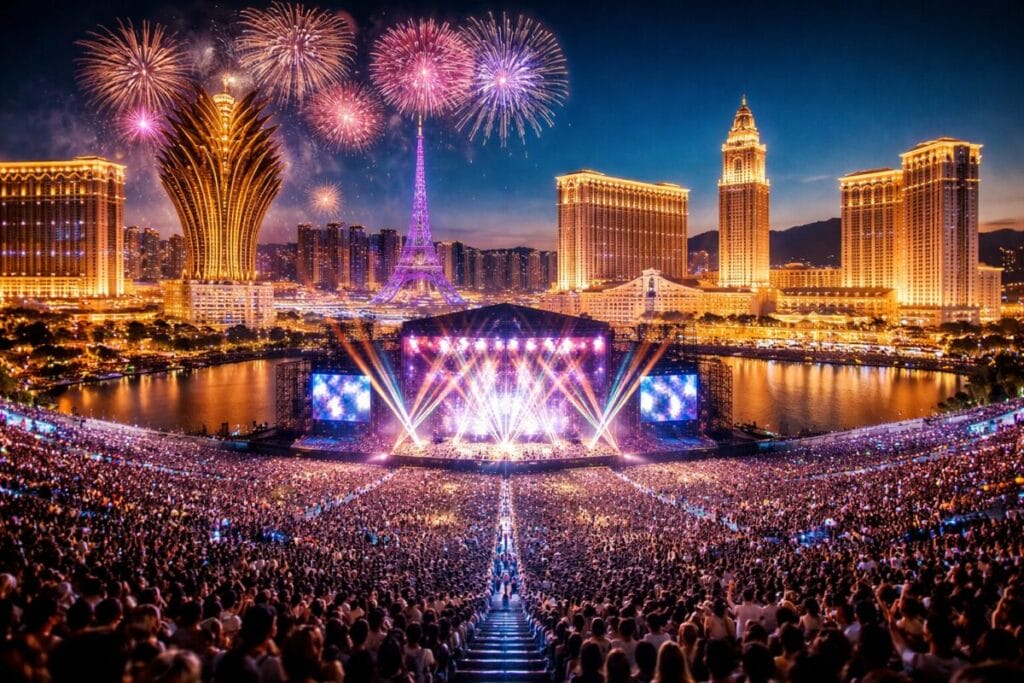
Macao is undergoing a significant transformation as it redefines its tourism identity beyond gaming and luxury casinos. Known for decades as a gambling hotspot, the Special Administrative Region is now positioning itself as a leading destination for mega-events, concerts, international festivals, and large-scale cultural gatherings. This strategic shift reflects a broader vision to diversify the economy while strengthening Macao’s appeal as a dynamic entertainment and tourism hub in Asia.
With new infrastructure projects, evolving policies, and ambitious development strategies, Macao is aiming to attract global audiences and compete with established event capitals worldwide. The move represents a major milestone in the region’s long-term development plans, focusing on cultural tourism, exhibitions, sports events, and large-scale entertainment experiences.
The “1+4” Development Strategy Driving Transformation
At the heart of Macao’s evolution is the “1+4” strategy, a framework designed to expand economic opportunities beyond gaming. The approach highlights Macao’s unique role as a special administrative region while promoting four key growth sectors: integrated tourism, convention and exhibition industries, cultural and creative sectors, and sports-related activities.
This multi-sector strategy is reshaping the city’s tourism landscape by encouraging investments in world-class venues and experiences. Authorities are focusing on attracting international performers, global exhibitions, and sporting events that draw diverse audiences. By combining entertainment with cultural experiences, Macao seeks to position itself as a destination where visitors can enjoy more than casinos — from music festivals and art exhibitions to international conferences and sporting competitions.
A major example of this shift is the rapid development of the Cotai district, which has become a focal point for integrated resorts and large-scale event infrastructure. Planned projects include a massive outdoor performance venue capable of hosting tens of thousands of spectators, opening the door for globally recognised concerts and entertainment spectacles.
Cotai’s Role in Building a World-Class Events Ecosystem
Cotai is emerging as the centerpiece of Macao’s ambitions to host mega-events. Designed to accommodate large audiences, the new outdoor performance venue represents a bold step toward competing with other international entertainment capitals. With its expansive capacity and modern facilities, the venue is expected to attract major international tours, cultural festivals, and sporting events that previously bypassed the region due to logistical limitations.
The development aligns with a broader trend in global tourism where destinations increasingly focus on experiential travel. Visitors today seek immersive events that combine entertainment, culture, and lifestyle experiences. By building venues capable of hosting large-scale gatherings, Macao aims to capture this demand and create year-round tourism opportunities.
Beyond the venue itself, the surrounding infrastructure is also evolving. Integrated resorts, dining districts, and shopping areas are being designed to complement event tourism, ensuring that visitors have diverse activities before and after attending performances.
Infrastructure Challenges and Urban Constraints
While Macao’s transformation presents exciting opportunities, it also introduces logistical challenges. The city’s compact geography and high population density mean that hosting mega-events requires careful planning to manage crowd movement, transportation, and accommodation demand.
Visitor numbers have already reached tens of millions annually, putting pressure on existing infrastructure. Limited land availability restricts hotel expansion, making efficient use of nearby regions and innovative transport solutions essential. During major celebrations and large-scale gatherings, public transport networks have experienced significant strain, highlighting the need for enhanced planning and crowd management strategies.
To address these issues, authorities are exploring solutions such as improved cross-border coordination, extended transport services, and smart mobility systems. Efficient event management will be key to ensuring that Macao’s growth remains sustainable while maintaining a positive visitor experience.
Learning from International Event Cities
Macao’s strategy reflects lessons learned from other successful event destinations worldwide. Cities renowned for hosting mega-events often rely on strong collaboration between government agencies, event organisers, and private companies. Dedicated transportation services, coordinated ticketing systems, and integrated event planning have proven effective in managing large crowds while minimising disruption.
One approach under consideration is enhanced regional cooperation with neighbouring areas to expand accommodation and transportation options. Nearby destinations can provide additional hotel capacity, while shuttle systems and cross-border transit solutions could help distribute visitor flow more evenly. Such collaborations may allow Macao to host larger events without overburdening its urban infrastructure.
Workforce Flexibility and Policy Innovation
Another important factor in Macao’s transformation is workforce readiness. Mega-events require skilled staff across various sectors, including hospitality, logistics, entertainment production, and security. Demand for labour can fluctuate significantly depending on event schedules, making flexibility essential.
Policymakers are exploring ways to create a more adaptable workforce through training programs, streamlined hiring processes, and mobility initiatives that allow workers to shift between industries during peak periods. These measures aim to ensure that the city can support large-scale events without compromising service quality.
By fostering a skilled and flexible workforce, Macao can strengthen its reputation as a reliable host for international gatherings and create new employment opportunities within the tourism and entertainment sectors.
A New Era for Tourism in Macao
Macao’s evolution into a mega-event destination signals a broader transformation in the global tourism landscape. As travellers increasingly seek experiences centred around music festivals, cultural showcases, and international sports events, destinations must adapt to remain competitive. Macao’s investments in infrastructure, policy innovation, and diversified tourism offerings demonstrate a clear commitment to meeting these changing demands.
The development of large-scale venues, combined with strategic planning and international collaboration, positions Macao to attract visitors from across Asia and beyond. By balancing its heritage as a gaming capital with a fresh focus on entertainment and cultural tourism, the city is crafting a new identity that reflects both tradition and innovation.
As Macao continues its journey toward becoming a premier global event destination, the coming years are likely to see an expansion of world-class festivals, concerts, and exhibitions that redefine the visitor experience. With the right mix of infrastructure, planning, and creativity, Macao is poised to enter a new era where mega-events play a central role in shaping its tourism future.
For more travel news like this, keep reading Global Travel Wire