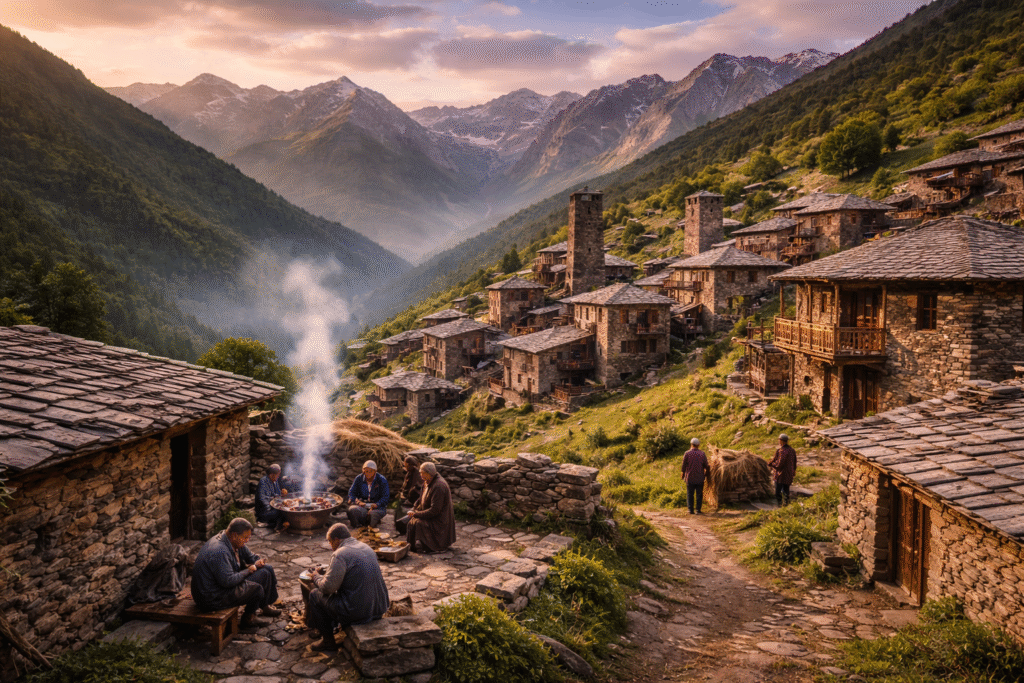
Tsakhur villages sit high in Dagestan’s southern mountains near international borders. These settlements reflect centuries of cultural exchange and adaptation. Geography, history, and daily life intersect in powerful ways.
Travelers visit Tsakhur villages to understand borderland culture. Life here develops through interaction rather than isolation. Tourism focuses on context, not landmarks.
These villages offer insight into how borders shape identity. Culture thrives through movement, trade, and shared survival in challenging terrain.
Mountain Geography Shapes Daily Life and Movement
Tsakhur villages occupy elevated valleys and slopes near the frontier. Steep mountains, narrow passes, and rivers guide settlement patterns. Nature defines access and connection.
This geography creates both protection and openness. Routes through mountain passes connect communities across regions. Exchange remains part of everyday life.
Visitors often feel the transition between spaces. Travel reinforces the sense of standing between worlds rather than inside one region.
Landscape Influences Culture and Identity
The surrounding landscape feels rugged yet inhabited. Terraced fields, grazing land, and stone paths reveal careful adaptation. Every feature reflects long-term use.
Mountains serve as orientation points rather than obstacles. Residents navigate by ridgelines, valleys, and seasonal markers. Identity grows from place-based knowledge.
Travelers quickly notice how land and culture remain inseparable. The environment shapes behavior, work, and social bonds.
Architecture Reflects Survival and Shared History
Tsakhur villages feature stone houses built for endurance. Thick walls protect against cold winters and harsh winds. Construction reflects necessity rather than decoration.
Homes cluster tightly together for warmth and security. Narrow lanes connect households and encourage constant interaction. Village layouts reinforce cooperation.
Architectural details vary between settlements. These variations reflect historic connections with neighboring regions. Travelers see cultural layering through design.
Shared Spaces Anchor Community Life
Courtyards and small squares serve as gathering points. These shared spaces support conversation, work, and daily interaction. Community life unfolds in open view.
Visitors walking through villages often encounter natural interaction. Shared paths invite conversation without formality. Social life remains visible and inclusive.
Tsakhur Cultural Identity Emerges From Exchange
The Tsakhur people maintain a strong cultural identity. Language, customs, and memory connect families across generations. This identity reflects mixed regional influences.
Clothing styles, food traditions, and rituals show cultural blending. These elements feel unified rather than fragmented. Coexistence shaped cohesion over time.
Travelers gain insight into borderland identity formation. Cultural richness grows through contact, not separation.
Language and Oral Tradition Preserve History
Language plays a central role in Tsakhur identity. Families use it daily in homes and public spaces. It carries values and collective memory.
Oral tradition preserves history and social norms. Elders share stories through conversation rather than written records. Knowledge passes through listening and repetition.
Visitors who listen respectfully gain rare perspectives. Stories reveal how border life shaped worldview and resilience.
Agriculture Supports Mountain Livelihoods
Daily life in Tsakhur villages centers on small-scale agriculture. Terraced fields and livestock support households year-round. Careful land use ensures survival.
Work relies on cooperation and shared responsibility. Neighbors support each other during planting and harvest. Trust strengthens community bonds.
Travelers observing daily routines understand the demands of mountain life. Livelihood and landscape remain tightly linked.
Hospitality Reflects Borderland Tradition
Hospitality holds deep cultural importance in Tsakhur villages. Guests receive welcome through food, conversation, and respect. This tradition reflects historical travel routes.
Offering shelter and food once ensured survival for travelers. That ethic continues today. Hospitality remains sincere and personal.
Visitors experience connection rather than transaction. These moments create lasting cultural understanding.
Tourism Focuses on Immersion, Not Attractions
Tsakhur villages suit travelers seeking immersion. There are no curated routes or formal attractions. Experience unfolds through presence and interaction.
Visitors observe daily life and join conversations when appropriate. This approach attracts cultural travelers and researchers. Patience enhances the experience.
Accommodation often involves small guesthouses or homestays. These stays offer deeper insight into village life.
Walking Routes Reveal Border Landscapes
Traditional paths connect villages, pastures, and viewpoints. These routes follow historic movement patterns. Walking offers understanding through effort and scale.
Travelers experience isolation and connection simultaneously. Each step highlights distance and interdependence. The landscape teaches through movement.
Responsible Travel Supports Community Balance
Visitors must approach Tsakhur villages with awareness. Modest dress and respectful behavior remain essential. Privacy carries great importance.
Photography requires sensitivity due to border proximity. Asking permission builds trust and understanding. Cultural awareness guides responsible interaction.
Environmental care also matters. Mountain ecosystems remain fragile. Travelers must manage waste and respect farmland and livestock.
Tourism Supports Borderland Livelihoods
Small-scale tourism provides additional income for households. Guest stays, guiding, and meals create economic support. This income complements traditional work.
Tourism reinforces cultural pride rather than replacing it. Community members maintain control over development pace. Balance ensures sustainability.
Tsakhur Villages Enrich Dagestan Tourism
Tsakhur villages add depth to Dagestan’s tourism landscape. They complement regions known for scenery and architecture. These settlements highlight cultural transition.
Travelers seeking full understanding of Dagestan benefit from visiting. Borderland perspectives reveal complexity and resilience.
Where Borders Shape Identity
Tsakhur villages exist where borders meet lived experience. Lines on maps influence daily life and culture. Exchange defines identity here.
Visitors do not reach a destination. They enter a process shaped by movement and memory. Understanding replaces spectacle.
These villages show how culture adapts without fading. Tradition absorbs influence while remaining rooted. Travelers leave with insight into resilience and belonging in the Caucasus.
For more travel news like this, keep reading Global Travel Wire