Sauraha welcomed thousands of visitors during the 19th Chitwan Elephant and Tourism Festival. The event marked a major celebration of culture, wildlife, and tourism. Organizers focused on promoting responsible tourism and elephant conservation. The festival strengthened Chitwan’s position as a leading eco-tourism destination in Nepal.
Around 80 elephants took part in parades, contests, and ceremonial activities. These events created excitement while honoring traditional practices. Local residents and tourists gathered to witness rare wildlife interactions in a festive setting.
A Grand Opening Rooted in Local Tradition
The festival opened with a colorful ceremonial parade through Sauraha. Cultural groups performed traditional Tharu dances during the opening program. Musicians and performers showcased regional heritage through music and costumes.
The Tharu community holds deep historical ties to the Chitwan region. Their performances highlighted centuries-old traditions connected to forests and wildlife. The cultural program reinforced pride in indigenous identity.
Visitors experienced authentic cultural storytelling through dance and rhythm. These performances added meaning beyond entertainment.
Celebrating the Human and Elephant Relationship
The festival centered on the historic bond between humans and elephants. Organizers highlighted coexistence as a guiding theme. Mahouts demonstrated respectful handling techniques during public demonstrations.
Elephants have long supported conservation and tourism efforts in Chitwan. Their presence helps monitor forests and protect wildlife habitats. The festival emphasized appreciation rather than exploitation.
Traditional elephant worship marked the closing ceremony. Locals offered prayers and blessings to honor the animals. This ritual symbolized gratitude and mutual respect.
Tourism Promotion Through Cultural Experience
Tourism promotion remained a key objective throughout the event. Local leaders aimed to attract both domestic and international visitors. The festival presented Chitwan as a destination rich in culture and biodiversity.
Sauraha serves as a gateway to Chitwan National Park. The festival encouraged longer stays and increased visitor spending. Hotels, guides, and local businesses benefited from higher footfall.
Government tourism strategies prioritize community-based tourism growth. Events like this support those national goals.
Interactive Experiences Engage Visitors
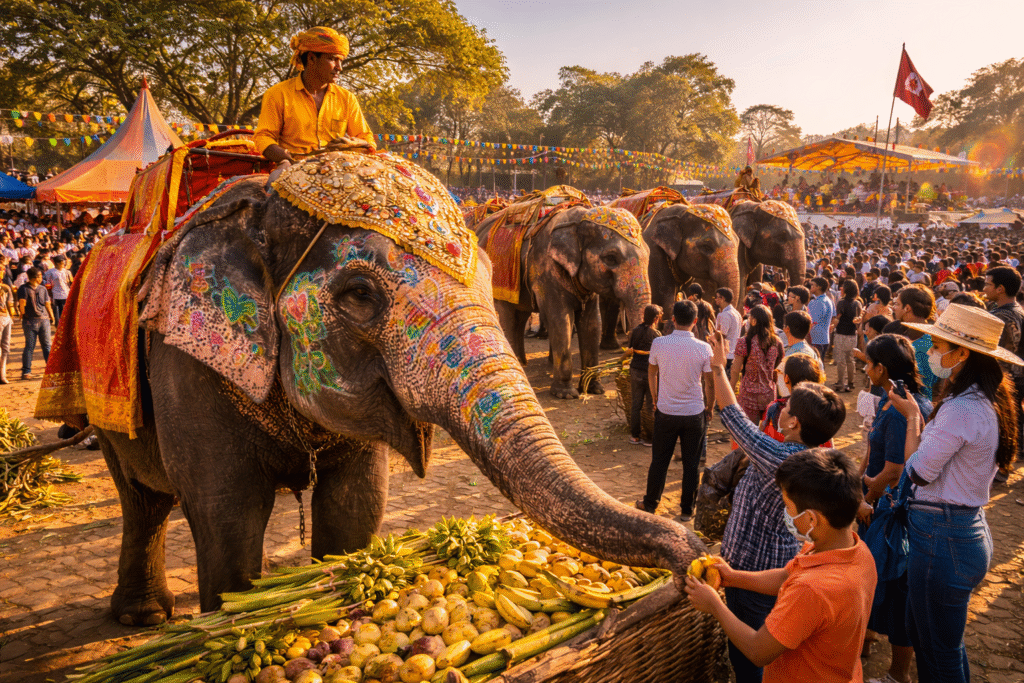
Visitors enjoyed rare opportunities to interact closely with elephants. Many guests fed fruits to the animals under supervision. Tourists captured photographs and shared memorable moments.
These interactions created emotional connections between visitors and wildlife. Organizers ensured safety and welfare during all activities. Staff closely monitored elephant behavior throughout the event.
Such engagement helps build awareness about elephant protection. Visitors often leave with stronger conservation values.
Elephant Picnic Highlights Festival Finale
The Elephant Picnic became the most anticipated event. More than 50 elephants gathered for a communal feast. Caretakers prepared rice pudding with jaggery, fruits, bread, and sugarcane.
The picnic symbolized appreciation for elephants’ contributions to tourism. Spectators watched elephants eat calmly in a relaxed environment. The scene reflected careful planning and humane treatment.
This event also educated visitors about elephant diets and care routines.
Competitive Events Add Energy and Excitement
The festival featured friendly competitions showcasing elephant skills. The Elephant Beauty contest attracted significant attention. Judges evaluated health, appearance, and behavior.
Elephant Poonam Kali won the beauty title. The announcement drew applause from the crowd. Another highlight involved a sporting challenge.
Elephant Champakali successfully completed a penalty kick. The crowd erupted with cheers. Champakali acknowledged spectators by lifting its trunk.
These moments added joy while maintaining respect for animal welfare.
Broad International and Domestic Participation
The festival attracted visitors from Europe, the United States, China, and India. Domestic tourists also attended in large numbers. Many international guests expressed excitement about close wildlife encounters.
This diversity reinforced Nepal’s global tourism appeal. Chitwan continues to attract travelers seeking authentic nature experiences. Cultural festivals enhance this appeal.
International attendance also strengthens Nepal’s tourism image abroad.
Supporting Conservation and Local Economy
The festival supports long-term conservation goals. Organizers collaborate with elephant breeding and welfare programs. Education remains a key focus during public events.
Local communities benefit directly from tourism revenue. Employment opportunities increase during festival periods. Crafts, food stalls, and accommodations see strong demand.
Government-backed conservation initiatives gain visibility through such events. Public awareness helps sustain funding and policy support.
Strengthening Sauraha as a Tourism Hub
Sauraha continues to grow as a tourism center. The festival boosts its profile beyond wildlife safaris. Cultural events diversify visitor experiences.
Authorities aim to balance tourism growth with conservation. Festivals provide platforms for responsible tourism messaging. This balance ensures long-term sustainability.
Community participation remains essential to this success.
Looking Ahead to Future Editions
The 19th edition concluded with strong public engagement. Organizers praised cooperation between locals, authorities, and tourism stakeholders. The festival demonstrated an effective model for sustainable tourism promotion.
Attention now shifts toward the upcoming 20th edition. Plans will likely expand conservation education and cultural programming. Stakeholders aim to strengthen elephant welfare standards further.
The Chitwan Elephant and Tourism Festival continues to shape Nepal’s tourism future. It celebrates heritage while protecting wildlife. This balanced approach secures lasting benefits for Chitwan and beyond.
For more travel news like this, keep reading Global Travel Wire